BeConnected — When everything else fails, can your family reach you?
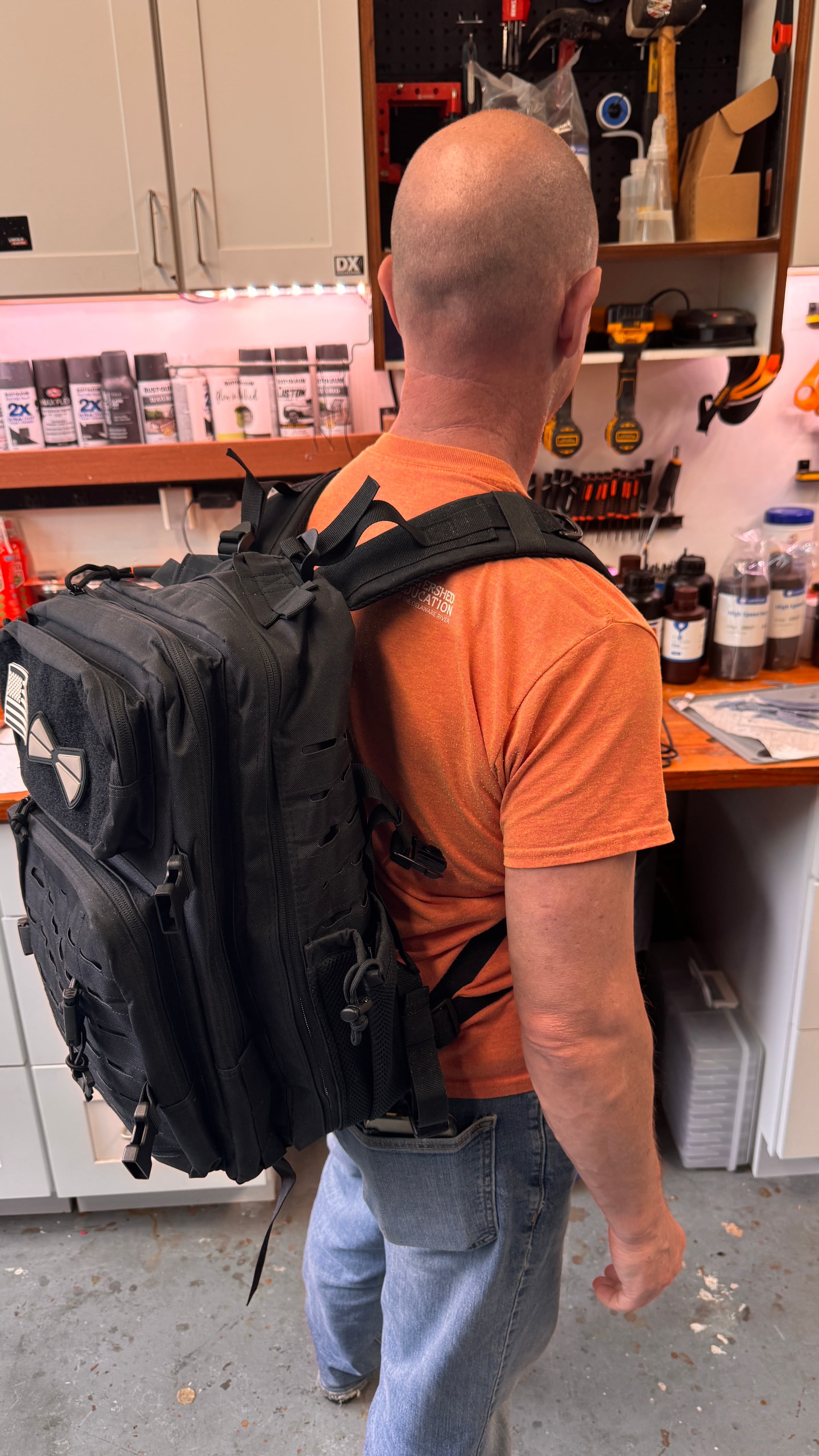
Ham radio, configured for your family. Your phone is the interface. No technical knowledge required - just open the bag, connect, and reach us.
How it works
- 1
Your kit arrives ready to use.
Pre-configured radio, Raspberry Pi, antenna, battery, and solar panel. All cables included. No assembly required beyond connecting the antenna.
- 2
Download the app and pair your phone.
Our custom app turns your smartphone into the radio interface. Pairing takes under five minutes. No frequency knowledge needed.
- 3
Open, connect, and reach anyone on the network.
When you need it, open the bag. Connect your phone. Text your family. The radio handles the rest.
The problems we built BeConnected to solve
These are the situations we hear about from families around us, and we spent years building the answer before we offered it to anyone else.
When It Mattered Most
During the hurricane, cell service went down for three days. I had no way to tell my family I was safe. I didn't even know if they were.
The Gap Nobody Talks About
I have a generator, food, and water. But if the grid goes down for a week, how do I communicate? Nobody ever answers that question.
Too Complex to Start
I looked into HAM radio. The licensing, the equipment, the setup — I didn't know where to begin. I gave up before I started.
We Built the Answer. Both of Them.
Most people know they need a communication backup. Almost no one has one — because the options are either too simple or too complex. We solved that. Two solutions, one for each range, both ready to go.
Local Communication Kit
Up to 10 miles
A compact go-bag with a pre-configured GMRS radio, customized antenna, and extra power packs. Grab it, turn it on, communicate with your family and neighbors up to 10 miles. Done.
Works out of the box. Transmitting requires an FCC GMRS license.
Long-Range Communication Kit
Across the state, country, or globe
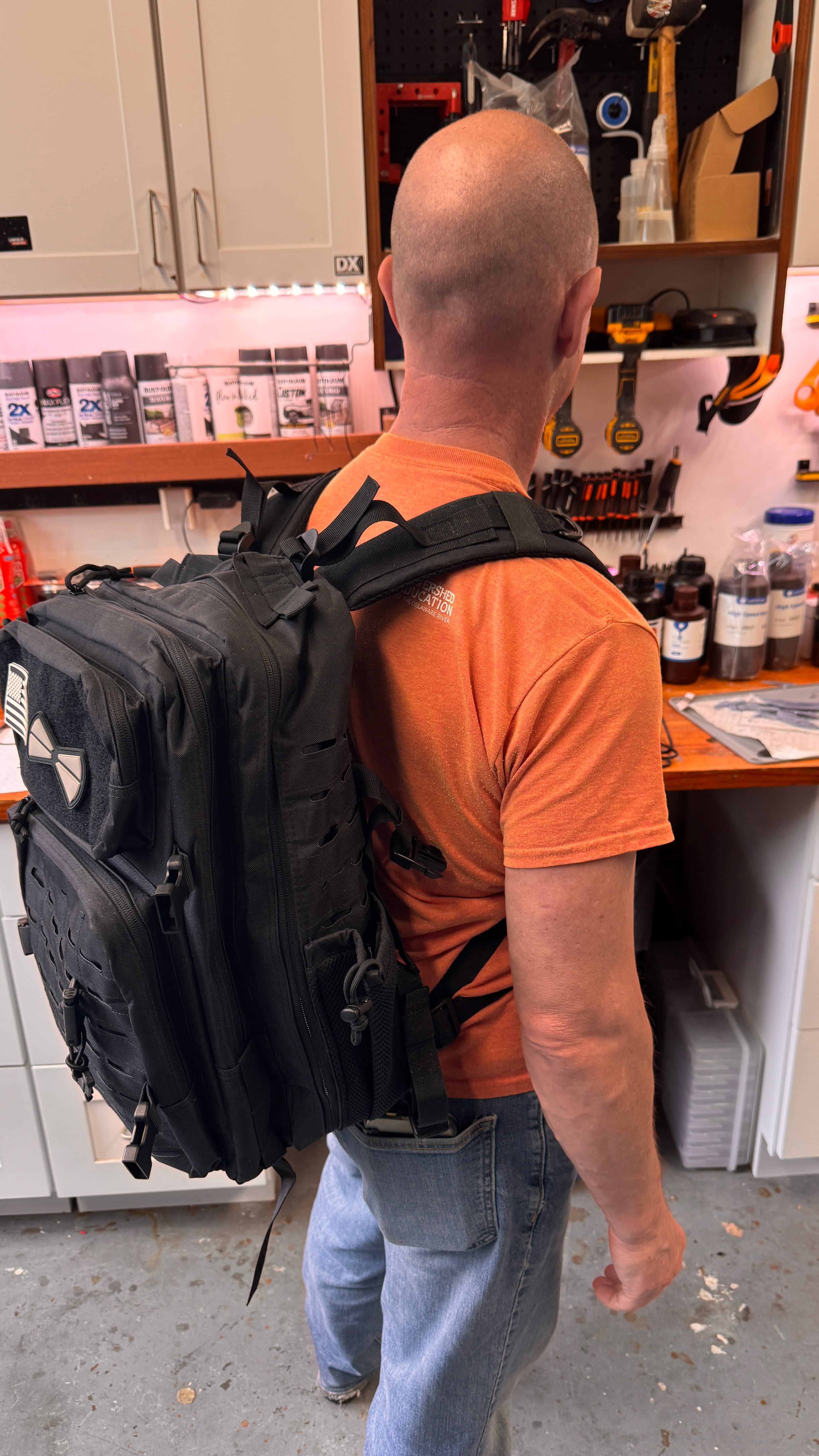
Ham radio is hundred-year-old technology — powerful but notoriously hard to use. We changed that. Our man pack connects to your smartphone so you can send text messages over ham radio to any other ham radio user, anywhere in the world. Your family uses the device they already know. The radio does the rest. Solar charging, batteries, and local Wi-Fi included. No technical expertise required.
Operating requires an FCC amateur radio license — we walk you through earning it.
Both solutions are pre-configured and grab-and-go. The GMRS kit works out of the box once you hold an FCC GMRS license — no setup. The ham radio man pack puts a century of communication range in your hands, controlled from your smartphone.
Both kits are in final field testing, expected to launch in 2026. Join the list to be first in line.
Want first access when BeConnected ships?
Read our story below — or skip ahead and get on the list now.
The Road to BeConnected
A story about radios, family, and a problem we couldn't stop trying to solve.
Chapter 1
The Question Nobody Could Answer
When cell towers go dark — during a hurricane, a grid failure, an EMP event — how do you reach your family? We searched for a turnkey answer. Something a non-technical person could grab and use. Nothing existed. So we started where most people start: Baofeng radios. About twenty of them, with every antenna we could find.

Chapter 1
The Question Nobody Could Answer
When cell towers go dark — during a hurricane, a grid failure, an EMP event — how do you reach your family? We searched for a turnkey answer. Something a non-technical person could grab and use. Nothing existed. So we started where most people start: Baofeng radios. About twenty of them, with every antenna we could find.
Chapter 2
Back to School
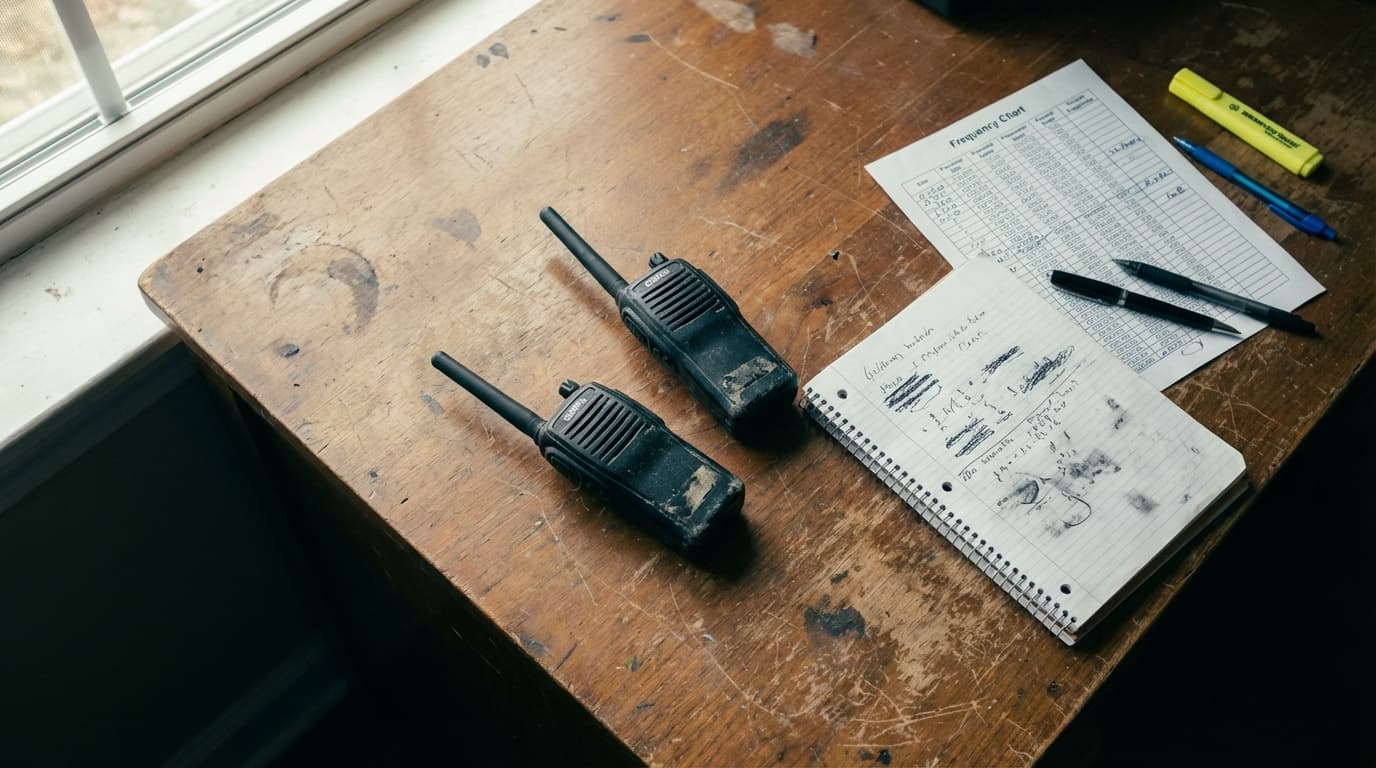
Before we tested anything on our families, Tiran and I signed up for a GMRS radio class together. We sat in the front row. We participated in every field exercise and scavenger hunt — firsthand, not as observers. We experienced the line-of-sight challenges, the antenna limitations, and the variables that nobody writes about in the product listings. We left with more knowledge — and more questions.
Chapter 2
Back to School
Before we tested anything on our families, Tiran and I signed up for a GMRS radio class together. We sat in the front row. We participated in every field exercise and scavenger hunt — firsthand, not as observers. We experienced the line-of-sight challenges, the antenna limitations, and the variables that nobody writes about in the product listings. We left with more knowledge — and more questions.
Chapter 3
The Backyard Barbecue
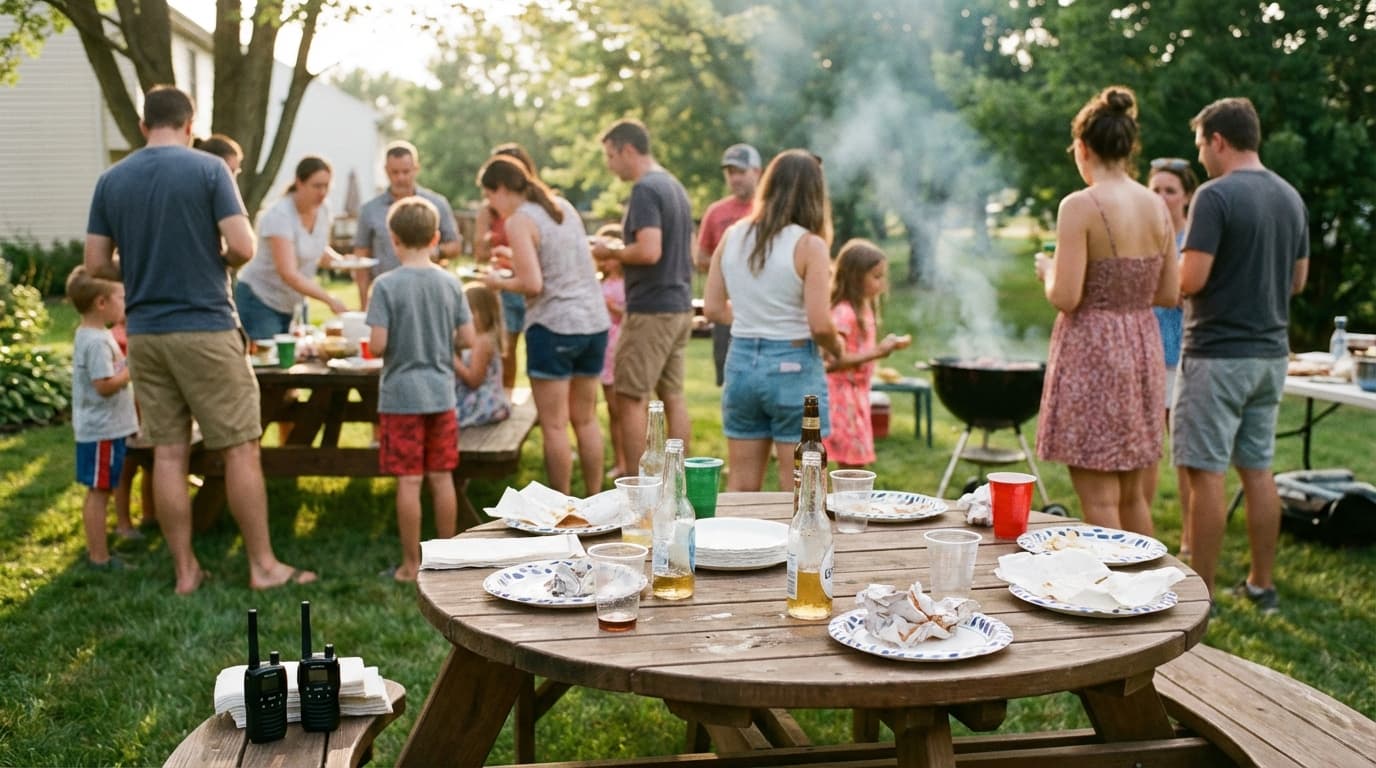
We invited everyone — adult children, brothers, sisters-in-law, nieces, nephews. Four teams. Four directions. Everyone else had standard GMRS antennas — the kind you'd order from Amazon or pick up at any gear shop. Our family had something different: a customized antenna designed to hang from a tree branch. You throw it over, hook it, and the GMRS radio reaches its maximum potential — up to 10 miles in the right conditions, without a repeater. Our family followed the instructions in the kit we'd prepared. They swapped the antenna. They got on frequency. They communicated back. Clear signal. First try. That was the moment. We knew we had something — a solution small enough to fit in a purse, a handbag, a small backpack — and powerful enough to actually work when it mattered. We just had to figure out how far "when it mattered" needed to reach.
Chapter 3
The Backyard Barbecue
We invited everyone — adult children, brothers, sisters-in-law, nieces, nephews. Four teams. Four directions. Everyone else had standard GMRS antennas — the kind you'd order from Amazon or pick up at any gear shop. Our family had something different: a customized antenna designed to hang from a tree branch. You throw it over, hook it, and the GMRS radio reaches its maximum potential — up to 10 miles in the right conditions, without a repeater. Our family followed the instructions in the kit we'd prepared. They swapped the antenna. They got on frequency. They communicated back. Clear signal. First try. That was the moment. We knew we had something — a solution small enough to fit in a purse, a handbag, a small backpack — and powerful enough to actually work when it mattered. We just had to figure out how far "when it mattered" needed to reach.
Chapter 4
The Repeater Rabbit Hole
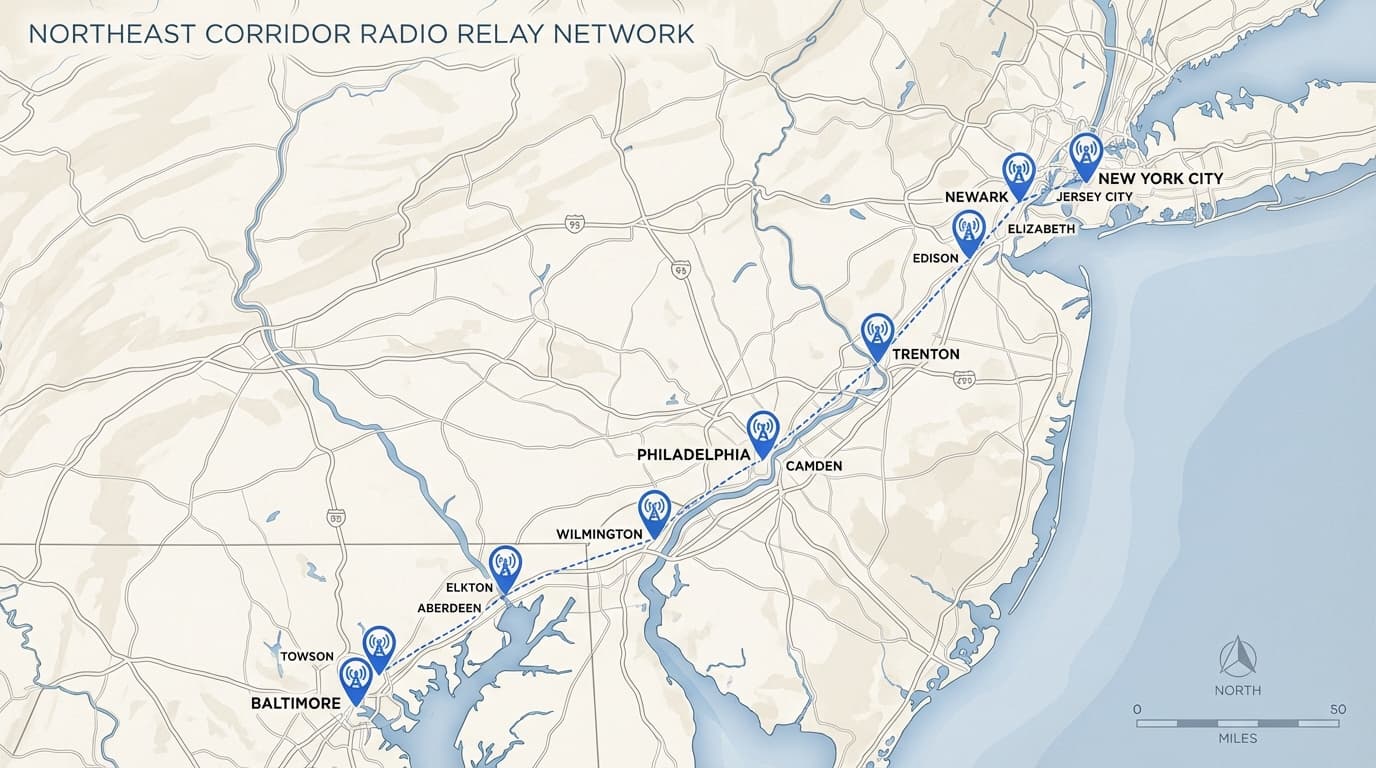
We mapped every radio repeater between us and our families. Drew lines. Calculated distances. Tracked down the owners. Then we asked the question we'd been avoiding: what happens to a repeater when the power grid goes down? Most of them go offline. It was a beautiful plan that fell apart the moment we put real people in front of it.
Chapter 4
The Repeater Rabbit Hole
We mapped every radio repeater between us and our families. Drew lines. Calculated distances. Tracked down the owners. Then we asked the question we'd been avoiding: what happens to a repeater when the power grid goes down? Most of them go offline. It was a beautiful plan that fell apart the moment we put real people in front of it.
Chapter 5
The Meshtastic Detour
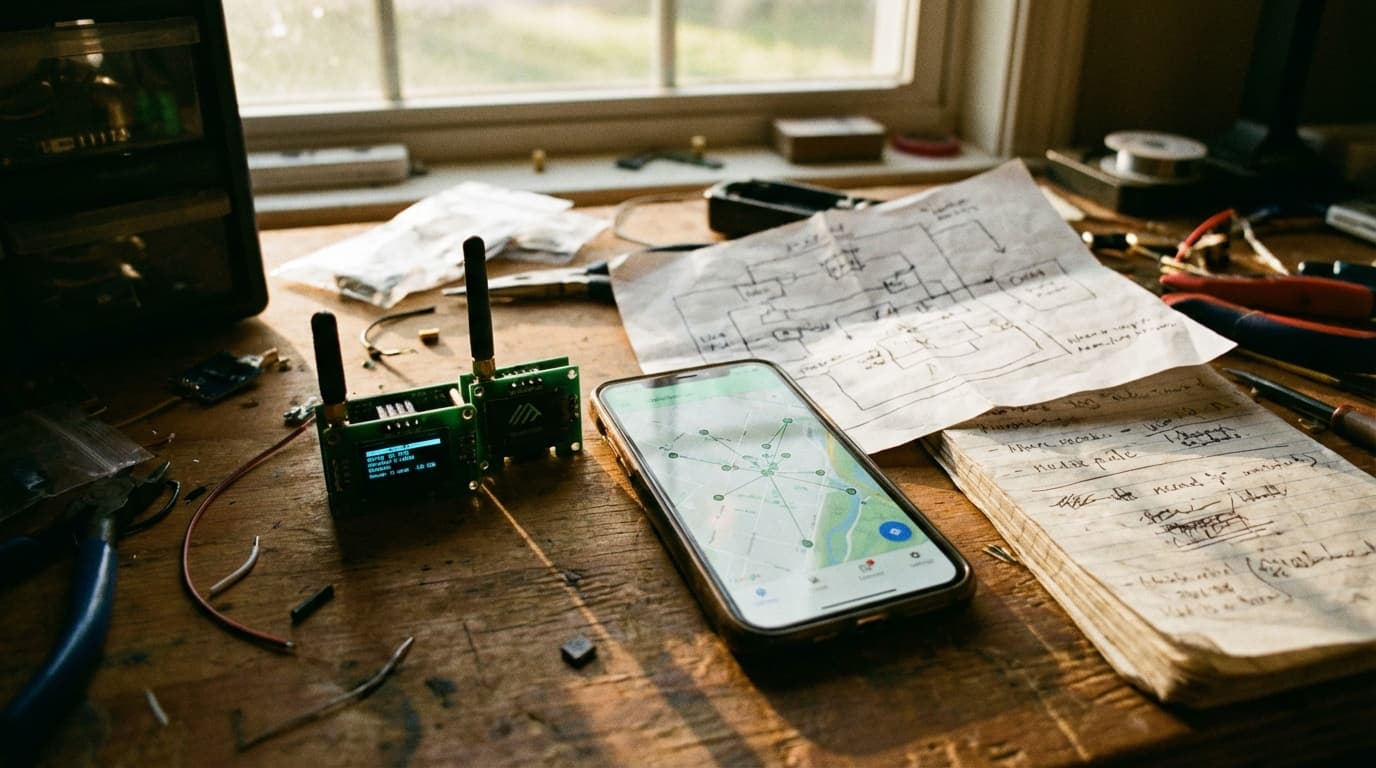
Meshtastic caught our attention -- a peer-to-peer mesh radio protocol that relays signals without any infrastructure. No towers, no repeaters, no grid. On paper it was exactly what we needed. In practice, it wasn't there yet: range was too limited, the network needed density to function, and reliability under stress conditions wasn't proven. We wanted to believe in it. We couldn't stake our families on it. We kept a file on it and kept going. That decision forced us to confront something we'd been circling: if we wanted real range -- the kind that reaches family members hours away when every tower is dark -- we had to go to ham radio.
Chapter 5
The Meshtastic Detour
Meshtastic caught our attention -- a peer-to-peer mesh radio protocol that relays signals without any infrastructure. No towers, no repeaters, no grid. On paper it was exactly what we needed. In practice, it wasn't there yet: range was too limited, the network needed density to function, and reliability under stress conditions wasn't proven. We wanted to believe in it. We couldn't stake our families on it. We kept a file on it and kept going. That decision forced us to confront something we'd been circling: if we wanted real range -- the kind that reaches family members hours away when every tower is dark -- we had to go to ham radio.
Chapter 6
Going HAM
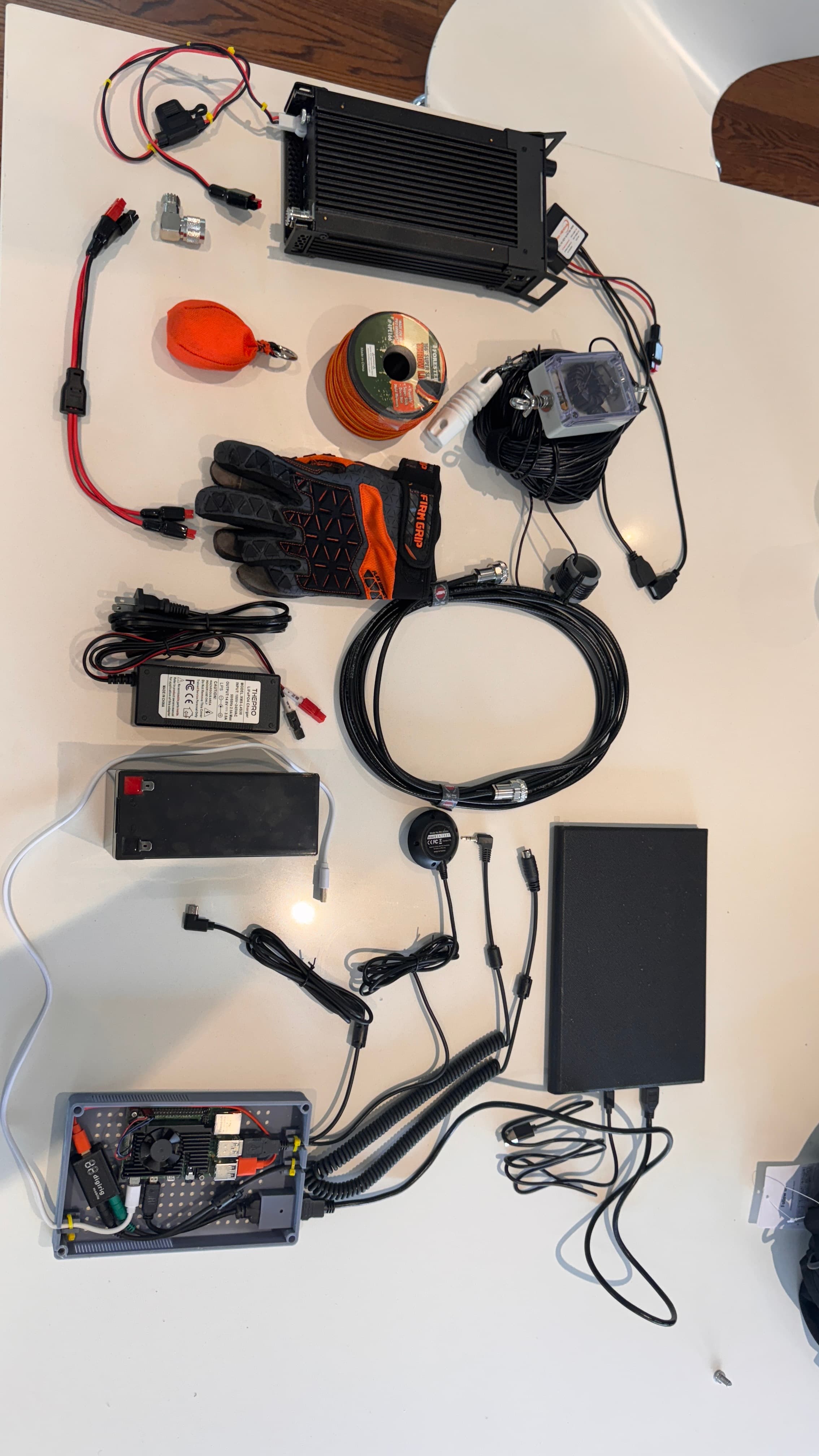
The GMRS solution worked beautifully under good conditions. That was the problem. Emergencies don't come with good conditions. The same field work that proved the antenna worked also showed us the ceiling. When conditions were at their best, making it reliable was still hard enough. We couldn't build a family communication plan around something that might not work when things were at their worst. We needed real range. Something that could reach family members an hour away — or across the state, or across the country. We made the decision: we were going all in on ham radio. We studied. We sat for our FCC exams. Both of us earned our amateur radio licenses. Then we built our first prototype: a Raspberry Pi, a 10Ah battery, a GPS module, and a Xiegu G90 HF radio. Rough, but it worked.
Chapter 6
Going HAM
The GMRS solution worked beautifully under good conditions. That was the problem. Emergencies don't come with good conditions. The same field work that proved the antenna worked also showed us the ceiling. When conditions were at their best, making it reliable was still hard enough. We couldn't build a family communication plan around something that might not work when things were at their worst. We needed real range. Something that could reach family members an hour away — or across the state, or across the country. We made the decision: we were going all in on ham radio. We studied. We sat for our FCC exams. Both of us earned our amateur radio licenses. Then we built our first prototype: a Raspberry Pi, a 10Ah battery, a GPS module, and a Xiegu G90 HF radio. Rough, but it worked.
Chapter 7
Thirty Designs Before Getting It Right
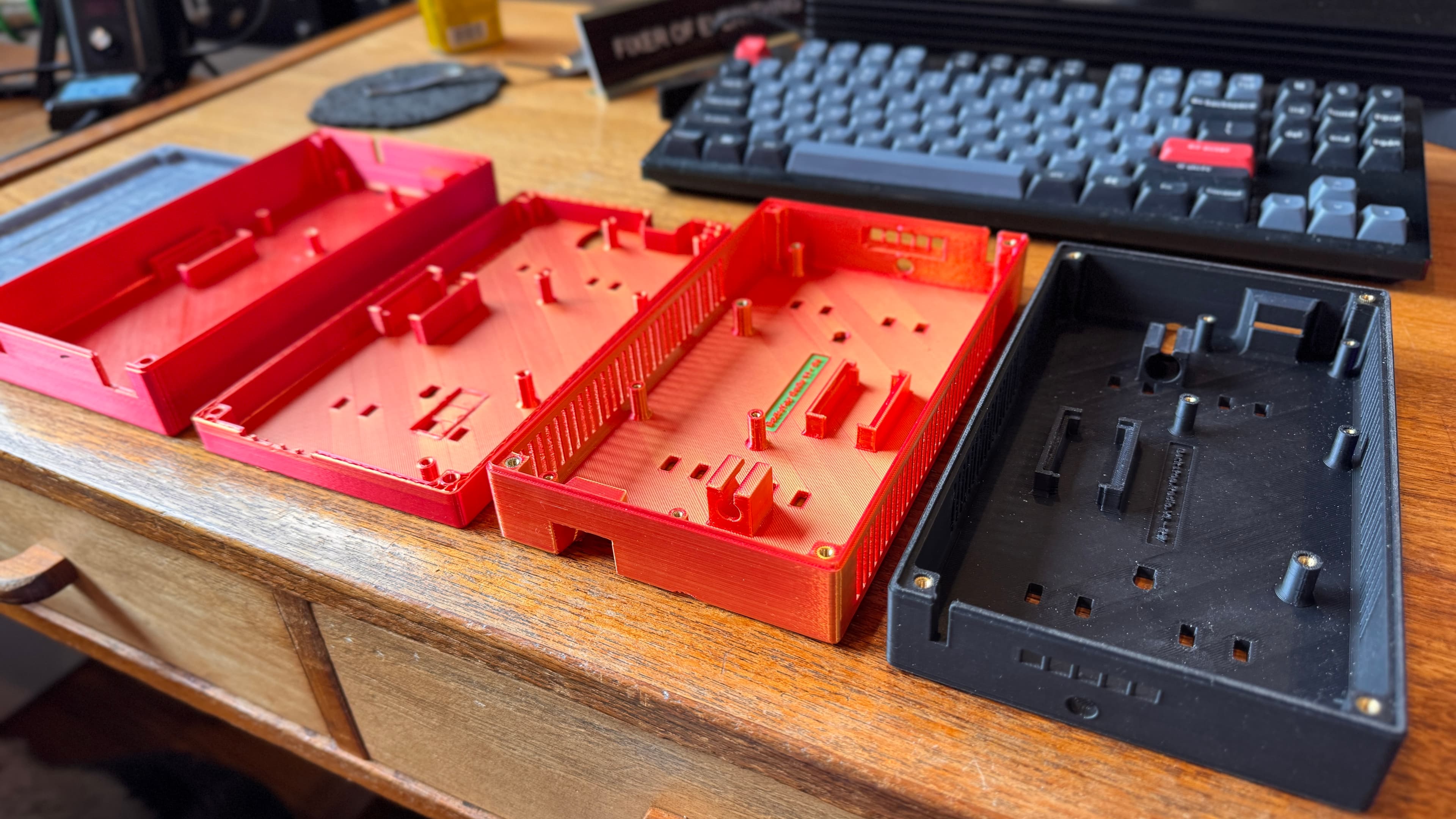
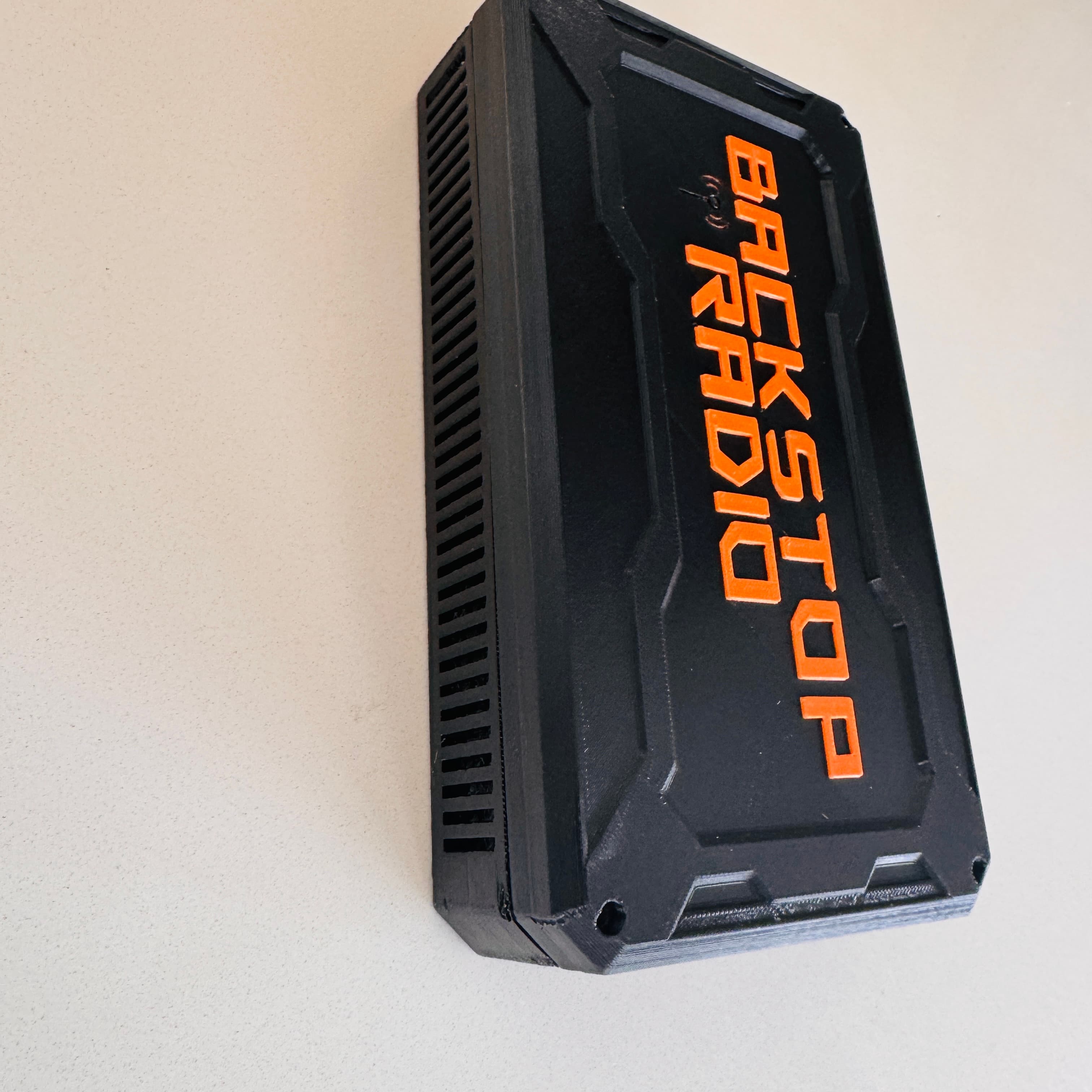
What followed was months of iteration across every single component. We evaluated over 20 different battery types — capacity, weight, discharge rate, rechargeability, cold-weather performance. We tried multiple meters, controllers, switches, and housings. We asked whether it should be in a Faraday cage. Whether it needed to be fully waterproof. How to protect the components during transport and storage. Our first enclosure was a $110 off-the-shelf waterproof box. We bought a 3D printer and taught ourselves Fusion 360. The first custom housing had walls that were too thin. Thirty iterations later — each print running 8 to 10 hours overnight — we had a rugged, purpose-built enclosure that cost $20 in materials and looked like a professional product. The people we were building this for don't have ham licenses. They're not technical. We kept that in front of us through every design decision.
Chapter 7
Thirty Designs Before Getting It Right
What followed was months of iteration across every single component. We evaluated over 20 different battery types — capacity, weight, discharge rate, rechargeability, cold-weather performance. We tried multiple meters, controllers, switches, and housings. We asked whether it should be in a Faraday cage. Whether it needed to be fully waterproof. How to protect the components during transport and storage. Our first enclosure was a $110 off-the-shelf waterproof box. We bought a 3D printer and taught ourselves Fusion 360. The first custom housing had walls that were too thin. Thirty iterations later — each print running 8 to 10 hours overnight — we had a rugged, purpose-built enclosure that cost $20 in materials and looked like a professional product. The people we were building this for don't have ham licenses. They're not technical. We kept that in front of us through every design decision.
Chapter 8
Engineering for Real Emergencies
Here's the technical part -- and it's worth it. We upgraded to 30Ah batteries for multi-day operation, built in automatic failover via UPS controller, integrated solar charging, and wrote the software ourselves in Python and Node.js, including a custom API wrapper around a 15-year-old Fortran program. Then Tiran put up an antenna in his front yard and we tested. Neighbors first. Then the next state. Then the other side of the country. Then someone overseas came back on frequency. We looked at each other and said: this works. Brian's daughter in her apartment. His brother in his backyard. Tiran's family an hour away. Whoever you love, wherever they are -- this is how you reach them when everything else is gone.
Chapter 8
Engineering for Real Emergencies
Here's the technical part -- and it's worth it. We upgraded to 30Ah batteries for multi-day operation, built in automatic failover via UPS controller, integrated solar charging, and wrote the software ourselves in Python and Node.js, including a custom API wrapper around a 15-year-old Fortran program. Then Tiran put up an antenna in his front yard and we tested. Neighbors first. Then the next state. Then the other side of the country. Then someone overseas came back on frequency. We looked at each other and said: this works. Brian's daughter in her apartment. His brother in his backyard. Tiran's family an hour away. Whoever you love, wherever they are -- this is how you reach them when everything else is gone.
Chapter 9
Solutions for the People We Love
But range alone wasn't the answer. Man packs exist on the market -- purpose-built ham radio kits, some costing up to $17,000. We looked at all of them. Cost aside, none of them solved the actual problem: they still require technical expertise to operate. Frequencies, modes, protocols. Our families weren't going to learn any of that, and laminated quick-start cards don't change that reality. So we built the missing piece: custom software that lets any smartphone connect directly to the radio and send messages as if it were a text. The radio does the work. The phone is the interface. Brian's daughter doesn't need to know what an HF frequency is. She just needs to know how to type. We built with one test in mind: could Brian's daughter open her bag, connect her phone, and text him -- "Dad, what should I do?" Not technical proficiency. Not memorized frequencies. Just: open, connect, text. She opened her bag. She connected her phone. She texted. We knew we had something worth sharing.

Chapter 9
Solutions for the People We Love
But range alone wasn't the answer. Man packs exist on the market -- purpose-built ham radio kits, some costing up to $17,000. We looked at all of them. Cost aside, none of them solved the actual problem: they still require technical expertise to operate. Frequencies, modes, protocols. Our families weren't going to learn any of that, and laminated quick-start cards don't change that reality. So we built the missing piece: custom software that lets any smartphone connect directly to the radio and send messages as if it were a text. The radio does the work. The phone is the interface. Brian's daughter doesn't need to know what an HF frequency is. She just needs to know how to type. We built with one test in mind: could Brian's daughter open her bag, connect her phone, and text him -- "Dad, what should I do?" Not technical proficiency. Not memorized frequencies. Just: open, connect, text. She opened her bag. She connected her phone. She texted. We knew we had something worth sharing.
BeConnected is what comes next.
Want to know when BeConnected launches?
Be the first to know. No spam. Just a heads-up when it's ready.
Already a BePrepared subscriber? You'll be notified automatically.