Go Bag Checklist: What to Pack for 72 Hours
Water, food, medicine, documents and the rest, in one printable list.
A go bag is a grab-and-go emergency kit: the supplies you would need if you had to leave home quickly and could not come back for a few days. The go bag checklist below covers about 72 hours, the 3-day supply the American Red Cross recommends for evacuation.
It is the same list people look for as a bug out bag checklist or a 72-hour kit, built from Red Cross and Ready.gov guidance. It stays calm and practical: what goes in the bag, and how to keep it ready.
Last reviewed
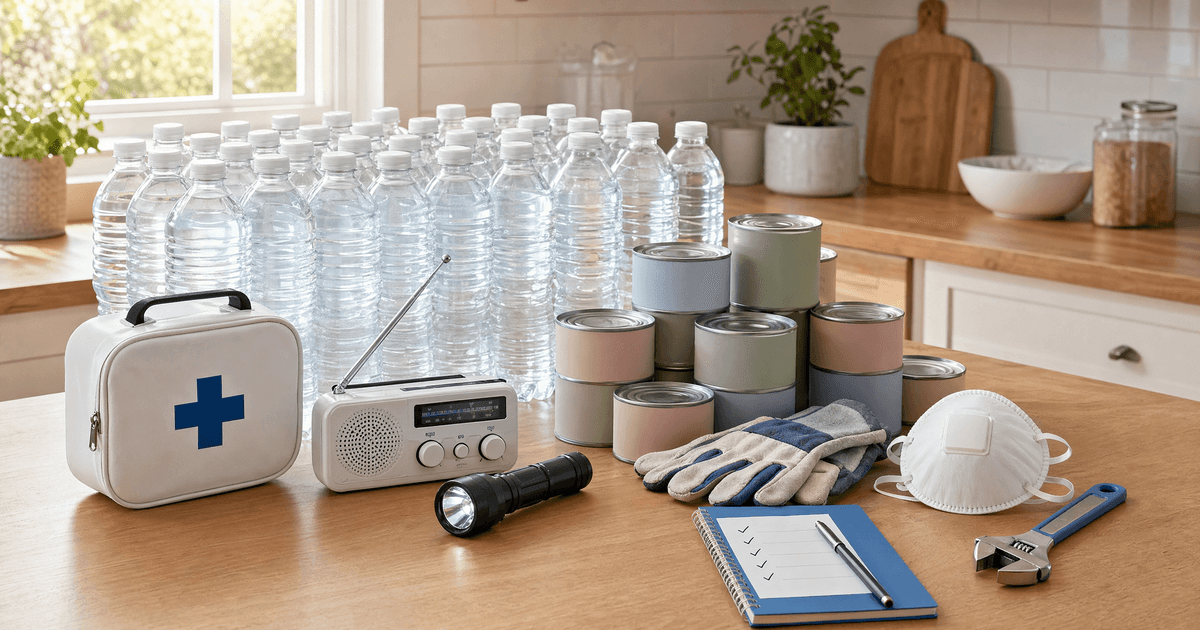
What goes in a 72-hour go bag?
Water, food, medicine, documents and the rest of what three days away from home takes, item by item below. Quantities are per person where an item says so. Tap each item as it goes into the bag, or print the list; this device remembers what you have packed.
Go Bag Checklist (72 Hours)
BePrepared Solutions · bepreparedsolutions.co/go-bag-checklist
Check off each item as you go.
0 of 37 checked
Water
Food
Light and power
First aid and medications
Documents and money
Communication
Clothing and shelter
Hygiene and sanitation
Tools
Kids, older adults and pets
Rather start from a list someone has already picked out? BeEquipped's Ten-Minute Evacuation kit is a curated set of evacuation supplies, starting with the backpack, sized to your household. Each item is sold and shipped by Amazon, item by item, not by us.
See the Ten-Minute Evacuation kitA checklist tells you what to pack; a plan says what happens when you need it - who grabs the bags, who picks up the kids, and where the household meets if phones are down. BeReady turns this checklist into that per-household plan, with a printable sheet for every family member.
Build my household go bag planHow do you keep a go bag ready?
Pack it, personalize it for each person, store it where anyone can grab it, and check it every six months. A packed bag is only useful if you can find it, carry it, and trust what is inside. These steps take the list from a page to a bag by the door.
Pack the basics
Gather the checklist items for each person. Ready.gov suggests sealing items in airtight plastic bags and keeping the whole kit in one or two easy-to-carry containers, such as a duffel bag or plastic bins. A go bag should be something you can carry if you have to leave on foot or by public transportation.
Personalize it for each person
Add what each member of the household needs that the basic list does not cover: prescription medications, glasses and hearing aid batteries, baby supplies, chargers for medical devices, and food and a carrier for each pet. Children, nursing mothers and sick people may need more water than the one-gallon baseline.
Protect your documents and contacts
Put copies of identification, insurance policies, bank records, proof of address and your medication list in a waterproof, portable container, and save copies electronically. Write down family and emergency contact numbers on paper so they survive a dead phone.
Store it where you can grab it
Keep the bag in one designated place so anyone in the household can pick it up and leave quickly. Ready.gov also recommends a kit in the car, a grab-and-go kit at work with comfortable walking shoes, and keeping half a tank of gas in the car at all times.
Decide where you would go
Identify several places you could stay, such as a friend’s home in another town or a motel. Most public shelters allow only service animals, so if you have pets, find a place that will accept them before you need it.
Check it every six months
Pick two dates a year and go through the bag: replace expired food and medications, swap in fresh batteries, and replace any water you bottled yourself, which Ready.gov says should be done every six months. Once a year, rethink the whole kit as your household’s needs change.
Related guides
A go bag covers leaving. Each hazard guide covers what to add for the specific risk, and what to do when it arrives.
Sources
The quantities and recommendations on this page follow these sources. If Ready.gov, the Red Cross or your local emergency managers tell you something different, follow them.
- Survival Kit Supplies — American Red Cross
Supports: the 72-hour frame and the core quantities: "Water: one gallon per person, per day (3-day supply for evacuation, 2-week supply for home)"; "Food: non-perishable, easy-to-prepare items (3-day supply for evacuation, 2-week supply for home)"; "Medications (7-day supply) and medical items". Also the flashlight, radio, batteries, first-aid kit, multi-purpose tool, document copies (medication list, proof of address, deed/lease, passports, birth certificates, insurance policies), cash, emergency blanket, maps, contact information, spare keys, hearing aids, glasses, baby and pet supplies, games for children, rain gear, work gloves, N95 masks, and extra clothing and sturdy shoes.
- Build A Kit — Ready.gov
Supports: the basic kit items (radio, flashlight, first-aid kit, extra batteries, "Whistle (to signal for help)", "Dust mask (to help filter contaminated air)", plastic sheeting, scissors and duct tape, "Moist towelettes, garbage bags and plastic ties", "Wrench or pliers (to turn off utilities)", manual can opener, local maps, "Cell phone with chargers and a backup battery"); the additional supplies (soap, hand sanitizer and disinfecting wipes, non-prescription medicines, eyeglasses and contact lens solution, infant formula, bottles, diapers, wipes and diaper rash cream, cash, documents "saved electronically or in a waterproof, portable container", a sleeping bag or warm blanket per person, a complete change of clothing and sturdy shoes, matches in a waterproof container, feminine supplies, paper and pencil, books, games and puzzles); packing ("store items in airtight plastic bags and put your entire disaster supplies kit in one or two easy-to-carry containers such as plastic bins or a duffel bag"); storage ("Keep this kit in a designated place and have it ready in case you have to leave your home quickly"; a car kit; a work kit with "comfortable walking shoes, stored in a 'grab and go' case"); and upkeep ("Replace expired items as needed. Re-think your needs every year and update your kit as your family's needs change").
- Water — Ready.gov
Supports: the water items: "Children, nursing mothers and sick people may need more water"; "In very hot temperatures, water needs can double"; "Buy commercially bottled water and store it in the sealed original container in cool, dark place"; "Water that has not been commercially bottled should be replaced every six months."
- Food — Ready.gov
Supports: the food items: foods needing "no refrigeration, cooking, water or special preparation", including ready-to-eat canned meats, fruits and vegetables, protein bars, dry cereal, peanut butter and dried fruit; "Be sure to include a manual can opener and eating utensils"; "Remember any special dietary needs"; and the formula advice: "Use ready-to-feed formula. If you must mix infant formula use bottled water or boiled water as a last resort."
- Evacuation — Ready.gov
Supports: the carry-it guidance ("Prepare a 'go-bag' you can carry when you evacuate on foot or public transportation"), the gas-tank rule ("Keep a half tank of gas in it at all times in case of an unexpected need to evacuate"), where to go ("Identify several places you could go in an emergency such as a friend's home in another town or a motel"), and pets ("Most public shelters allow only service animals").
- Prepare Your Pets for Disasters — Ready.gov
Supports: the pet item: several days' supply of food and water, an extra supply of medicine, collar with ID tag and a leash, a crate or sturdy carrier, and "a picture of you and your pet together" to "help you document ownership".
- Older Adults — Ready.gov
Supports: the older-adults item: "Include items that meet your individual needs, such as medicines, medical supplies, batteries and chargers, in your emergency supply kit."
Preparedness that goes beyond the bag
The go bag is for the day you have to leave. BeAware monitors the risks at your address, BeReady builds the plan, BeEquipped curates the kit, and BeAdvised gives you time with a preparedness expert if you want help deciding what your household packs.
See all BePrepared solutions