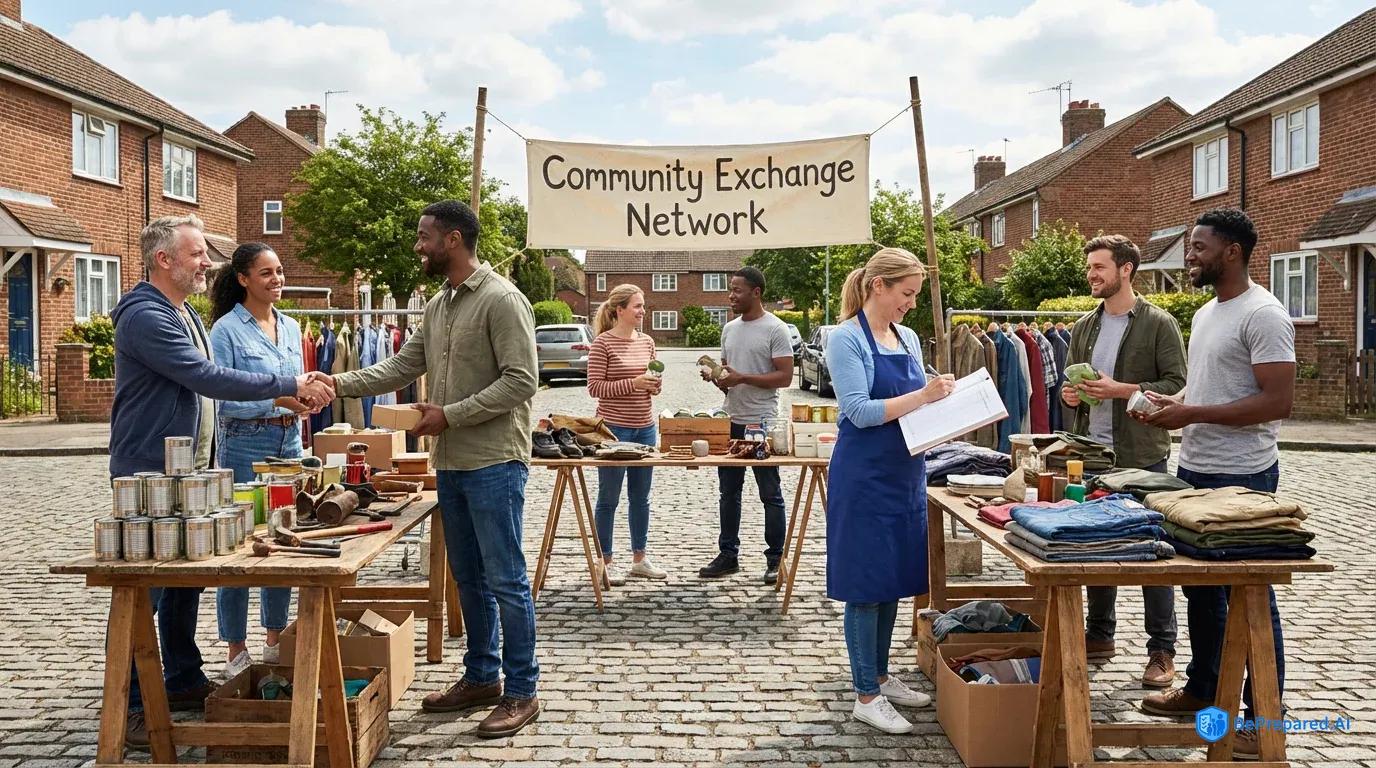
Understanding Alternative Currency Systems in Crisis
When María walked into her neighborhood community center in Buenos Aires in early 2002, she carried a bag filled with homemade empanadas, not pesos. The Argentine currency had collapsed overnight, and her savings had evaporated. But inside that converted warehouse, a different kind of economy thrived. Hundreds of her neighbors gathered weekly to exchange goods and services using printed vouchers called créditos. María traded her empanadas for bread, vegetables, and even a haircut. She wasn't alone in this new reality. Barter networks typically expand 3-4x during periods of monetary system stress , and Argentina's 2001 crisis proved no exception as informal exchange systems kept families fed when traditional currency failed.
Understanding alternative currency systems isn't about preparing for an unlikely dystopian future. It's about recognizing that economic disruptions happen with surprising regularity, and communities that prepare for them fare dramatically better than those caught unprepared. An alternative currency system is any medium of exchange that operates outside or alongside traditional government-issued money. These systems range from simple direct barter—trading goods for goods—to sophisticated local currencies, time banks where people exchange hours of service, and mutual credit systems where transactions are recorded digitally or on paper.
History shows us that when mainstream economies falter, alternative systems emerge organically, but they function far more effectively when communities have established them beforehand. During the Great Depression, dozens of American cities issued their own scrip currencies to keep commerce flowing when dollars became scarce. In Greece during the 2010s debt crisis, alternative currency schemes proliferated as unemployment soared and banks restricted withdrawals. More recently, during Venezuela's hyperinflation, entire neighborhoods organized barter markets when the bolívar became essentially worthless. The pattern repeats itself: traditional currency fails when governments print excessive money, when banking systems collapse, when supply chains break down, or when political instability undermines confidence in official money.
Research demonstrates that communities with established alternative currency systems show 40% better resilience during economic disruptions compared to those without such networks . This resilience stems from several factors. First, these systems maintain economic activity when traditional money becomes scarce or worthless. Second, they strengthen community bonds and mutual support networks before crisis strikes. Third, they create redundancy in economic systems—a crucial principle in any preparedness strategy.
Just as you wouldn't rely on a single water source or food supply, depending solely on government-issued currency creates a dangerous vulnerability. The communities that weathered Argentina's crisis most successfully weren't those with the most savings in banks, but those with the strongest networks of mutual exchange and the clearest systems for facilitating trade without traditional money. These networks provided stability when formal institutions failed, allowing people to continue meeting their basic needs through cooperative exchange rather than desperation.
- Crisis Relevance
- Brief notation indicating how each category's value shifts during different emergency scenarios
Essential Trade Items and Their Value
The hierarchy of value shifts dramatically when traditional currency systems fail. Understanding this shift requires thinking beyond the conventional wisdom about precious metals and recognizing that practical utility trumps theoretical value when communities face real scarcity. During Venezuela's hyperinflation, basic household items became more valuable than cash, with people trading toilet paper, cooking oil, and soap for food and medicine . A gold coin might have significant theoretical value, but you cannot eat it, clean with it, or use it to fix a broken water pipe. In crisis economies, the items that command the highest trading value are those that meet immediate, practical needs.
Shelf-stable food represents the foundation of crisis currency. Specifically, foods that provide calories, require no refrigeration, and have extended shelf lives become highly tradeable. Rice, beans, pasta, canned goods, cooking oil, salt, sugar, and flour consistently maintain value across different crisis scenarios. These items serve a dual purpose: they sustain your own household while providing trading power for items you lack.
A fifty-pound bag of rice might cost forty dollars in normal times, but during a supply chain disruption, portions of that rice can be traded for medications, repairs, fresh vegetables, or services you need. The key consideration is divisibility—having items in various sizes allows for trades of different scales. A case of canned soup can be traded as a whole unit for a major service, or individual cans can be exchanged for smaller needs. This flexibility makes your trading inventory more versatile and useful across a wider range of situations.
Practical household goods form the second tier of valuable trade items. Hygiene products—soap, toothpaste, toilet paper, feminine hygiene products, diapers—maintain consistent demand regardless of economic conditions. People need to stay clean to remain healthy, making these items perennially valuable. Cleaning supplies, batteries, candles, matches, and basic tools similarly command trading power because they enable daily life to continue with some normalcy.
Medications, both over-the-counter pain relievers and prescription drugs, become extraordinarily valuable during supply disruptions. Trading prescription medications raises legal and ethical considerations that each community must navigate carefully. Over-the-counter medications like pain relievers, antihistamines, and antacids present fewer complications while still offering significant trading value. First aid supplies including bandages, antiseptics, and basic medical equipment also command strong trading power.
The concept of skills as trading assets deserves particular emphasis because skills represent renewable trade value. Unlike physical goods that deplete with each trade, skills can be exchanged repeatedly. A person skilled in carpentry, plumbing, electrical work, medical care, food preservation, bicycle repair, or teaching possesses valuable currency that cannot be inflated, stolen, or destroyed. The mechanic who can repair vehicles and generators, the nurse who can treat injuries and illness, the seamstress who can mend clothing, the gardener who can grow food—these individuals maintain economic power regardless of currency fluctuations.
Skills offer another advantage over physical goods: they require no storage space, cannot spoil or deteriorate, and travel with you wherever you go. Developing multiple practical skills before crisis strikes gives you permanent trading power that no economic collapse can eliminate. Even basic skills like bread baking, bicycle repair, or hair cutting can generate significant trading value when professional services become unavailable or unaffordable.
The debate between practical goods and precious metals reveals a fundamental misunderstanding about crisis economics. Precious metals like gold and silver maintain theoretical value and can be useful for preserving wealth across long time periods or for large transactions. However, they present significant practical limitations in local, immediate crisis scenarios. Precious metals are difficult to divide for small transactions, require authentication to prevent fraud, and meet no immediate survival needs.
A silver coin cannot bandage a wound, purify water, or provide calories. In the initial phases of economic disruption, when communities are establishing new trading systems, a box of ammunition, a bottle of antibiotics, or a bag of coffee beans will typically trade more readily than precious metals. Precious metals may serve a role in long-term wealth preservation or major transactions, but they should not form the foundation of a practical barter strategy.
The most sophisticated approach combines stockpiled trade goods with developed skills and established relationships. This creates multiple pathways for obtaining needed items and services. You might trade canned goods for fresh eggs, repair a neighbor's fence in exchange for firewood, and teach someone's child in return for medical care. This diversity of trading options provides resilience and flexibility that relying on any single type of currency—whether dollars, gold, or goods—cannot match.
Pros of Skill-Based Trading:
- Renewable resource that never depletes
- No storage requirements or spoilage concerns
- Portable and always available
- Cannot be stolen or confiscated
- Builds lasting community relationships
Cons of Skill-Based Trading:
- Requires time investment to develop proficiency
- Some skills need tools or materials to execute
- Physical limitations may restrict certain skills
- Harder to trade across distances than physical goods
- Value depends on community needs at specific times
Building a Barter Network
Creating a functional barter network before crisis strikes separates communities that maintain stability from those that descend into chaos when traditional systems fail. The process begins with systematic identification of community resources, both material and human. Start by conducting a personal inventory of your own tradeable assets. List your skills—what can you do that others might need? Consider not just professional abilities but also practical knowledge: Can you preserve food? Repair small engines? Cut hair? Provide childcare? Teach music? Fix bicycles? Each skill represents potential trading value.
Next, expand your inventory to physical items. This doesn't mean cataloging everything you own, but rather identifying surplus items and supplies you've specifically acquired for trading purposes. Create a simple spreadsheet or notebook with categories: food items, tools, medical supplies, hygiene products, clothing, seeds, and miscellaneous goods. Update this inventory quarterly as you acquire new items or trade existing ones.
This record serves multiple purposes: it prevents you from forgetting what you have, helps you identify gaps in your trading inventory, and provides a reference point when opportunities for pre-crisis trades arise. The act of documenting your assets also helps you think strategically about what additional items might strengthen your trading position.
The second phase involves mapping your community's resources and needs. Local exchange trading systems (LETS) showed increased adoption during economic downturns, with the most successful systems being those established before crisis conditions emerged . Begin by having informal conversations with neighbors, family members, and community contacts about their skills and interests. Frame these discussions around mutual aid and community resilience rather than doomsday scenarios—most people respond better to positive framing.
Ask questions: What do you enjoy doing? What skills do you have? What do you wish you could access more easily? These conversations reveal the human capital in your network. You might discover that your neighbor is an experienced electrician, that the family down the street raises chickens, or that someone in your church has medical training. This knowledge becomes invaluable when needs arise.
Document your findings in a simple community resource directory. This doesn't need to be elaborate or formalized initially. A shared document or notebook listing names, skills, and potential trade items creates the foundation for a barter network. Include contact information and any specific notes about availability or limitations. María might offer baking services but only on weekends. John can repair lawnmowers but lacks some specialized tools. This directory becomes invaluable when someone needs a service or item—instead of wondering where to find help, they consult the directory and know exactly who to contact.
Establishing trust forms the critical third element of network building. Trust doesn't emerge automatically; it requires consistent positive interactions over time. Start building this trust immediately through small exchanges. Trade garden vegetables with a neighbor. Exchange babysitting hours with a friend. Borrow tools and return them promptly in good condition.
These pre-crisis trades serve multiple purposes: they establish patterns of reciprocity, they test the reliability of network members, and they normalize the concept of non-monetary exchange. When crisis eventually arrives, you won't be learning to barter while also dealing with scarcity and stress. You'll be activating a system that already works, with people you already trust.
Implement a record-keeping system appropriate to your network's size and sophistication. For a small neighborhood network of five to ten households, a simple shared ledger might suffice. Create a notebook where each transaction is recorded: date, parties involved, items or services exchanged, and any notes about the trade. Both parties initial each entry. This creates accountability and prevents disputes about who owes what to whom.
For larger networks, consider adopting a time banking model where services are valued by hours spent rather than subjective worth—an hour of legal advice equals an hour of house cleaning. This prevents hierarchical valuation and promotes equality within the network. Time banking recognizes that all contributions have value, regardless of the professional status typically associated with different types of work.
Technology can enhance record-keeping if infrastructure remains functional, but always maintain paper backups. Simple spreadsheets shared via email or cloud services work well for tracking trades in normal times. Several apps designed for time banking and local exchange exist, though relying solely on digital systems creates vulnerability if power or internet fails. The most resilient approach combines digital convenience with paper redundancy.
Schedule regular network meetings, even when no crisis looms. Monthly or quarterly gatherings serve multiple purposes: they maintain relationships, they provide opportunities for trades, they allow the network to refine its systems, and they keep the concept of alternative exchange fresh in everyone's minds. These meetings might include skill-sharing workshops, group purchases of bulk goods for trading inventory, or discussions about expanding the network. The goal is to make the barter network a normal part of community life rather than an emergency-only system activated during crisis.
Actionable Recommendations for Network Building:
- Start with 3-5 trusted households and expand gradually
- Hold your first network meeting within 30 days
- Create a shared resource directory within 60 days
- Complete at least one practice trade per month
- Establish record-keeping systems before you need them
- Build relationships during calm times, not during crisis
Trading During Food and Fuel Shortages
The dynamics of barter and trade shift significantly when specific critical resources become scarce. Food and fuel shortages create unique challenges that require adapted strategies, and communities that prepare for these scenarios maintain economic activity while others struggle. The differences in outcomes between prepared and unprepared communities reveal the importance of advance planning.
Transportation represents one of the most immediate challenges during fuel shortages. Traditional trading assumes participants can travel to exchange locations, whether that's a community center, a neighbor's home, or a designated market area. When gasoline becomes unavailable or prohibitively expensive, trading networks must adapt or collapse. Communities that have normalized bicycle use for local trips maintain access to resources within a several-mile radius—a dramatically larger network of potential trading partners than those limited to walking distance.
In a car-dependent suburb, a fuel shortage might reduce trading activity to immediate neighbors only, limiting available goods and services to whatever exists within walking distance. Bicycle-based communities maintain broader access to diverse resources and skills. This expanded range can mean the difference between finding the specific item or service you need and going without.
Preparing for this scenario means investing in bicycles and related equipment before shortages occur. A basic bicycle costs far less than most preparedness equipment and provides transportation independence. Add cargo capacity through panniers, baskets, or bike trailers, and you've created a viable trading transport system. Bicycle-based communities also maintain better physical fitness, reduce dependence on fragile fuel supply chains, and create quieter, more socially connected neighborhoods where people interact at human speeds rather than speeding past in cars.
Consider acquiring multiple bicycles if possible—a primary bike for yourself and a backup in case of mechanical failure or to equip other household members. Learn basic bicycle maintenance and stock essential spare parts: tubes, tires, brake pads, chain lubricant, and basic tools. The ability to keep bicycles running becomes a valuable trading skill in itself during fuel shortages.
Food preservation methods become crucial trading skills during food shortages. The difference between communities with widespread preservation knowledge and those without determines whether seasonal abundance can be extended through scarcity periods. A community where most households can preserve summer's tomato harvest through canning, drying, or freezing maintains access to these nutrients through winter. They can also trade preserved foods for other items, creating trading opportunities that extend far beyond the growing season.
In contrast, a community lacking preservation skills experiences a boom-and-bust cycle—temporary abundance during harvest followed by scarcity and complete dependence on supply chains. This dependence creates vulnerability that preservation knowledge eliminates.
The practical application requires learning multiple preservation methods before crisis conditions emerge. Canning preserves foods in sealed jars through heat processing, creating shelf-stable products that last years. Dehydrating removes moisture, preventing spoilage while concentrating flavors and nutrients. Fermentation preserves through beneficial bacteria, creating foods like sauerkraut, kimchi, and pickles that actually improve nutritional value. Root cellaring stores certain vegetables in cool, humid conditions for months without processing.
Each method suits different foods and situations. Canning requires initial equipment investment but produces long-lasting, easily traded items in standard jar sizes. Dehydrating requires less equipment and produces lightweight, compact foods ideal for storage and transport. Fermentation requires minimal equipment but produces foods that some people find unfamiliar. Root cellaring needs appropriate space but requires no special equipment or energy input.
Learning these skills now, while food remains readily available, allows you to practice and refine your techniques without pressure. You can experiment with different foods and methods, learning what works best for your situation and preferences. When shortages arrive, you'll have proven systems and confidence in your abilities.
Local resource mapping creates awareness of available food and fuel sources within your community's reach. This process involves systematically identifying resources that might become available for trade during shortages. Map community gardens, fruit trees on public land, wild edible plants, water sources, and households with chickens, rabbits, or other small livestock. Identify people with greenhouses, solar panels, wood stoves, or other infrastructure that produces value during shortages.
Rural areas typically have more space for food production and alternative fuel sources like firewood, while urban areas concentrate more diverse skills and manufactured goods. Understanding your area's specific resource profile helps you identify both strengths to leverage and gaps to address through trading relationships with other regions.
When everyone knows that María has excess eggs, John has a large garden, and Sarah has solar panels charging batteries, trading happens smoothly and efficiently. Without this knowledge, people struggle to find what they need, leading to frustration and potential conflict. Create your resource map now, while information gathering seems like a friendly community project rather than desperate intelligence collection. Share this map with your trading network, updating it regularly as situations change.
Walk or bike through your neighborhood with a notebook, documenting resources you observe. Note fruit trees, vegetable gardens, solar panels, wood piles, chicken coops, and other visible assets. Talk with neighbors about resources that might not be visible from the street. Create a simple map marking these resources, respecting privacy concerns while building useful community knowledge.
Fuel shortages affect not just transportation but also heating, cooking, and electricity generation. Communities that have diversified their energy sources maintain more stable trading networks because people can continue producing goods and services. A household dependent solely on natural gas for heating and cooking becomes vulnerable when supply disrupts, potentially having nothing to offer in trade. A household with a wood stove, solar panels, and a bicycle maintains productive capacity and trading power.
This diversification doesn't require elaborate off-grid systems—even simple additions create resilience compared to complete grid dependence. A camping stove with fuel reserves allows cooking when natural gas fails. A solar phone charger keeps communication devices working during power outages. A wood stove provides heat and cooking capacity independent of utility infrastructure. Each addition strengthens your household's resilience and trading position.
The psychological dimension of trading during shortages deserves attention. Scarcity creates stress, fear, and sometimes hoarding behavior that can destroy trading networks. Communities that have practiced trading during normal times, established trust, and created clear systems for fair exchange weather these psychological challenges better than those attempting to build systems during crisis.
Pre-existing relationships and proven systems reduce conflict and maintain cooperation even when resources become scarce. This represents perhaps the strongest argument for building your barter network now rather than waiting for disruption to force the issue. The social capital you build through regular, positive trading interactions becomes as valuable as any physical stockpile.
Pros of Preparation for Shortages:
- Maintains economic activity when traditional systems fail
- Reduces dependence on fragile supply chains
- Creates multiple pathways for meeting needs
- Builds community resilience and cooperation
- Provides psychological security and reduced stress
Cons of Preparation for Shortages:
- Requires time and resource investment upfront
- Some preparations may never be needed
- Storage space requirements for trade goods
- Ongoing maintenance of skills and relationships
- Potential for neighborhood tensions if not handled sensitively
The communities that navigate food and fuel shortages most successfully are those that begin preparation long before crisis strikes. They build networks, develop skills, map resources, and establish trust during times of abundance. When scarcity arrives, they activate existing systems rather than improvising under pressure. This preparation doesn't guarantee easy times during shortages, but it dramatically improves outcomes compared to communities caught unprepared.