Why Store Emergency Water During Civil Unrest?
You're watching the news, and protests have erupted in your city. The situation escalates. Suddenly you hear reports that the municipal water treatment plant has been damaged. Or perhaps emergency services are stretched so thin that routine water system maintenance has been postponed indefinitely. Within hours, your tap runs dry. Even worse, local officials issue a "do not use" order for all municipal water. What seemed like a distant possibility is now your immediate reality.
Water disruptions during civil unrest happen more often than most people realize. When tensions rise in urban areas, critical infrastructure often becomes vulnerable. Sometimes it's intentional damage to water facilities. Other times, emergency crews simply can't safely access broken water mains to make repairs. Power outages during unrest can shut down pumping stations, leaving entire neighborhoods without running water. These disruptions can last anywhere from a few days to several weeks, depending on the severity of the situation and how quickly repairs can be made safely.
The human body doesn't negotiate when it comes to water. Adults need a minimum of one gallon per day just for drinking and basic sanitation . That's not for comfort—that's the bare minimum to keep you alive and maintain basic hygiene. Half of that gallon goes toward drinking, while the other half handles essential tasks like washing hands, cleaning minor wounds, and basic food preparation. Children, nursing mothers, and anyone who's ill will need even more. During stressful situations like civil unrest, when anxiety runs high and you might be moving around your home more frequently to stay informed and secure, your body actually requires additional hydration.
Storing emergency water isn't about paranoia or doomsday thinking. It's about recognizing that our modern water systems, as reliable as they usually are, depend on electricity, functioning infrastructure, and workers who can safely access facilities. When civil unrest disrupts any of these elements, your faucet becomes just another piece of useless metal.
Having water stored means you can shelter in place safely. You won't need to venture out into potentially dangerous situations just to find drinking water. You can maintain the sanitation standards that keep your family healthy during already stressful times. Think of it as insurance—you hope you'll never need it, but you'll be grateful it's there if you do.
- Daily Human Needs
- 1 gallon per person per day (drinking, cooking, hygiene)
- Family Calculator
- Number of family members × 1 gallon × 7 days = Weekly water needs
- Storage Types
- Clean food-grade containers or commercial water jugs with secure lids
- Basic Safety
- Store water in cool, dark place away from chemicals and direct sunlight
Calculating Your Water Storage Needs
Let's walk through the math together. Getting this right makes all the difference between adequate preparation and a false sense of security. Start with the baseline: one gallon per person, per day. If you have a family of four, that's four gallons daily. Multiply that by fourteen days—the recommended supply for emergency situations —and you're looking at 56 gallons of water. That's your foundation.
Here's where many people make their first mistake: they stop at that baseline number. Real-world water needs vary based on your household's unique circumstances. Does anyone in your home have a medical condition? Kidney disease, diabetes, or heart conditions often require increased fluid intake. Pregnant women need additional water, as do nursing mothers—sometimes up to an extra half-gallon per day. If anyone in your household takes medications that cause dry mouth or increased urination, factor in another quart or two per day for them.
Climate and season matter more than you might think. If civil unrest occurs during summer months, especially in warmer regions, you'll need considerably more water. Heat stress increases fluid requirements. Without air conditioning during a power outage (a common companion to civil unrest), your family will be sweating more and needing to drink more frequently. A good rule of thumb: add 50% to your baseline calculation if you live in a hot climate or if you're preparing for summer months. That four-person household suddenly needs 84 gallons instead of 56.
Don't forget your pets. They're family members too, and they depend entirely on you for their water supply. Dogs and cats need fresh water daily, with larger animals requiring more than smaller ones. A medium-sized dog might need about half a gallon per day, while cats typically need less. Over two weeks, plan for roughly seven gallons for a medium dog and two gallons for a cat. If you're unsure about your pet's specific needs, ask your veterinarian for guidance based on your animal's size and health.
Consider adding a 25% buffer to your final calculation. This accounts for unexpected needs: cleaning a wound, rinsing contaminated food containers, or the possibility that the disruption lasts longer than anticipated. It also provides a margin of error if some of your stored water becomes compromised.
So that family of four with one dog might start at 56 gallons, add 7 for the pet, then increase the total by 25%, landing at approximately 79 gallons total. Write down your household's specific number and use it as your storage goal. This isn't just a theoretical exercise—this number represents your family's survival capacity during a crisis.
If that number feels overwhelming, remember: you don't have to gather everything at once. Start with a three-day supply, then build from there. Even a small amount of stored water puts you ahead of most people and gives you options during an emergency.
Choosing Safe Storage Containers
Not all containers are created equal. Using the wrong ones can turn your carefully stored water into a health hazard. The golden standard for water storage is food-grade plastic containers marked with recycling codes #1 (PETE or PET) or #2 (HDPE) are safe for water storage . These plastics are designed not to leach chemicals into their contents, even when storing liquids for extended periods. You'll find these codes stamped on the bottom of containers, usually inside a small triangle.
Compare this to that old milk jug sitting in your recycling bin. While it's technically food-grade plastic, milk jugs are designed for short-term use with a product that gets refrigerated. The plastic is thinner and breaks down more quickly, making it prone to cracking and developing microscopic holes where bacteria can enter.
Even worse are containers that previously held non-food substances. That empty juice bottle might seem perfect, but if it once contained motor oil, cleaning chemicals, or pesticides, you're risking serious contamination. The plastic absorbs residue from previous contents, and no amount of washing can make these containers safe for drinking water .
For practical water storage, you have several excellent options. Purpose-built water storage containers ranging from five to seven gallons offer the sweet spot between portability and capacity. A five-gallon container weighs about 40 pounds when full—heavy, but manageable for most adults to move if needed. These stackable containers are available at outdoor supply stores, emergency preparedness retailers, and online. Expect to pay $15-30 per container, depending on features like spigots or handles.
Larger options include 55-gallon drums, which work beautifully if you have garage or basement space and don't anticipate needing to move them. These hold enough water for a family of four for nearly two weeks. The tradeoff is that once filled, they're essentially permanent fixtures weighing over 400 pounds.
You can also repurpose commercially bottled water containers. Those three-gallon or five-gallon jugs from water delivery services are perfect. They're already food-grade and designed for water storage.
What you want to avoid: glass containers (heavy and breakable), containers with narrow openings that prevent proper cleaning, anything previously used for chemicals regardless of how well you've washed it, and biodegradable or compostable containers that will break down over time.
Your water storage containers need to be durable, cleanable, and purpose-appropriate. Investing in the right containers from the start saves you from having to replace your entire water supply. More importantly, it protects you from potentially risking your health with contaminated water when you need it most.
Storage Location and Maintenance
Where you put your water matters almost as much as how you store it. Water is remarkably stable when stored properly, but it's also surprisingly vulnerable to environmental factors that can compromise its safety. The ideal storage location is cool, dark, and away from direct sunlight. Think of your water storage like wine—both benefit from consistent, moderate temperatures and protection from light .
Temperature control prevents two major problems. First, heat can accelerate any chemical leaching from plastic containers, even food-grade ones. While these containers are safe, keeping them in cooler conditions minimizes any potential for plastic compounds entering your water. Second, warm water becomes a breeding ground for bacteria and algae, especially if any microscopic organisms made it into your containers during filling.
A cool, dark basement is ideal. A climate-controlled closet works well. Your garage might seem convenient, but unless it stays relatively cool year-round, temperature swings can compromise your water quality. Try to find a spot that stays consistently cool without getting freezing cold.
Here's a detail many people miss: never store water containers directly on concrete floors . Concrete is porous and can transfer chemicals into plastic over time through a process called leaching. The compounds in concrete—particularly in newer concrete that's still curing—can migrate through plastic and contaminate your water. Place a wooden pallet, plastic sheeting, or even cardboard between your containers and concrete surfaces. This simple barrier protects your water investment and maintains its purity.
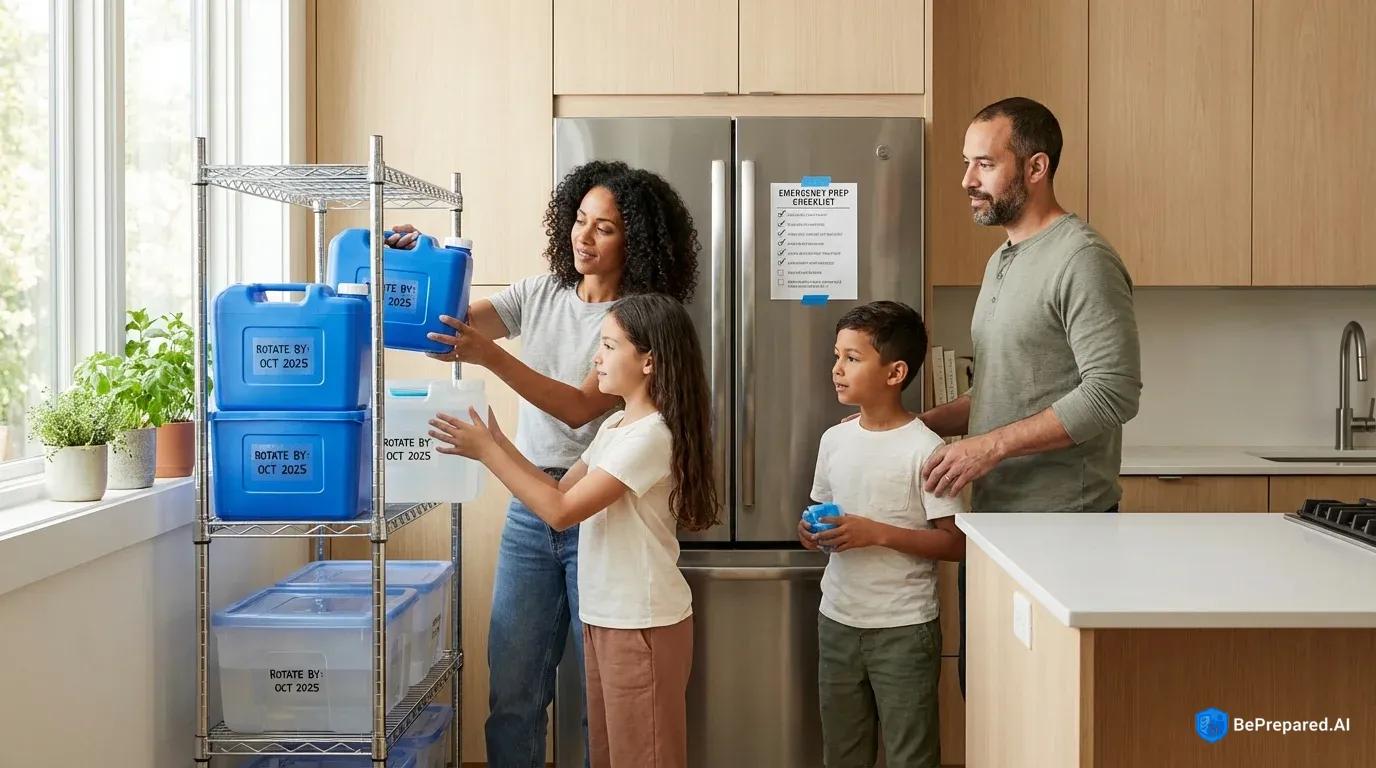
Rotation schedules prevent stagnation and ensure your water stays fresh. Even properly stored water should be rotated every six to twelve months . Mark each container with the date you filled it using a permanent marker or waterproof label. When rotation time comes, don't waste the old water—use it for watering plants, washing your car, or cleaning. Refill the containers with fresh tap water, and you're set for another cycle.
This rotation schedule also serves as a maintenance check. It lets you inspect containers for cracks, leaks, or any signs of algae growth. Catching these issues early means you can replace problem containers before an emergency happens.
Container cleaning requires attention to detail but isn't complicated. Before initial use and during each rotation, wash containers with dish soap and hot water. Rinse thoroughly until you can't smell or taste any soap residue. For extra sanitization, you can use a diluted bleach solution following EPA guidelines: add 1/8 teaspoon (or 8 drops) of regular, unscented liquid household chlorine bleach for each gallon of water. Swirl it around the container, let it sit for two minutes, then rinse completely with clean water . Let containers air dry completely before refilling—trapped moisture can promote bacterial growth.
The maintenance routine becomes second nature once you establish it. Set calendar reminders for rotation dates. Keep cleaning supplies dedicated to your water containers. Make it a twice-yearly ritual, perhaps when you change your clocks for daylight saving time. These small, consistent efforts ensure that when civil unrest disrupts your water supply, you're not just hoping your stored water is still good—you know it is.
Start small if the whole process feels overwhelming. Fill just two or three containers this week. Get comfortable with the cleaning and storage process. Next month, add a few more. Before you know it, you'll have built up a supply that gives you real peace of mind. That confidence transforms preparedness from an abstract concept into a reliable safety net for your family.
Download our free water storage maintenance checklist to track your rotation schedule and ensure you never miss important maintenance tasks. This simple tool helps you stay organized and keeps your emergency water supply ready when you need it most.