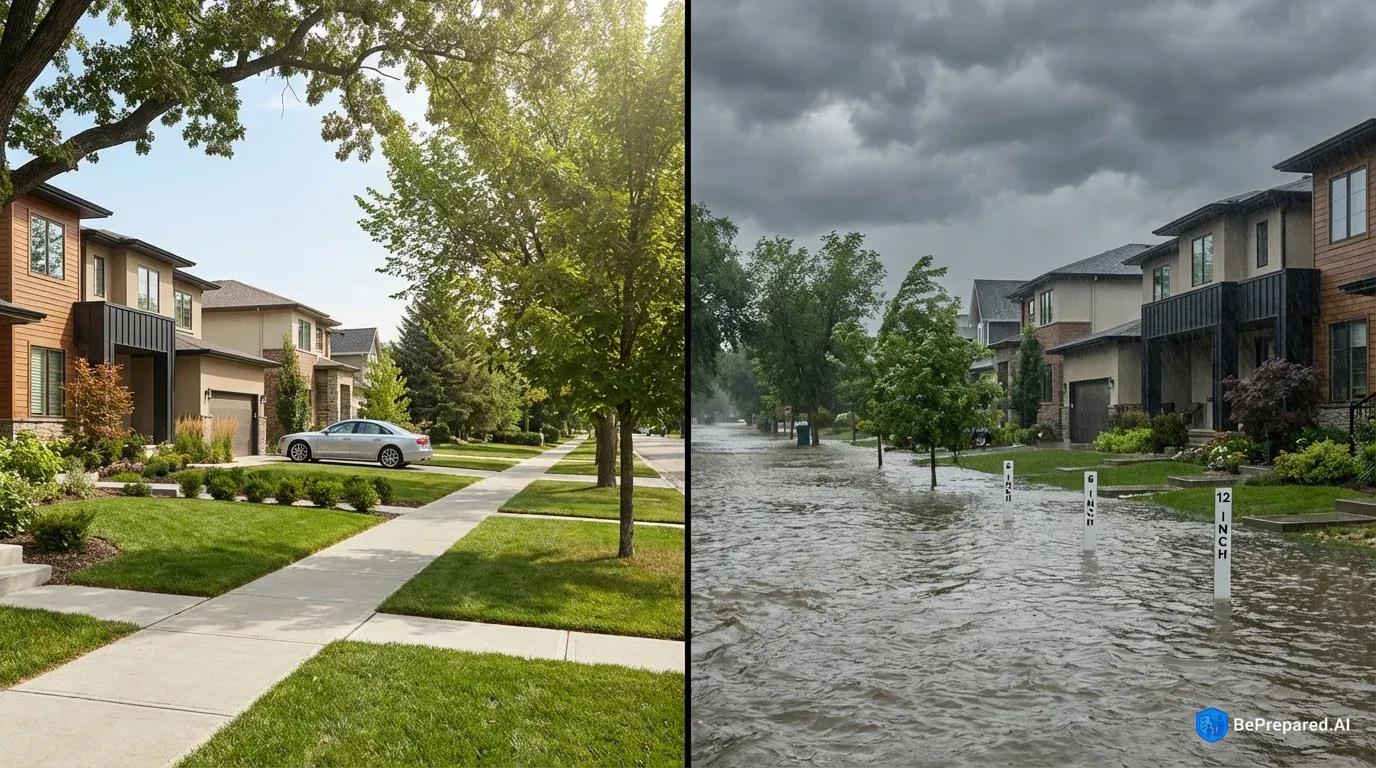
Understanding Flood Risks: Know Your Enemy
Picture this: You're driving home after work when you notice water pooling across a familiar intersection. It doesn't look deep—maybe just a few inches. You've driven through puddles before, right? This decision, made in a split second, could be the difference between getting home safely and becoming a statistic. Here's the thing about floods: they're deceptive. What looks manageable can turn deadly in seconds, and understanding what makes them so dangerous starts with recognizing that not all water is created equal.
Floods come in different varieties, each with its own personality and dangers. Flash floods are the sprinters of the flood world—they develop within minutes or hours of heavy rainfall, dam failures, or levee breaks. These are particularly treacherous because they give you almost no time to react. River floods develop more slowly as waterways overflow their banks, sometimes giving you days of warning. Coastal floods arrive with storm surges during hurricanes or nor'easters, while urban floods happen when city drainage systems can't keep up with rainfall, turning streets into rivers .
Here's what catches most people off guard: the power of moving water is exponentially greater than you'd expect. Six inches of moving water can knock a full-grown adult off their feet . Think about that for a moment. Half a foot of rushing water—about the height of a standard ruler—has enough force to sweep your legs out from under you. Scale that up, and one foot of moving water can sweep away most vehicles, including SUVs . That innocent-looking puddle across the road? It could be your car's worst enemy.
Your local flood risk depends on several factors that create a unique fingerprint for your area. Do you live near rivers, streams, or coastal areas? Are you in a low-lying area or at the bottom of a hill? Does your neighborhood have adequate drainage systems, or do streets flood after heavy rains? Check FEMA's flood maps to understand your specific risk level . Even areas not traditionally considered flood zones can experience flooding during unprecedented weather events—something we're seeing more frequently as weather patterns shift.
The good news? Once you understand your risk, you can take simple steps to protect yourself and your family. You don't need to become a survival expert overnight. Start with one small action today, and build from there.
- Water Supply
- 1 gallon per person per day, minimum 3-day supply
- First Aid Kit
- Basic kit with bandages, antiseptic wipes, and essential medications
- Battery Radio
- NOAA weather radio with extra batteries for emergency updates
- Flashlight
- LED flashlight with spare batteries for power outages
- Non-Perishable Food
- 3-day supply of canned goods and dry foods that don't need cooking
- Emergency Documents
- Copies of ID, insurance, and contact info in waterproof container
Before the Flood: Essential Preparations
Preparation isn't about paranoia. It's about peace of mind. When you've got your ducks in a row before disaster strikes, you can focus on keeping your family safe instead of scrambling to figure out what to do. Let's break down what you need to have ready, starting with the basics.
Your Emergency Kit Should Include:
Think of your emergency kit as your safety net. You're building it once so you don't have to think during a crisis. Here's what experts recommend you gather:
- Water for drinking and sanitation
- Non-perishable food for at least three days
- Battery-powered or hand-crank radio (NOAA Weather Radio if possible)
- Flashlights and extra batteries
- First aid kit with any prescription medications
- Whistle to signal for help
- Dust masks, plastic sheeting, and duct tape
- Moist towelettes, garbage bags, and plastic ties for sanitation
- Wrench or pliers to turn off utilities
- Manual can opener
- Local maps and a compass
- Cell phone with chargers and backup battery
Here's a sobering fact: more than 50% of flood-related drownings occur in vehicles . People see water on the road, think they can make it through, and find themselves in a life-threatening situation within seconds. This statistic underscores why your emergency kit needs to be portable and why you should never underestimate flood waters.
Don't let this list overwhelm you. You don't need to buy everything at once. Pick up a few items each week when you grocery shop. Before you know it, you'll have a complete kit without breaking the bank or stressing yourself out.
Protecting Your Important Documents:
Your birth certificates, insurance policies, property deeds, medical records, and financial documents represent your ability to rebuild after disaster strikes. Store important documents in waterproof containers , preferably in a safe deposit box or fireproof safe on an upper floor. But here's the game-changer: create digital copies of everything. Scan or photograph these documents and store them in secure cloud storage or on a USB drive you keep with your emergency kit. When floodwaters destroy your filing cabinet, those digital copies become your lifeline to insurance claims, FEMA assistance, and proving your identity.
Set aside one weekend afternoon to tackle this project. Put on some music, make it less of a chore, and knock it out. Future you will be incredibly grateful.
Your Communication Plan:
Designate an out-of-state contact person who can serve as a central communication hub for your family. During local disasters, out-of-state calls sometimes work better than local calls because the networks aren't as overwhelmed. Make sure every family member has this contact information memorized or written down in their wallet. Establish a meeting place outside your neighborhood in case you can't return home. Practice your plan—yes, actually practice it—because in an emergency, muscle memory kicks in when panic tries to take over.
Listen to local radio, NOAA radio or TV for updates during any emergency situation. These official channels give you the most accurate, up-to-date information about what's happening in your area and what actions you need to take.
Your communication plan doesn't need to be complicated. Keep it simple enough that even young children can remember the basics. Write it down, stick it on the fridge, and review it once or twice a year.
Evacuation Planning: When and How to Leave
Knowing when to leave can save your life, but the decision isn't always clear-cut. Let's walk through how to make this critical choice and execute it safely. The key is having a plan before you need it, so you're not making life-or-death decisions under pressure.
Step 1: Recognize Your Evacuation Triggers
Start monitoring weather conditions as soon as you hear about potential flooding in your area. Sign up for emergency alerts through your local emergency management office and download weather apps that send notifications . Your triggers to evacuate include official evacuation orders from local authorities—these are non-negotiable, you leave immediately.
Even if no official order exists, you should consider evacuating if you observe rapidly rising water, if you live in a flood-prone area and heavy rain persists, or if you feel unsafe. Trust your instincts. It's better to evacuate unnecessarily than to stay and regret it. You can always come back if the situation improves, but you can't undo a dangerous decision to stay.
Step 2: Plan Your Routes in Advance
Right now, before any flood threat exists, identify at least two evacuation routes from your home to higher ground. Drive these routes during normal conditions so you know exactly where you're going. Note landmarks, potential obstacles, and alternative paths. Identify where these routes might be vulnerable to flooding—low-lying areas, roads near streams, underpasses that collect water.
Print physical maps because GPS and cell service may fail during emergencies. Mark your routes clearly and keep these maps in your car and emergency kit. Technology is wonderful until it stops working, and paper maps never run out of battery.
Step 3: Prepare Your Home Before Leaving
When you've made the decision to evacuate, move quickly but methodically. Turn off utilities at the main switches if time permits and if you can do so safely—but never touch electrical equipment if you're standing in water . Move valuable items and important documents to upper floors. Unplug appliances to prevent electrical damage when power returns.
Take your emergency kit, medications, and any special items for children or pets. Lock your home and leave. Don't waste precious time trying to save everything. Your life is worth more than any possession.
Step 4: Execute Your Evacuation Safely
Never drive through flooded roadways—this cannot be emphasized enough . The road beneath the water may be washed out, the water may be deeper than it appears, or the current may be stronger than your vehicle can handle. Remember: almost half of all flood deaths occur in vehicles . If you encounter water on the road, turn around and take your alternate route.
If your car stalls in water, abandon it immediately and move to higher ground. Consider keeping your gas tank above half full when floods are forecast in your area, so you have enough fuel to evacuate if needed. Bring your pets—emergency shelters now accommodate animals, and you'll never forgive yourself for leaving them behind.
During and After: Safety and Recovery
The Martinez family thought the worst was over when the rain finally stopped. They returned to their home as soon as the water receded, eager to assess the damage and start cleaning up. What they didn't know was that the real dangers were just beginning. The standing water in their basement harbored bacteria from overwhelmed sewage systems, the drywall concealed toxic mold already spreading, and the electrical system was compromised in ways they couldn't see. Their story, unfortunately, is common. But it doesn't have to be yours.
During the flood itself, your safety rules are straightforward but critical. Stay out of floodwater whenever possible. It's not just water—it's a toxic soup of sewage, chemicals, debris, and potentially live electrical currents . Never drink flood water or use it to wash dishes, brush teeth, or prepare food . If you must walk through standing water, use a stick to check the ground ahead of you for holes or missing pavement.
Never let children play in or near floodwater, no matter how much it resembles a temporary swimming pool. If you're trapped in a building by rising water, go to the highest level—but don't climb into a closed attic where you could become trapped. Instead, get onto the roof if necessary and signal for help with a bright cloth or flashlight.
The aftermath of a flood presents hazards that persist long after the water disappears. Wait for the all-clear from local authorities before returning home—this isn't a suggestion, it's a safety imperative . When you do return, approach your home carefully. Check for structural damage before entering, including foundation cracks, warped floors, or sagging ceilings. If you smell gas or suspect a leak, leave immediately and call the gas company from a safe location.
Document everything with photos before you touch anything—your insurance company will need this evidence. Take pictures from multiple angles, capturing both overall damage and specific details. This documentation becomes your proof when filing claims and seeking assistance.
Floodwater is often contaminated with sewage, agricultural runoff, chemicals, and other hazardous materials . This means every surface the water touched is now contaminated. Wear protective gear including rubber boots, gloves, and eye protection during cleanup. Throw away any food, cosmetics, or medications that contacted floodwater—even canned goods if the cans are damaged.
Disinfect everything thoroughly. Remove and discard drywall, insulation, and flooring that was submerged, because these materials harbor mold that can make your family sick. The cleanup process is overwhelming, but taking shortcuts now creates health problems and structural issues that haunt you for years.
Your recovery journey starts with patience and proceeds one step at a time. Contact your insurance company immediately, even before you start cleaning. Take only emergency steps to prevent further damage, like covering holes in the roof with tarps, but keep receipts for everything. FEMA disaster assistance may be available if your area is declared a federal disaster area .
Connect with local disaster relief organizations—they provide not just supplies but also emotional support during this traumatic time. Don't try to do everything alone. Accept help when it's offered. Talk to neighbors who've been through floods before. Join community recovery groups where you can share experiences and resources.
The road back to normal is long, but thousands of families have walked it before you. Their experience shows that preparation, patience, and community support make all the difference between merely surviving and truly recovering. Break the recovery process into small, manageable tasks. Celebrate each milestone, no matter how small. Clean one room at a time. Replace one damaged item at a time. Heal one day at a time.
Take Your First Step Today
Floods don't have to be catastrophic for your family. With proper preparation, a clear evacuation plan, and knowledge of how to stay safe during and after the event, you transform from a potential victim into a prepared survivor. The difference between those two outcomes often comes down to the simple steps you take today.
Start small. You don't need to do everything at once. Pick one action from this guide—maybe it's checking FEMA's flood maps for your area, or buying a few emergency supplies on your next shopping trip, or simply having a conversation with your family about where you'd meet if you couldn't get home. That one small step puts you ahead of most people.
Then next week, take another step. Before you know it, you'll have a complete flood preparedness plan without ever feeling overwhelmed. The best time to prepare for a flood is long before the rain starts falling. The second best time is right now.