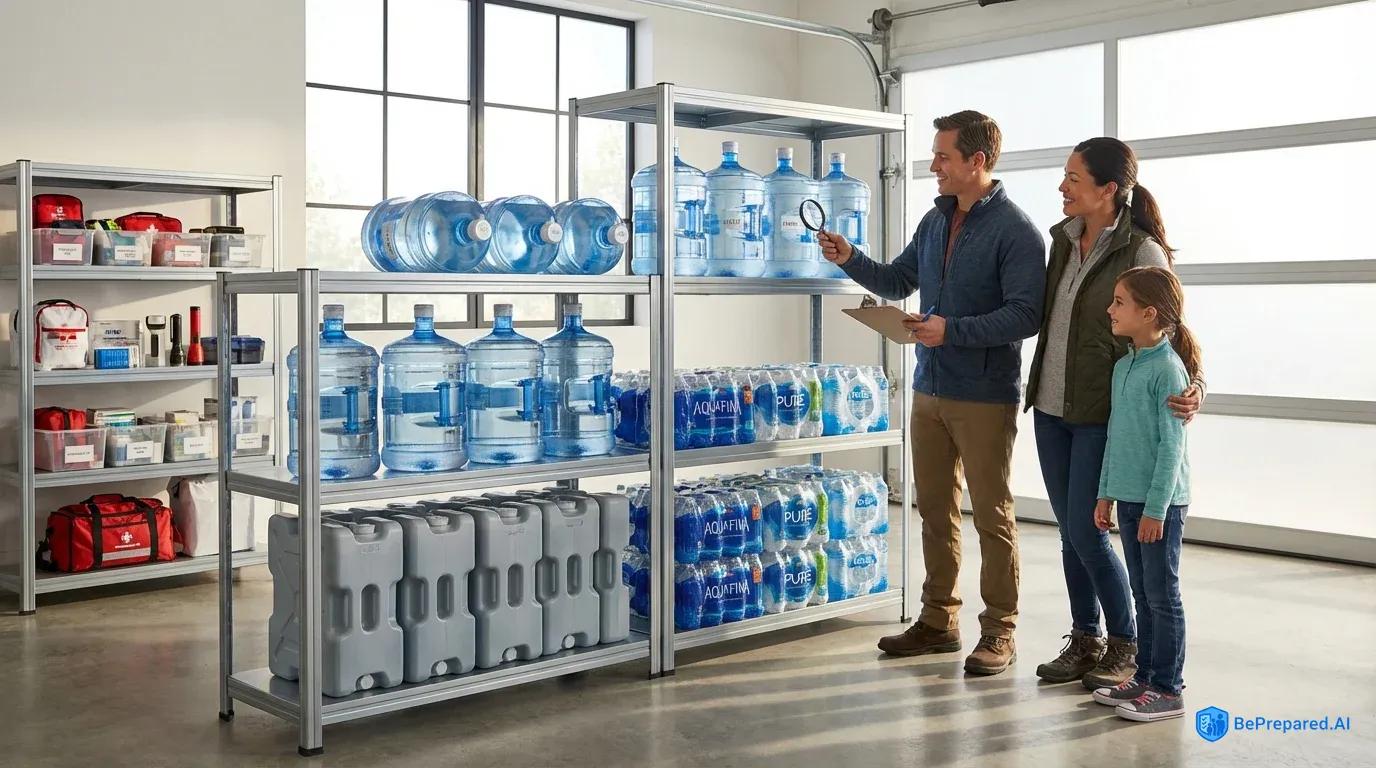
Why You Need an Emergency Water Supply
Picture this: You wake up one morning, shuffle to the kitchen for your first cup of coffee, and turn on the tap. Nothing. You try again. Still nothing. A water main broke overnight, and the city has shut down service to your entire neighborhood. No timeline for repairs yet—could be hours, could be days. How much water do you have on hand right now?
Most of us take clean, running water completely for granted. According to the EPA, the average American uses between 80 and 100 gallons every single day for drinking, cooking, washing dishes, showering, and flushing toilets. That's enough to fill a standard bathtub more than twice. We barely think about it until the moment we turn the faucet and nothing comes out. Hurricanes, earthquakes, floods, winter storms, infrastructure failures, and even contamination events can all disrupt water service without warning. When disaster strikes, bottled water disappears from store shelves within hours, leaving unprepared families scrambling.
Here's the sobering reality: medical experts generally agree that most people can survive only about three days without water, though this varies based on conditions and individual health. Your body depends on constant hydration to regulate temperature, transport nutrients, remove waste, and keep every organ functioning. During a crisis, when stress levels spike and you might be doing physical work like cleaning up debris or boarding windows, you'll need even more water than usual. Having an emergency water supply isn't paranoid—it's practical planning that could protect your family's health when normal services fail.
The good news? Building a water supply is one of the easiest preparedness steps you can take. You don't need special skills or expensive equipment. You just need to understand how much water your household needs and where to store it. Let's break this down into simple, manageable steps.
Calculate Your Basic Water Needs
Let's talk numbers, because understanding exactly how much water you need is the foundation of any preparedness plan. The Federal Emergency Management Agency (FEMA) recommends you store at least one gallon of water per person per day for drinking and sanitation purposes . This might sound like a lot when you're thinking about storage space, but it's actually the bare minimum for survival situations.
That one gallon breaks down into roughly half for drinking and half for basic hygiene and food preparation. You'll need water to brush your teeth, wash your hands after using the bathroom, rinse dishes, and prepare any freeze-dried or dehydrated emergency foods. If you've ever gone camping with limited water, you know how quickly a gallon disappears when you're being conscious about every drop.
For evacuation scenarios, FEMA recommends maintaining a minimum three-day supply . That means three gallons per person in your household. For a family of four, you're looking at 12 gallons total—roughly one and a half of those large office water cooler bottles. This amount gives you enough water to grab and go if you need to evacuate quickly, whether you're heading to a shelter or staying with relatives outside the affected area.
However, if you're planning to shelter in place during an extended emergency—think major winter storm, widespread power outage, or earthquake aftermath—you'll want to stock significantly more. Experts suggest a two-week supply for shelter-in-place situations . Using the basic calculation, that's 14 gallons per person. Your family of four now needs 56 gallons stored somewhere in your home. That might sound daunting, but we'll cover practical storage solutions that make this manageable even in apartments or smaller homes.
Consider your household size carefully when calculating. Don't forget to count everyone: yourself, your spouse or partner, kids of all ages (yes, even teenagers who claim they "never drink water"), and any elderly relatives living with you. Babies drinking formula need clean water for mixing, and young children often need help with handwashing and hygiene tasks that consume additional water. Write down your household number and multiply by 14 gallons—that's your baseline target for a solid two-week emergency supply.
Start with a three-day supply if two weeks feels overwhelming. You can always build up your storage over time. The key is to start somewhere rather than putting it off because the full amount seems too big.
- Storage Duration
- Minimum 3-day supply, recommended 2-week supply per household member
Additional Water Needs Calculator
Not everyone fits the standard one-gallon-per-day calculation. Several factors can significantly increase your water requirements, and failing to account for them could leave you dangerously short during an emergency. Let's break down the special circumstances that require extra water storage.
Medical Conditions: People with diabetes, kidney disease, or heart conditions often need additional hydration. Anyone taking diuretic medications will require more water to prevent dehydration. Individuals with chronic conditions should consult their healthcare provider about emergency water needs. Add an extra half gallon per day for each person with significant medical needs. This isn't being excessive—it's being realistic about health requirements that don't disappear during emergencies.
Pregnancy and Nursing: Pregnant women need extra hydration to support increased blood volume and amniotic fluid. Nursing mothers require 2-3 gallons per day to maintain milk production and their own hydration . This is double or triple the standard recommendation—don't underestimate this need. Dehydration directly impacts milk supply, which could endanger an infant during an emergency. If you're nursing or know you'll be nursing during your storage period, this extra water is non-negotiable.
Pets and Service Animals: Dogs and cats are family members who depend entirely on you for water. Small pets (under 20 pounds) need approximately one quart daily . Medium to large pets require one-half to one full gallon per day depending on size and activity level. Service animals, working dogs, and very active pets need amounts on the higher end. Don't forget other pets like rabbits, birds, or reptiles that also need clean water. Your emergency plan isn't complete if it doesn't include the animals counting on you.
Climate and Environmental Factors: Hot climates dramatically increase water consumption through sweating and cooling needs. If you live in desert regions or areas with extreme summer heat, add an extra half gallon per person daily. High altitude locations also increase hydration requirements. Consider seasonal needs—your summer emergency supply should exceed your winter supply in hot climates. Think about when emergencies are most likely in your area and plan accordingly.
Physical Activity Levels: Emergency situations often involve strenuous physical work: moving debris, boarding windows, carrying supplies. Anyone doing heavy physical labor can easily require an additional one to two quarts per day. Factor in the reality that disasters create physically demanding situations. You won't be sitting calmly on the couch—you'll be active, stressed, and burning through water faster than normal.
Take time to honestly assess your household's unique needs. Add up all the special circumstances, then include a buffer of about 10-20% beyond your calculated total. Running out of water isn't an option, so err on the side of having too much rather than too little.
Storage Container Options and Requirements
Choosing the right containers makes the difference between safe, drinkable water and potentially contaminated supplies that could make you sick during an emergency. Not all containers are created equal, and understanding your options helps you build a storage system that fits your space, budget, and needs.
Store-Bought Bottled Water represents the easiest option for beginners. Those cases of water bottles you buy at the grocery store are ready to go, properly sealed, and clearly dated. Manufacturers typically print expiration dates on bottled water, with most brands remaining safe for one to two years when stored properly. The advantages are obvious: no preparation required, highly portable for evacuation, and individual bottles are perfect for rationing. The downside? Cost and space. Storing two weeks' worth of water for a family in individual bottles requires significant room and can get expensive. However, the convenience factor makes bottled water excellent for your grab-and-go evacuation kit.
Food-Grade Water Storage Containers offer a more economical solution for larger quantities. These purpose-built containers come in sizes ranging from 5-gallon jugs (similar to office water coolers) up to 55-gallon drums. The key phrase here is "food-grade"—containers must be made from materials approved for storing consumables, typically marked with a recycling symbol #1, #2, or #4. Never use containers that previously held milk, juice, or any non-water beverages, as residual sugars and proteins create perfect breeding grounds for bacteria that you cannot fully eliminate. Containers that held chemicals or non-food products are absolutely off-limits, regardless of how well you clean them.
Multi-Gallon Jugs in the 5-7 gallon range strike an excellent balance for most households. They're large enough to store meaningful quantities but still manageable for one person to lift and pour. These jugs fit in closets, under beds, or in garage corners. They're also affordable, typically costing $10-20 each. A family of four needs eight of these 7-gallon containers to reach their two-week supply—totally doable in most living situations. This is probably the sweet spot for people just getting started with water storage.
Large Drums and Tanks (55 gallons and up) make sense if you have garage or basement space and want to minimize the number of containers you're managing. A single 55-gallon drum holds nearly a month's supply for two people. However, consider that these containers are essentially immobile once filled—water weighs about 8.3 pounds per gallon, making a full 55-gallon drum over 450 pounds. You'll need a pump to access the water, and rotation becomes more complex. These work great for long-term storage but aren't ideal if you might need to move quickly.
Temperature and Light Considerations apply to all storage types. Keep containers in cool, dark locations away from direct sunlight, which degrades plastic and promotes algae growth. Avoid storing water near gasoline, kerosene, pesticides, or other chemicals, as vapors can permeate plastic over time. Ideal storage temperature ranges from 50-70°F. Basements work wonderfully if they're not prone to flooding; climate-controlled garages or interior closets also work well. A dark corner of a bedroom closet works perfectly fine if that's your only option.
Don't let perfect be the enemy of good here. Start with whatever containers fit your budget and space. You can always upgrade or expand your system later. The important thing is to have water stored, period.
Water Rotation Schedule
Storing water is only half the battle—maintaining your supply through proper rotation ensures you'll actually have safe, drinkable water when you need it. Think of water storage like a living system that requires regular attention, not a one-and-done project you can forget about.
Step 1: Label Everything Immediately. The moment you fill or purchase water containers, grab a permanent marker and write the date clearly on each one. Use a format like "Filled: 03/2024" or "Expires: 03/2026" for store-bought bottles. This simple step prevents the common problem of staring at a dozen containers during an emergency with no idea which ones are fresh. Some people use colored tape systems—blue tape for containers filled in spring, green for summer, and so on—making rotation visual and obvious at a glance.
Step 2: Establish Your Replacement Timeline. Store-bought bottled water keeps for the duration printed on the label, so mark your calendar to check expiration dates annually. For containers you fill yourself with tap water, experts recommend replacing water every six months . This might seem excessive if your tap water is chlorinated (which helps prevent bacterial growth), but it's the safest approach. Set recurring reminders on your phone for rotation days—perhaps the first day of spring and fall each year.
Step 3: Clean Containers Before Refilling. When rotation day arrives, don't just dump old water and refill. Empty containers need proper sanitization. The CDC recommends cleaning with a solution of one teaspoon of unscented liquid household chlorine bleach per quart of water . Swirl this solution around the entire interior of the container, let it sit for 30 seconds, then rinse thoroughly with clean water. Allow containers to air dry completely before refilling—trapped moisture can harbor bacteria.
Step 4: Use Rotated Water Wisely. Water you're rotating out doesn't need to go to waste. Use it for watering plants, washing your car, mopping floors, or filling your pet's water bowl. Some people use rotation water for their next batch of laundry. This practical approach means you're not pouring money down the drain every six months. Your garden will thank you, and you'll feel better about the rotation process knowing nothing goes to waste.
Step 5: Track Your System. Create a simple tracking sheet listing each container, its capacity, fill date, and next rotation date. Keep this log with your emergency supplies or take a photo and store it on your phone. This system prevents confusion and ensures nothing gets overlooked. You can use a spreadsheet, a notebook, or even a whiteboard in your storage area. Whatever method you'll actually use is the right method for you.
The rotation schedule might feel like unnecessary work when you're first establishing your water supply, but it becomes second nature quickly. Many families tie water rotation to other seasonal tasks—changing smoke detector batteries, flipping mattresses, or switching out seasonal clothing. The peace of mind knowing your emergency water is fresh and safe is absolutely worth the minimal effort twice a year.
Your First Step: Start Small and Build Up
Feeling overwhelmed by all these numbers and requirements? Take a breath. You don't need to do everything at once. Here's your simple starting point: buy two cases of bottled water this week. That's it. Just two cases.
Those two cases give you about three gallons—enough for one person for three days or a couple for a day and a half. It's not your complete supply, but it's infinitely better than having nothing when the water stops flowing. Put those cases somewhere accessible, mark today's date on them with a marker, and congratulate yourself. You've started.
Next week, grab two more cases. The week after, maybe pick up a 5-gallon jug and fill it from your tap. Before you know it, you'll have a respectable emergency water supply without ever feeling like you spent a fortune or turned your home into a warehouse. Building preparedness works best when you approach it gradually and consistently rather than trying to do everything at once.
Calculate your household's specific needs using the guidelines above. Write down that number. Then break it into manageable chunks. Maybe you commit to adding one week's worth of water per month until you reach your two-week goal. Maybe you decide to fully stock water for one family member at a time. There's no wrong approach as long as you're moving forward.
The families who succeed at preparedness are the ones who start small, stay consistent, and don't let perfection paralyze them into inaction. Your future self—the one dealing with a water main break or boil order—will be incredibly grateful you took these simple steps today.