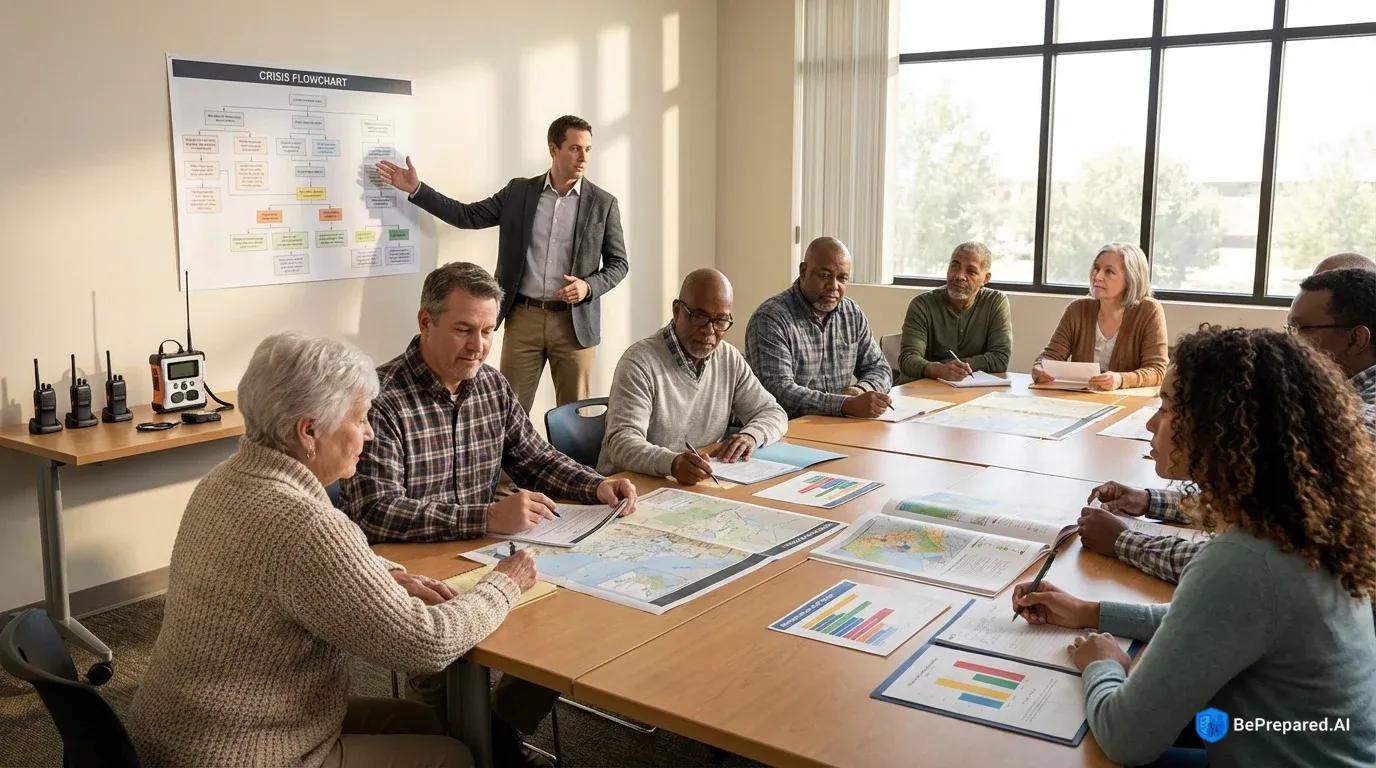
Understanding the Scope of Community Organization During Civil Unrest
The summer of 2020 revealed how rapidly stable neighborhoods transform into zones of uncertainty. Businesses that had served communities for generations shuttered their windows with plywood. Residents who had never questioned their security suddenly evaluated escape routes and organized informal protection networks. Communities that weathered the storm most effectively shared one characteristic: they had already established organizational frameworks capable of rapid scaling to meet escalating challenges.
Civil unrest manifests across a spectrum of severity. Peaceful protests occasionally turn confrontational. Widespread riots involve property destruction, looting, and violence. The critical distinction between scenarios lies not in the triggering event but in the breakdown of normal civic functions. When emergency services become overwhelmed, when supply chains falter, when the implicit social contract governing daily life fractures—community organization transitions from optional civic engagement to essential survival infrastructure.
Understanding this spectrum helps communities calibrate their response appropriately. A neighborhood watch suitable for deterring opportunistic crime during protests requires fundamentally different protocols than coordinating security during a complete breakdown of law enforcement capability. The organizational requirements scale with the severity of the disruption, demanding increasingly sophisticated coordination as situations deteriorate.
The legal framework governing community response during civil unrest operates within narrow but clearly defined boundaries. Citizens retain the right to organize for mutual protection, to share resources voluntarily, and to communicate about threats to public safety. These rights exist within strict limitations. Vigilantism—taking law enforcement into civilian hands—crosses legal and ethical lines that transform defenders into criminals.
Research from the National Institutes of Health examining community resilience during civil unrest emphasizes that the most effective community organizations maintain clear coordination with legitimate authorities rather than attempting to replace them . This coordination proves especially critical during the chaotic early hours of an incident. Misinformation spreads rapidly during these periods. Well-intentioned citizens may inadvertently obstruct professional emergency response without established communication channels to verify information and coordinate actions.
Communities with organized response plans achieve 47% better recovery outcomes compared to unorganized neighborhoods . This advantage compounds over time. The initial organizational capacity enables faster resource mobilization, which preserves more community infrastructure, which in turn accelerates long-term recovery. The causality flows bidirectionally: communities that invest in organizational capacity before crisis prove more resilient during crisis, and that resilience reinforces social bonds that strengthen future organizational capacity.
Food security provides perhaps the most tangible example of organizational advantage. During civil unrest, supply chains face multiple simultaneous pressures. Delivery drivers may refuse to enter affected areas. Retail establishments may close preemptively. Panic buying can strip shelves within hours. Distribution infrastructure may suffer physical damage.
Organized communities maintain 82% better food security during disruptions . They achieve this through coordinated stockpiling, diversified supply sources, and established distribution networks that activate automatically when commercial systems fail. This isn't merely about having more food—it's about having systems that ensure equitable access to available resources, preventing the hoarding and price gouging that exacerbate social tensions during crisis.
The hierarchy of community needs during civil unrest follows predictable patterns that inform organizational priorities. Immediate security concerns dominate the first 24-72 hours as communities assess threat levels and establish protective measures. This phase requires rapid activation of pre-planned protocols because the time available for deliberation essentially vanishes. Communication infrastructure becomes paramount during this initial period—knowing what's actually happening, distinguishing verified threats from rumor, and coordinating response across the community.
As situations extend beyond the initial crisis window, resource management ascends the priority hierarchy. Food, water, medical supplies, and fuel transition from background concerns to active challenges requiring systematic management. Communities that survive the immediate security crisis but lack resource management frameworks often fracture during this secondary phase. Scarcity generates internal conflict. The social cohesion that enabled collective security deteriorates when neighbors compete for dwindling supplies.
Long-term stability depends on maintaining community morale and purpose. Humans tolerate extraordinary hardship when they perceive collective effort toward shared goals within a framework of fairness. Conversely, even moderate deprivation can fracture communities when people perceive inequitable distribution or lack clear understanding of the overall situation. This psychological dimension of community organization often receives insufficient attention from technically-minded preparedness planners. Yet it frequently determines whether communities emerge from crisis stronger or permanently damaged.
The scope of effective community organization extends beyond the immediate neighborhood. It encompasses coordination with adjacent communities and higher-level governmental structures. Isolated neighborhood resilience provides limited protection when surrounding areas descend into chaos. The most sophisticated community organizations establish liaison relationships with adjacent neighborhoods. They create mutual aid agreements and information sharing protocols that extend protective coverage.
Maintaining communication channels with county emergency management, law enforcement command structures, and municipal government ensures that community-level responses align with broader stabilization efforts. Without this coordination, neighborhood initiatives may work at cross-purposes with professional emergency response, creating confusion and potentially dangerous conflicts over jurisdiction and authority.
Establishing Command and Communication Networks
Picture the first hours after civil unrest begins escalating in your area. Your phone buzzes with contradictory messages. A neighbor reports looting three blocks away. Social media shows fires in the commercial district. Another message claims police have abandoned the precinct.
Without established communication protocols, each household makes isolated decisions based on incomplete information. Some families evacuate unnecessarily. Others fail to take basic precautions. The community's collective response capacity fragments into dozens of individual reactions. This scenario repeats in every unorganized community facing crisis.
Effective command structure begins with pre-designated leadership roles that activate automatically when specific trigger conditions occur. The structure should mirror established emergency management frameworks using the Incident Command System (ICS) principles that professional responders employ. This isn't about militarizing civilian neighborhoods. It's about applying proven organizational frameworks that prevent the chaos of competing authorities and unclear responsibility.
A community coordinator serves as the primary decision-maker and external liaison. Section chiefs manage security, resources, communications, and medical response. This hierarchy must be established during calm periods through community meetings where residents discuss, debate, and ultimately consent to the structure. The legitimacy of the command structure depends on this consensual foundation rather than imposed authority.
The leadership selection process carries enormous weight because authority during crisis must rest on legitimate foundations. Communities that simply allow the loudest voices or most forceful personalities to assume control often experience internal conflict that undermines response effectiveness. Better approaches involve structured selection considering relevant expertise, community respect, availability during crisis, and demonstrated judgment.
A retired police officer might seem ideal for security coordination. However, if their work schedule takes them out of the area regularly, that expertise becomes unavailable precisely when needed. The selection process should explicitly address succession planning. Who assumes each role if the primary designee is unavailable? Secondary and tertiary designations ensure continuity even when specific individuals cannot fulfill their assigned roles.
Multi-channel communication systems provide critical redundancy during crisis. The primary channel might be a dedicated smartphone application or group messaging platform for rapid information dissemination. This must be backed by radio communications (FRS/GMRS or amateur radio depending on community capability). Telephone trees serve those without smartphones. Physical messaging systems function when electronic communications fail entirely.
Establishing these systems requires methodical preparation. The smartphone application or messaging platform needs setup during normal conditions with all participating households enrolled and the system tested regularly. Monthly or quarterly communication drills serve dual purposes: they verify the system functions correctly and they train participants in proper usage protocols.
These drills should simulate realistic scenarios. A security threat requiring rapid notification. A resource request from a vulnerable household. Coordination with law enforcement during an evolving situation. The muscle memory developed through repetition ensures that during actual crisis, people default to trained protocols rather than improvising ineffectively.
Radio communications provide the most resilient backup system but require more sophisticated preparation. Family Radio Service (FRS) and General Mobile Radio Service (GMRS) radios offer accessible entry points. FRS requires no licensing. GMRS requires a simple FCC license but no examination.
A community might designate specific channels for different purposes. Channel 1 for security reports. Channel 2 for resource coordination. Channel 3 for medical emergencies. This channel segregation prevents the confusion that occurs when all traffic flows through a single frequency, allowing urgent messages to get lost in routine communications.
Amateur radio (ham radio) provides significantly enhanced capability. Long-range communication extends beyond the immediate neighborhood. Digital modes enable text messaging and data transfer when voice communications prove difficult. Access to repeater networks multiplies effective range. However, amateur radio requires licensing that demands study and examination.
Communities serious about communication resilience should encourage multiple members to obtain amateur radio licenses. This creates a cadre of skilled operators who can maintain communications even during widespread infrastructure failure. The Federal Communications Commission offers three license classes—Technician, General, and Amateur Extra—each providing progressively greater privileges and requiring increasing technical knowledge.
Information verification protocols prevent the rumor cascades that frequently transform manageable situations into panic-driven disasters. The communication hierarchy should designate specific individuals as authorized to release information to the broader community. Reports from individual community members flow to section chiefs who evaluate credibility, seek corroboration, and determine appropriate response before information disseminates widely.
This doesn't mean suppressing information. It means processing it through a verification filter that distinguishes confirmed threats from speculation. The filter protects the community from acting on false information while ensuring that verified threats receive rapid dissemination and appropriate response.
The verification process follows structured steps. Initial reports receive preliminary classification based on source reliability. Direct observation by trusted community members carries more weight than third-hand social media posts. For significant reports, the communication coordinator attempts independent verification through multiple sources. Checking local emergency scanner traffic. Contacting police liaison officers. Requesting visual confirmation from community members positioned to observe.
Only verified information receives broad distribution through primary communication channels. Unverified reports are flagged clearly as unconfirmed when sharing is necessary for precautionary purposes. This classification system prevents the community from dismissing all reports as unverified while maintaining appropriate skepticism about unconfirmed information.
Coordination with local law enforcement represents perhaps the most critical element of community command structure. Establishing these relationships requires proactive outreach during normal conditions. Community leaders should schedule meetings with precinct commanders, neighborhood patrol officers, and county emergency management coordinators. These meetings introduce the community organization, explain its purpose, and establish communication protocols.
The liaison relationships operate bidirectionally. Law enforcement gains a force multiplier. Organized communities provide reliable information about developing situations, reducing the fog of war that hampers professional response. Communities gain prioritized attention and guidance that keeps civilian response aligned with overall public safety strategy.
The liaison protocol should include designated contact persons on both sides. Preferred communication methods vary by department and situation. Clear escalation procedures for different threat levels ensure that minor incidents don't overwhelm command staff while critical threats receive immediate attention. A community security coordinator might have direct phone numbers for the precinct watch commander and county emergency operations center. This enables rapid information exchange that benefits both parties.
Regular interaction maintains these relationships. Quarterly meetings to review community preparedness plans. Invitations for law enforcement to participate in community drills. Ongoing dialogue about emerging threats. These activities build the trust and familiarity that prove invaluable during crisis. When civil unrest erupts, the precinct commander already knows your community coordinator by name, understands your organizational structure, and trusts your information because the relationship has been tested and proven during calm periods.
- Perimeter Grid Quadrants
- Tactical map divided into alpha-numeric sectors (A1-D4) for precise threat location reporting and team coordination
- Hardened Response Points
- Pre-designated reinforced positions with overlapping fields of fire, equipped with emergency supplies and comm equipment
- QRF Assembly Points
- Quick Reaction Force staging areas with vehicle access, positioned for optimal response times to all sectors
- Fallback Positions
- Tiered defensive positions with pre-staged ammunition and supplies, connected by covered routes
- Command & Control Hub
- Central monitoring station with real-time sensor feeds, communications array, and tactical display of all defensive elements
Security and Surveillance Systems
The perimeter of any community exists as much in the collective awareness of its residents as in any physical boundary. During civil unrest, this perimeter transforms from an abstract concept into a concrete operational reality requiring systematic monitoring and coordinated response. The difference between communities that maintain security and those that suffer repeated incidents often comes down to whether residents can answer a simple question: who's watching, and what happens when they see something?
The foundation of effective surveillance lies in comprehensive area mapping that identifies critical observation points, access routes, vulnerable infrastructure, and natural choke points. This mapping process should involve walking every street in the community. Note sight lines. Identify positions that provide visibility over multiple approaches. Mark locations that require special attention due to high value (community supply caches) or vulnerability (isolated households with elderly or disabled residents).
The observation network builds from this mapping foundation. Rather than random or ad-hoc watching, effective systems assign specific observation sectors to designated teams operating in coordinated shifts. A residential community might divide into four quadrants, each monitored by a team of 3-4 observers working 6-hour shifts. This structured approach ensures continuous coverage while preventing observer fatigue that degrades alertness.
The observers need standardized reporting formats. Not merely "I saw something suspicious" but structured reports including precise location, detailed description, time, and assessed threat level. Standardized reporting enables pattern recognition across multiple observers and shifts. What appears as isolated incidents to individual observers may reveal coordinated probing when reports are aggregated and analyzed.
Technology extends human observation capability significantly when deployed systematically. Consumer-grade security cameras positioned at key access points create a persistent surveillance layer that operates continuously without human fatigue. However, technology deployment requires careful planning to avoid creating false security. Cameras without monitoring provide only forensic value after incidents occur.
Effective systems integrate cameras into an active monitoring framework. Feeds are actually watched during heightened alert periods. At minimum, motion detection triggers immediate alerts to security coordinators. Cloud-based camera systems offer the advantage of off-site storage that preserves footage even if local equipment is damaged or stolen. However, they depend on internet connectivity that may fail during widespread disruption.
The surveillance network must account for nighttime operations when visibility degrades but threat levels often increase. Night vision devices, thermal imaging, and strategic lighting each play distinct roles. Passive observation using night vision or thermal imaging allows security teams to monitor approaches without revealing observer positions. This maintains tactical advantage by keeping potential threats unaware they're being observed.
Conversely, motion-activated lighting in critical areas serves deterrent purposes. Suddenly illuminating an approach route signals to potential threats that they've been detected while providing defenders clear visual identification. The balance between covert observation and overt deterrence depends on specific community geography and threat assessment. Some areas benefit from obvious surveillance that deters casual criminals. Others require covert monitoring to gather intelligence about more sophisticated threats.
Perimeter monitoring strategies vary based on community layout and resources. Suburban neighborhoods with multiple access points require different approaches than gated communities with limited entry routes. The monitoring strategy should identify primary access routes requiring constant observation and secondary routes where periodic patrols or technology-based monitoring suffices. This risk-based approach concentrates limited human resources where they provide maximum security value rather than attempting comprehensive coverage that stretches capabilities too thin.
Threat assessment protocols transform observations into actionable intelligence. Not every unfamiliar vehicle or pedestrian represents a threat. Overreaction to benign activity wastes resources while creating community anxiety. Assessment criteria should consider multiple factors. Time of day. Behavior patterns. Known versus unknown individuals. Correlation with other reports. Current threat level.
A structured threat classification system provides common language that enables coordinated reaction. Green indicates routine activity requiring no special response. Yellow designates suspicious activity requiring enhanced monitoring. Orange signals probable threat requiring response preparation. Red indicates immediate threat requiring active response. This color-coded system allows rapid communication of threat levels without lengthy explanations.
Response protocols must be calibrated to threat levels with clear escalation procedures. Yellow-level suspicious activity might trigger increased observation and notification to adjacent sectors. Security teams maintain normal posture but heighten awareness. Orange-level probable threats activate security response teams while simultaneously notifying law enforcement liaisons. Teams move to predetermined positions. Equipment is staged for rapid deployment.
Red-level immediate threats initiate full community alert protocols and emergency law enforcement contact. All security personnel activate. The community receives notification through primary communication channels. Law enforcement receives immediate notification with detailed threat information. These graduated responses prevent both under-reaction that allows threats to develop and over-reaction that depletes community resources responding to false alarms.
The security posture must balance deterrence and provocation carefully. Overt displays of armed patrols may deter opportunistic criminals but can escalate tensions with protesters or attract unwanted attention from authorities concerned about vigilantism. More subtle indicators signal community organization without provocative displays. Organized vehicle patrols. Visible communication between residents. Well-maintained properties. Strategic lighting. These elements communicate that the community is organized and alert without appearing militarized or confrontational.
Non-lethal deterrence methods deserve primary emphasis in community security planning. Physical barriers like temporary vehicle obstacles at key access points increase security without requiring confrontation. Jersey barriers, parked vehicles, or even heavy planters can channel vehicle traffic through controlled checkpoints during heightened threat periods. Strategic use of thorny vegetation along perimeter fences creates natural barriers that deter casual intrusion.
Maintained sight lines that eliminate concealment opportunities reduce the tactical advantage of potential threats. Trimming vegetation near property lines. Removing abandoned vehicles or equipment that provides cover. Installing lighting that eliminates dark zones. These environmental design measures make the community a harder target through passive means.
Sound-based deterrence including vehicle alarms, air horns, or dedicated alarm systems can disrupt criminal activity while alerting the community. The psychological impact of sudden loud noise often causes criminals to abort their activities even when no physical response materializes. Chemical deterrents like pepper spray provide personal protection options that avoid the legal and ethical complications of lethal force.
The security framework must explicitly address rules of engagement that keep community response within legal and moral boundaries. Community members providing security operate as civilians with the same legal authorities and constraints as any citizen. They can observe and report. They can protect themselves and others from immediate threats using reasonable force. They cannot detain, interrogate, or punish suspected criminals.
These boundaries must be reinforced constantly through training and leadership emphasis. The stress of crisis situations can lead well-intentioned people toward actions they would never consider during normal conditions. Clear rules of engagement, regular training on legal constraints, and strong leadership that models appropriate behavior all help maintain discipline when tensions run high.
The legal standard for civilian use of force centers on reasonable fear of imminent serious bodily harm or death. This standard applies whether the threat comes from criminal activity during civil unrest or any other circumstance. Community security personnel must understand that they cannot use force to protect property alone, cannot pursue fleeing suspects, and cannot employ force as punishment for criminal activity.
Documentation of all security incidents provides both operational intelligence and legal protection. Detailed logs recording observations, decisions, and actions create a record that can defend against false accusations while identifying patterns that inform future security planning. Video documentation when available provides even stronger evidence of appropriate conduct.
Resource Management and Distribution
The grocery stores that anchor modern food security operate on supply chains measured in days, not weeks. Distribution centers maintain inventory calculated to meet anticipated demand with minimal excess. When civil unrest disrupts transportation networks or triggers panic buying, this just-in-time efficiency transforms into a critical vulnerability. The community that assumes commercial supply chains will continue functioning during crisis plans for a scenario that rarely occurs.
Effective resource management begins with acknowledging that communities must provide their own security of supply when normal systems fail. This requires preparation across multiple dimensions. Individual household stockpiling. Community-level reserve supplies. Diversified supply sources. Established distribution networks. Each element reinforces the others to create resilient resource security.
The stockpiling strategy operates at both household and community levels. Individual households should maintain supplies of shelf-stable foods, water, medications, and essential supplies. The American Red Cross recommends a minimum two-week supply for each household member. However, household-level preparation alone creates inequality. Some families have resources and knowledge to prepare extensively. Others lack storage space, financial capacity, or awareness.
Community-level stockpiling addresses these disparities through collective resource pools that provide backup for vulnerable households. The community supply serves multiple functions. It provides emergency assistance to households that exhausted their individual supplies. It supports community members who lacked resources to prepare adequately. It enables coordinated distribution that prevents hoarding and ensures equitable access during scarcity.
Establishing community supply caches requires careful planning regarding what to store, where to store it, who controls access, and how to maintain security and rotation. The supply composition should emphasize calorie-dense shelf-stable foods that require minimal preparation. Rice, beans, pasta, canned goods, cooking oil, and salt provide nutritional foundations. These staples offer long shelf life, high caloric density, and versatility in preparation.
Water storage presents volume challenges. The Federal Emergency Management Agency recommends one gallon per person per day for drinking and sanitation . A 200-household community averaging 2.5 persons per household needs 500 gallons daily. A 30-day supply requires 15,000 gallons. This volume typically requires distributed storage across multiple locations rather than centralized caches.
Water storage solutions include food-grade plastic containers, purpose-built water storage tanks, and even swimming pools treated with appropriate chemicals. Rotation prevents stagnation. Water stored in sealed containers remains safe for six months to a year. After that period, it should be rotated into normal use and replaced with fresh water.
Medical supplies including first aid materials, common over-the-counter medications, and prescription medication reserves for chronic conditions represent critical stockpile components often overlooked in food-focused planning. Basic first aid supplies address minor injuries that become serious without treatment. Antiseptics prevent infection. Bandages and wound dressings manage bleeding. Pain relievers address both injury and chronic conditions.
Over-the-counter medications for common ailments extend beyond first aid. Fever reducers. Anti-diarrheal medications. Antihistamines for allergic reactions. Antacids for digestive issues. These common medications prevent minor health issues from becoming serious problems when professional medical care is unavailable.
Prescription medications present particular challenges. Legal restrictions prevent stockpiling most controlled substances. Many medications have limited shelf life. However, individuals with chronic conditions requiring ongoing medication should work with their physicians to obtain modest reserves when possible. Some physicians will prescribe 90-day supplies instead of 30-day supplies, allowing patients to build a rotating reserve.
Storage location decisions balance accessibility, security, and distribution efficiency. Centralized storage in a community building provides easier security and inventory management. A single location simplifies access control and monitoring. However, centralized storage creates single-point vulnerability. If civil unrest isolates specific areas, the central cache may become inaccessible to portions of the community.
Distributed storage across multiple household locations provides redundancy and maintains access if portions of the community become cut off. However, distributed storage complicates security and inventory tracking. Each storage location requires security measures. Inventory management becomes more complex when supplies are scattered across multiple sites.
Hybrid approaches often work best. Centralized storage for bulk staples provides economy of scale and simplified management. Distributed caches of ready-to-distribute packages enable rapid deployment to households in need even if the central facility becomes inaccessible. The distributed caches might contain 3-7 day supply packages that can sustain households during short-term disruptions while the central facility provides longer-term reserves.
The security framework protecting community supplies must prevent both external theft and internal misappropriation. External security follows the same principles discussed in the security section. Controlled access limits entry to authorized personnel. Surveillance monitors the facility. Deterrence measures signal that the location is protected.
Internal security requires transparent inventory management and access control protocols. Multiple keyholders prevent single-person control while requiring at least two people present for any supply access creates mutual accountability. No individual can access supplies without a witness. This prevents both theft and false accusations of theft.
Detailed inventory logs recording all additions and distributions provide transparency that builds community trust in the system's fairness. Every item entering the stockpile gets logged with date, quantity, source, and expiration date. Every distribution gets logged with date, quantity, recipient, and authorization. These logs create an auditable record that demonstrates responsible stewardship of community resources.
Supply rotation prevents the common prepper problem of accumulating stockpiles that expire before use. A systematic rotation program distributes older stock to households for normal consumption while replenishing with fresh supplies. This keeps inventory fresh while familiarizing community members with stored food items. People are more likely to use resources effectively during crisis if they've already incorporated them into normal meal planning.
Some communities organize quarterly distribution events where each household receives a portion of rotating stock. This simultaneously refreshes community supplies and reinforces social bonds. The distribution events provide opportunities to discuss preparedness, conduct training, and strengthen the relationships that prove critical during crisis.
The pooling of resources enables needs-based distribution that prevents some households from exhausting supplies while others maintain excess. During extended disruptions, centralized coordination ensures that available resources flow to those with greatest need. A household with ample supplies doesn't receive distributions while a household with exhausted supplies receives priority allocation.
Fair distribution systems require explicit protocols established before crisis creates pressure to improvise. The basic framework should address several questions. Who qualifies for community supplies? How are individual allocations determined? What happens when supplies run low? How are special needs accommodated?
A typical protocol might provide base allocations per household member, with adjustments for medical needs, age, and contribution to community security or operations. Children and elderly may receive different rations based on nutritional requirements. Individuals with medical conditions requiring special diets receive appropriate accommodations. Those providing security or other essential services may receive priority or enhanced allocations.
The system must balance equality with equity while rewarding contribution. Equality suggests everyone receives identical allocations. Equity recognizes that different people have different needs. Contribution-based allocation rewards those who provide services to the community. The optimal balance depends on community values and specific circumstances.
The distribution process itself requires organization to prevent the chaos and conflict that can erupt when stressed people compete for limited resources. Scheduled distribution times prevent constant demands on resource coordinators. Orderly queuing systems prevent crowding and conflict. Pre-packaged allocations speed distribution and ensure consistency. Multiple distribution points reduce crowding and improve access for geographically dispersed communities.
The psychological aspects matter enormously. People tolerate scarcity more readily when they perceive the distribution process as fair and when they understand the overall supply situation. Regular communication about remaining supplies, expected duration, and potential resupply builds trust even when the news isn't encouraging. Transparency about the decision-making process and the rationale behind allocation decisions prevents the suspicion and resentment that can fracture communities.
Resource management extends beyond food and water to encompass fuel, medications, sanitation supplies, and other essentials. Fuel stockpiling faces legal and safety constraints. Gasoline degrades relatively quickly, typically remaining stable for 3-6 months without stabilizers. Fuel stabilizers extend storage life to 12-24 months but don't eliminate degradation. Gasoline also presents significant fire hazards requiring careful storage away from ignition sources.
Diesel fuel stores more safely and lasts longer, making it preferable for community-level stockpiling if appropriate equipment can use it. Diesel remains stable for 6-12 months without treatment, and with additives can last several years. Diesel also presents lower fire risk than gasoline due to its higher flash point.
Rotation programs similar to food stockpiles help maintain fuel freshness. Fuel stored for community use gets rotated into normal use before degradation occurs. Vehicles and generators in regular use consume the older fuel while fresh fuel replenishes the stockpile. This rotation prevents the waste of degraded fuel while maintaining ready reserves.
Medical supply management deserves specialized attention due to regulatory constraints and technical requirements. Prescription medications present particular challenges. Legal restrictions prevent stockpiling most controlled substances. Many medications have limited shelf life. However, some medications remain effective well beyond their labeled expiration dates when stored properly.
Communities with medical professionals should involve them in medical supply planning. Doctors, nurses, paramedics, and EMTs bring expertise in medical supply requirements, proper storage, and appropriate use. These professionals may be willing to provide community medical services during extended crises, dramatically improving community health outcomes.
Basic medical supplies including bandages, antiseptics, pain relievers, and common medications for chronic conditions should be stockpiled with attention to expiration dates and storage requirements. Many medical supplies remain effective for years when stored in cool, dry conditions. Rotation programs ensure that supplies remain within their effective lifespan.
Supply chain maintenance during civil unrest requires maintaining relationships with suppliers who might continue operating when retail channels close. Local farmers, wholesale distributors, and regional suppliers may be willing to sell directly to organized communities when normal retail isn't functioning. These relationships must be established before crisis.
A community representative visiting local farms during normal times to discuss potential emergency supply arrangements builds connections that can be activated when needed. The farmer knows the community organization, understands its purpose, and has established trust through previous interactions. When crisis disrupts normal distribution channels, that pre-existing relationship enables direct sales that bypass failed retail systems.
Having multiple potential suppliers provides redundancy when specific sources become unavailable. A community might establish relationships with several local farms, multiple wholesale distributors, and regional suppliers in different geographic areas. This diversification ensures that disruption of any single source doesn't eliminate supply access.
The resource management framework must integrate with the broader community organization structure. The resource coordinator reports to the community coordinator and maintains close communication with security teams, medical teams, and communication networks. Security teams protect supplies from theft. Medical teams ensure medical supply availability and provide guidance on health-related resource needs. Communication networks gather information about household needs and coordinate distribution.
This integration ensures that resource decisions align with overall community strategy rather than operating in isolation. Security concerns may dictate changes to distribution schedules or locations. Medical emergencies may require immediate allocation of specific supplies. Communication about resource status informs broader community decision-making about sustainability and potential evacuation.
Long-term sustainability requires thinking beyond stored supplies to renewable production. Communities with access to agricultural land should consider emergency gardening programs that can supplement stored supplies. Even urban communities can implement container gardening, vertical growing systems, or rooftop gardens that provide fresh produce.
These systems won't replace commercial food supplies. A community garden cannot produce sufficient calories to sustain a neighborhood. However, gardens can extend stored resources while providing nutritional variety and community purpose during extended crises. Fresh vegetables supplement calorie-dense staples. The act of gardening provides purposeful activity that maintains morale.
Planning for these systems must occur well before crisis because establishing productive gardens requires months of preparation. Soil must be prepared. Seeds or seedlings must be obtained. Irrigation systems must be established. Knowledge about appropriate crops and cultivation techniques must be developed. A garden started after crisis begins won't produce meaningful yields for months.
The ultimate goal of resource management isn't merely surviving until normal supply chains resume. It's maintaining community cohesion and capability throughout the crisis period. Communities that manage resources effectively emerge from civil unrest with social bonds strengthened by collective effort and mutual support.
Those that fail to organize resource management often fracture permanently, even after external threats subside. The internal conflicts generated by resource competition destroy the social trust that holds communities together. Neighbors who fought over food during crisis cannot easily rebuild relationships afterward. The investment in resource management systems pays dividends far beyond the immediate crisis, building community resilience that serves residents for years afterward.
Download our Community Organization Toolkit with templates, checklists, and coordination guides to implement these resource management protocols in your community. This comprehensive toolkit includes inventory tracking spreadsheets, distribution planning templates, supply rotation schedules, and supplier contact frameworks that transform these concepts into actionable systems. Visit our resource center to access detailed implementation guides developed by emergency management professionals with decades of field experience.