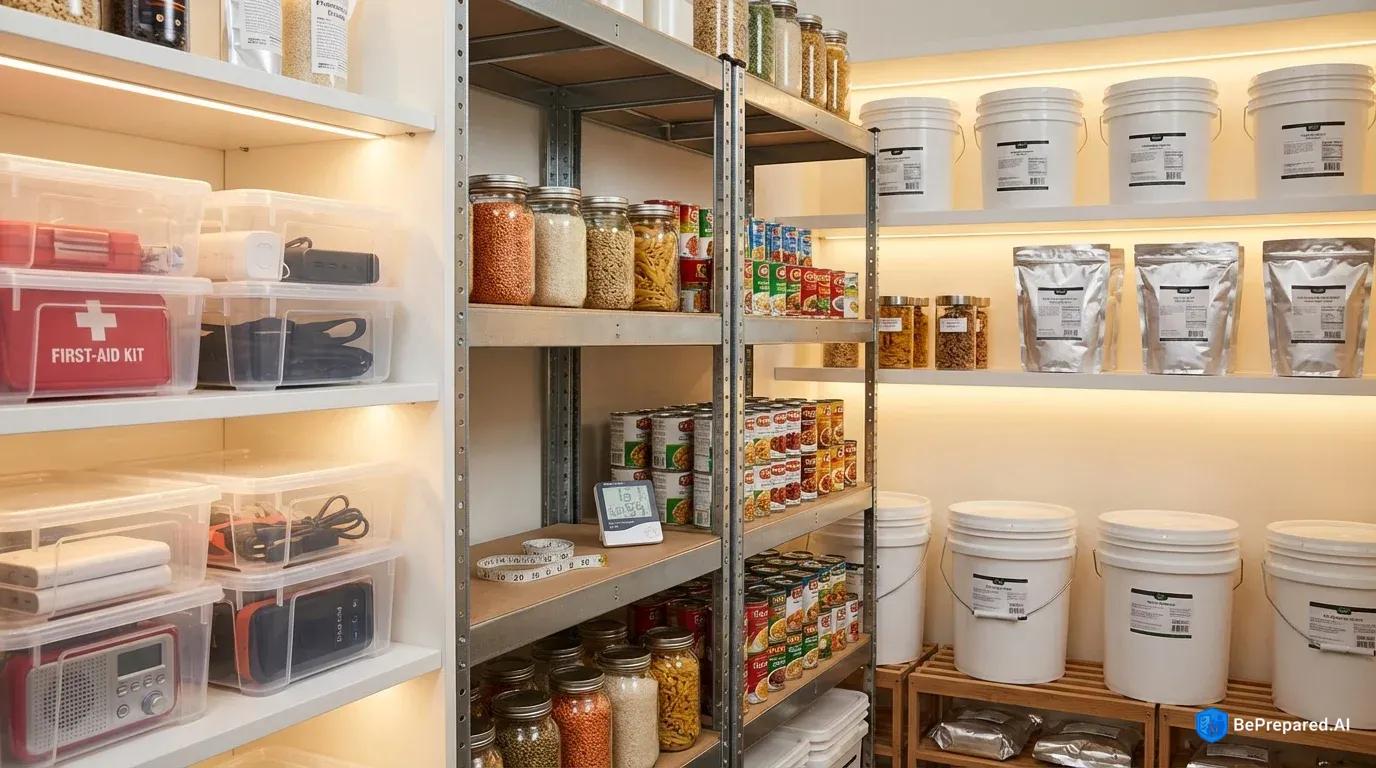
Understanding Food Security: Beyond Emergency Supplies
The Martinez family thought they were prepared. They had their three-day emergency kit tucked away in the garage—canned goods, bottled water, flashlights. Then the 2021 Texas winter storm hit, and grocery stores sat empty for two weeks. Their three days of supplies ran out quickly, and they found themselves rationing crackers and peanut butter while scrambling to find open stores. This scenario plays out across the country more often than most people realize, revealing a critical gap between basic emergency preparedness and true food security.
Food security extends far beyond the standard recommendation to store at least a three-day supply of non-perishable food . It's the consistent ability to access nutritious, culturally appropriate food regardless of external circumstances—whether that's a natural disaster, economic disruption, supply chain failure, or personal crisis like job loss. True food security operates across multiple time horizons: immediate needs (3-7 days), medium-term resilience (2-4 weeks), and long-term sustainability (3-12 months or more). Each tier serves a distinct purpose in your overall preparedness strategy.
Research demonstrates the tangible value of comprehensive food storage. Communities with established food storage programs show 47% better disaster recovery rates compared to those relying solely on emergency services . This improvement stems from reduced stress, maintained nutrition, and the ability to focus on other recovery priorities rather than scrambling for basic sustenance. Yet the average American household maintains less than a week's worth of food at any given time, leaving them vulnerable to even minor disruptions.
The mathematics of food security start with a simple baseline: most adults need roughly 2,000-2,500 calories per day to maintain health and energy during stressful situations. For a family of four, that's 8,000-10,000 calories daily, or 240,000-300,000 calories for a month. Understanding these numbers transforms food storage from an abstract concept into a concrete, achievable goal. The question isn't whether to build food security, but how to do it systematically and sustainably.
Building Your Food Security Strategy
Effective food security rests on a three-tier storage system, each layer designed for specific timeframes and purposes. This approach prevents both the wastefulness of buying food you'll never eat and the false security of stockpiling items that won't sustain you through an actual crisis.
The first tier consists of your everyday pantry—the foods you already eat and rotate through naturally. This layer should contain 1-2 weeks of normal groceries, slightly expanded beyond what you might typically keep on hand. Think pasta, rice, canned tomatoes, cooking oils, spices, and frozen proteins. This tier requires minimal additional investment because you're simply buying more of what you already purchase, just in larger quantities. The key advantage here is psychological: during the first days of an emergency, you maintain normalcy through familiar meals, which significantly reduces stress for both adults and children.
The second tier bridges the gap between everyday eating and true long-term storage. This intermediate layer focuses on shelf-stable foods with 1-5 year shelf lives that you'll actually consume: canned meats and vegetables, jarred sauces, dried pasta, white rice, flour, sugar, and cooking staples. Low-moisture foods like grains and dried beans can last 10+ years when properly stored . This tier should provide 1-3 months of sustenance and requires more intentional planning. You're selecting foods based on both longevity and utility—items that can combine into complete meals rather than random ingredients that don't work together.
The third tier represents your true long-term insurance: foods specifically packaged for extended storage, typically lasting 20-30 years. This includes wheat berries, dried beans in sealed containers, white rice in mylar bags, powdered milk, honey, and other foods with exceptional shelf stability. This tier might never get used in your lifetime, and that's perfectly acceptable. It's catastrophic insurance, the foundation that provides genuine security during extended disruptions.
Balancing these three tiers requires understanding your household's actual consumption patterns and dietary needs. A family with gluten sensitivities needs different solutions than one following a standard American diet. Those with diabetes must carefully consider the carbohydrate content and glycemic impact of stored foods. Religious dietary restrictions, vegetarian or vegan lifestyles, and food allergies all demand customized approaches. The worst time to discover your stored food doesn't meet your family's needs is during an actual emergency.
The rotation principle ties these tiers together. Your first tier rotates constantly through normal consumption. The second tier rotates on a planned schedule—perhaps you designate one week per month to cook primarily from stored foods, naturally cycling through inventory. The third tier rarely rotates but should be checked annually for any signs of degradation. Proper rotation prevents waste and ensures you're never eating food at the end of its viable life.
Start by calculating your household's baseline needs. Multiply the number of people by 2,000-2,500 calories, then by the number of days you want to prepare for. A family of four aiming for 30 days needs roughly 240,000-300,000 calories. Divide this by the caloric density of various foods to determine quantities. White rice typically provides around 1,600-1,700 calories per pound; dried beans offer similar density; wheat berries deliver approximately 1,500 calories per pound. Suddenly, the abstract goal becomes concrete: 50 pounds of rice, 40 pounds of beans, 30 pounds of wheat, supplemented with fats, proteins, and variety items.
- Storage Requirements
- Temperature, humidity, and container specifications with clear iconography
- Information Hierarchy
- Consistent placement of data elements within each cell for quick comparative analysis
Essential Long-Term Storage Foods
Grains and Starches:
Wheat berries store exceptionally well, potentially lasting 20-30 years under optimal conditions. Hard red wheat works for bread making; soft white wheat suits pastries and lighter baked goods. Requires a grain mill for processing but offers maximum nutrition and versatility. Wheat berries retain their bran and germ, providing fiber, B vitamins, and minerals that refined flour lacks.
White rice stores indefinitely when kept dry and protected from pests. Unlike brown rice, which contains oils that go rancid within months, white rice's processed nature becomes an advantage for long-term storage. It provides substantial calories and serves as a foundation for countless meals across cultures. Choose long-grain for side dishes, short-grain for sushi and risotto, and jasmine or basmati for aromatic variety.
Oats last 2-3 years in standard packaging, but properly sealed with oxygen absorbers can extend to 10-15 years. Steel-cut oats store even longer than rolled oats. Excellent breakfast option and useful in baking. Oats provide soluble fiber that helps regulate blood sugar and cholesterol, making them valuable beyond simple calorie delivery.
Pasta stores 2-3 years commercially, up to 8-10 years when repackaged in mylar with oxygen absorbers. Choose various shapes for meal variety. Egg noodles have shorter shelf life than semolina pasta due to egg content, but both work well for intermediate storage.
Proteins:
Dried beans and legumes offer exceptional value and nutrition. Pinto, black, kidney, navy, and lentils all store 8-10 years in standard conditions, potentially 20-30 years when properly sealed. They provide essential protein, fiber, and minerals including iron, magnesium, and potassium. Require soaking and cooking but offer exceptional nutritional value per dollar. Lentils and split peas cook faster than whole beans, making them practical for situations where fuel conservation matters.
Canned meats maintain quality 2-5 years commercially, though often remain safe well beyond printed dates. Chicken, tuna, salmon, and beef provide ready-to-eat protein without refrigeration. Look for low-sodium options to maintain flexibility in seasoning. Canned fish with bones, like salmon and sardines, delivers calcium along with protein and omega-3 fatty acids.
Powdered eggs and milk have improved dramatically in recent years. Modern freeze-dried versions last 5-10 years and reconstitute remarkably well. Essential for baking and adding protein to meals. Powdered whole eggs work better for scrambling; powdered egg whites suit baking. Powdered milk comes in both non-fat and whole varieties—whole milk powder tastes better but stores for shorter periods.
Fats and Oils:
Coconut oil stores 2-3 years at room temperature due to high saturated fat content. Provides essential calories and cooking medium. Works for both cooking and baking, though it imparts a mild coconut flavor. The high calorie density of fats makes them critical for long-term storage—your body needs concentrated energy sources.
Shortening in sealed containers lasts 3-5 years. More stable than most liquid oils. Vegetable shortening works well for baking and frying. While not the healthiest fat option, its stability makes it practical for storage situations.
Olive oil maintains quality 18-24 months when stored in dark bottles away from heat. Rotate more frequently than other storage foods. Extra virgin olive oil provides healthy monounsaturated fats and antioxidants. Buy smaller containers to minimize oxidation after opening.
Sweeteners and Flavor:
Honey stores indefinitely when kept sealed and dry . Never refrigerate; crystallization is natural and reversible by gentle warming. Provides sweetness, calories, and antimicrobial properties. Raw honey contains enzymes and trace nutrients that processed honey lacks.
White sugar stores indefinitely when kept dry. Brown sugar requires more care but lasts years in airtight containers. If brown sugar hardens, a slice of bread in the container overnight will soften it. Sugar provides quick energy and improves palatability of stored foods.
Salt remains essential for preservation, flavor, and electrolyte balance. Stores forever; buy iodized for nutritional completeness. Sea salt and kosher salt work well for cooking, but iodized table salt prevents iodine deficiency during extended storage situations. Stock both canning salt (pure sodium chloride) and iodized table salt.
Spices lose potency over 2-3 years but remain safe indefinitely. Buy in smaller quantities and rotate regularly. Whole spices last longer than ground—consider buying peppercorns, coriander seeds, and cumin seeds with a grinder. Dried herbs fade faster than spices; plan to replace them every 1-2 years.
Supplementary Items:
Baking powder and baking soda enable bread making without yeast. Replace every 18-24 months for best results. Test baking powder by mixing a teaspoon with hot water—it should bubble vigorously. Baking soda lasts longer and also serves cleaning and deodorizing purposes.
Vinegar stores indefinitely and serves both culinary and cleaning purposes. White vinegar works for pickling and cleaning; apple cider vinegar adds flavor to cooking. The acidity prevents bacterial growth, making vinegar shelf-stable without special storage.
Bouillon cubes add flavor to stored grains and beans. Last 2+ years and weigh almost nothing. Choose low-sodium versions when possible to control salt levels. Bouillon transforms plain rice or pasta into satisfying meals with minimal effort.
The nutritional balance matters as much as quantity. Grains provide carbohydrates and some protein, but lack complete amino acid profiles. Beans complement grains to create complete proteins—the combination of rice and beans provides all essential amino acids your body needs. Fats deliver concentrated calories and fat-soluble vitamins A, D, E, and K. A storage plan heavy on wheat and rice but light on proteins and fats won't sustain health long-term.
Storage Methods and Environment Control
The enemies of food preservation are heat, light, oxygen, moisture, and pests. Temperature dramatically affects shelf life—foods stored in cool conditions last significantly longer than those in warm environments. A food that might last 20 years at 60°F will deteriorate much faster at 70°F or 80°F. This reality makes storage location your most critical decision.
Basements typically offer the coolest, most stable temperatures in a home, though they may present humidity challenges. Interior closets work better than garages, which experience temperature extremes. Avoid attics entirely—summer temperatures can exceed 130°F, destroying food quality within months. Store food in a dry, cool dark area to maximize shelf life and maintain nutritional value.
Humidity control ranks second in importance. Lower humidity levels prevent bacterial growth, mold, and accelerated degradation. In humid climates, this presents a significant challenge. Desiccant packets help manage moisture in individual containers, but they're not a substitute for environmental control. A dehumidifier in your storage area may prove one of your best investments, particularly in coastal or southern regions. Monitor conditions with an inexpensive hygrometer—they cost less than $15 and provide invaluable data about your storage environment.
Container selection determines whether your carefully chosen foods last decades or fail within years. Food-grade plastic buckets with gamma seal lids offer the gold standard for bulk storage. These buckets, typically 3.5 to 6 gallons, protect against moisture, pests, and light while remaining accessible for rotation. Line them with mylar bags for additional protection. Look for buckets marked with recycling code 2 (HDPE) or 5 (PP)—these are food-safe.
Mylar bags with oxygen absorbers create an oxygen-free environment that prevents oxidation and insect activity. Use 5-7 mil thickness for durability. Heat-seal the bags after adding appropriate oxygen absorbers—typically 300-500cc absorbers for gallon-sized bags. The bag will compress as oxygen absorbers work, creating a vacuum-packed appearance.
Glass jars work excellently for smaller quantities and foods you'll access frequently. Mason jars with new lids seal effectively and allow visual inspection of contents. They're ideal for dried beans, rice, pasta, and baking ingredients. However, glass breaks, so consider your storage location's safety. Store jars on lower shelves to minimize fall risk.
PETE plastic bottles (recycled soda bottles) provide a free or low-cost option for grains and dried beans. Clean thoroughly, dry completely, and ensure caps seal tightly. They stack efficiently and allow you to see contents. Two-liter bottles work well for rice, beans, and pasta. Avoid bottles that previously held non-food items.
Oxygen absorbers deserve special attention. These small packets contain iron powder that oxidizes, removing oxygen from sealed containers. This prevents oxidation of fats, stops insect eggs from hatching, and inhibits aerobic bacterial growth. Use them immediately after opening the package—they begin working as soon as exposed to air. For a 5-gallon bucket, use 2000-2500cc of absorption capacity. For gallon mylar bags, 300-500cc suffices.
Don't confuse oxygen absorbers with desiccants—they serve different purposes. Desiccants remove moisture; oxygen absorbers remove oxygen. Many foods benefit from both, particularly in humid climates. Use desiccants for foods like crackers and cereals where crispness matters; use oxygen absorbers for grains, beans, and foods where oxidation threatens quality.
Label everything meticulously. Include the food type, quantity, packaging date, and source if relevant. Use permanent markers or printed labels that won't fade. Your future self will thank you when you're trying to rotate stock or assess your inventory. Consider a simple coding system—perhaps color-coded labels indicating storage tier or expected rotation schedule. Some people include purchase price to track inflation and budget for replacements.
Rotation and Maintenance Systems
The first-in-first-out (FIFO) system forms the backbone of effective food storage management. This restaurant industry principle ensures older items get used before newer ones, preventing waste and maintaining quality. The concept is simple: place new purchases behind existing stock, and always draw from the front. Implementation requires discipline and organization.
Step 1: Establish a physical organization system. Designate specific shelves or areas for each food category. Group similar items together—all canned vegetables in one section, grains in another, proteins in a third. Within each category, arrange items by expiration date with the nearest dates in front. Some people use angled shelf organizers that naturally move cans forward as front items are removed. Others mark shelves with date ranges. Find a system that matches your space and thinking style.
Step 2: Create a comprehensive inventory. Start with a complete audit of everything you have. Use a spreadsheet, dedicated app, or even a notebook—the tool matters less than consistent use. Record item names, quantities, purchase dates, and expiration dates. Include location information if you store food in multiple areas. This initial inventory takes several hours but provides invaluable baseline data. Update your inventory each time you add or remove significant quantities.
Step 3: Schedule regular inventory updates. Monthly reviews work well for most households. Check quantities, note what you've used, add new purchases, and look for any signs of degradation. This monthly touchpoint takes 15-30 minutes once you're in the habit. It prevents the common scenario where you think you have plenty of something but actually ran out months ago. It also helps you spot problems early—a leaking can, pest intrusion, or environmental issue—before they spread.
Step 4: Plan meals around stored food. Designate one week per month as "pantry challenge week" where you cook primarily from stored foods. This serves multiple purposes: it rotates stock naturally, it familiarizes your family with the foods they'd eat during an emergency, it builds your cooking skills with storage foods, and it reduces your grocery bill. You'll quickly discover which stored foods your family enjoys and which sit unused—valuable information for future purchasing decisions.
Step 5: Conduct quality checks. Once or twice yearly, examine your long-term storage items for any signs of degradation. Look for bulging cans, rust, pest damage, or moisture intrusion. Check that mylar bags remain vacuum-sealed. Verify that storage conditions haven't changed—perhaps a new appliance raised the temperature in your storage room, or a plumbing leak increased humidity. These quality checks catch problems while they're still manageable.
Step 6: Document and adjust. Keep notes about what works and what doesn't. Maybe you bought 50 pounds of wheat berries but your family won't eat whole wheat bread. Perhaps the canned green beans you stockpiled taste terrible compared to frozen. Your storage plan should evolve based on real-world experience. Adjust future purchases accordingly, and don't be afraid to donate or trade items that aren't working for your household.
The psychological benefit of a well-maintained rotation system extends beyond preventing waste. Knowing exactly what you have and where to find it provides genuine peace of mind. During an actual emergency, you won't waste precious time and mental energy figuring out your supplies—you'll already know. The confidence that comes from a tested, organized system is itself a valuable form of preparedness.
Pros and Cons of Different Storage Approaches
Bulk Purchasing Approach
Pros: Lower per-unit costs, fewer shopping trips, immediate substantial inventory, economies of scale make long-term storage affordable.
Cons: Requires significant upfront capital, needs adequate storage space, risk of waste if family preferences change, can overwhelm beginners.
Gradual Accumulation Approach
Pros: Spreads costs over time, allows testing of foods before bulk purchase, easier to manage psychologically, adapts to changing needs and budgets.
Cons: Takes longer to reach security goals, may miss sales opportunities, requires consistent discipline, per-unit costs typically higher.
Commercial Freeze-Dried Meals
Pros: Extremely long shelf life (25-30 years), minimal preparation required, lightweight and compact, professionally balanced nutrition.
Cons: Expensive per serving, often high in sodium, limited variety can cause palate fatigue, requires water for reconstitution.
Home Canning and Preservation
Pros: Uses foods you grow or buy fresh, complete control over ingredients, satisfying skill development, preserves seasonal abundance.
Cons: Requires equipment and knowledge, time-intensive process, shorter shelf life than commercial options (1-3 years), botulism risk if done incorrectly.
Actionable Recommendations
For Beginners: Start with a two-week supply of foods you already eat. Buy double your normal groceries for three shopping trips. Focus on canned goods, pasta, rice, and cooking staples. Don't worry about specialized storage containers yet—use what you have. Practice cooking one meal per week from your stored foods.
For Intermediate Planners: Expand to a three-month supply across all three tiers. Invest in proper storage containers—food-grade buckets, mylar bags, and oxygen absorbers. Create a detailed inventory system. Learn basic food preservation skills like canning or dehydrating. Calculate your family's actual caloric needs and stock accordingly.
For Advanced Preparedness: Build toward a one-year supply with emphasis on the third tier. Consider bulk purchases of wheat, rice, and beans in 50-pound quantities. Develop skills in grain milling, bread making, and cooking from scratch. Establish relationships with local farmers or co-ops for fresh food access. Create redundant storage locations if possible.
For All Levels: Store food in a dry, cool dark area . Test your storage foods regularly through planned consumption. Adjust your plan based on actual family preferences and dietary needs. Don't neglect water storage—you need one gallon per person per day. Consider nutritional supplements to fill gaps in stored food nutrition.
Ready to take control of your food storage? Download our Food Storage Inventory Template to start tracking your supplies today. This comprehensive spreadsheet helps you organize your three-tier system, schedule rotations, and ensure your family's food security. Stop guessing about your preparedness level—know exactly where you stand.
Building food security isn't a weekend project—it's an ongoing practice that becomes part of your household rhythm. Start with one tier, master it, then expand. Buy a few extra items each shopping trip rather than trying to purchase everything at once. Learn to cook with stored foods so they're familiar rather than foreign. Most importantly, view food storage not as paranoid stockpiling but as practical resilience—the same wisdom that led previous generations to maintain cellars and pantries.
The Martinez family learned their lesson during that Texas winter storm. They now maintain a three-month supply across all tiers, rotate their stock monthly, and actually enjoy their "pantry challenge" weeks. When the next disruption comes—and it will—they'll face it with full bellies and clear minds, able to focus on what matters rather than scrambling for basic sustenance. That's the real value of food security: not the food itself, but the freedom and stability it provides when everything else falls apart.