General Emergency
9 articles
A personal disruption is an emergency that hits one household rather than a whole community, such as a job loss, a serious illness or a family crisis. Prepare by keeping key documents and contacts in one place and setting money aside for surprises, even in small amounts.
Personal emergencies like of illness, or family crisis. Focus on resources of medical
Updated

How to Create a Family Emergency Communication Plan
Phone calls fail when disasters strike, but texts get through. Build a family communication plan that works when networks are overwhelmed.

Essential Documents Checklist for Family Emergencies
Missing paperwork delays disaster assistance more than any other factor. This checklist ensures you can prove identity, ownership, and residence when it matters most.

Complete Family Financial Emergency Preparedness Guide
Only 41% of Americans can cover a $1,000 emergency. This family-focused guide shows how to build financial resilience starting today, regardless of income.

Complete Guide to Personal Crisis Management
40% of Americans have zero emergency plan. This friendly walkthrough turns everyday scenarios into your personal crisis roadmap—no bunker required.

How to Build Your First Emergency Fund (Even on a Tight Budget)
Living paycheck to paycheck doesn't disqualify you from emergency savings. Build real financial protection starting with amounts smaller than you'd expect.

Budget-Friendly Emergency Food Storage Guide
Emergency food storage costs less than one week's groceries when done right. Build a three-month supply without breaking your budget or buying freeze-dried meals.
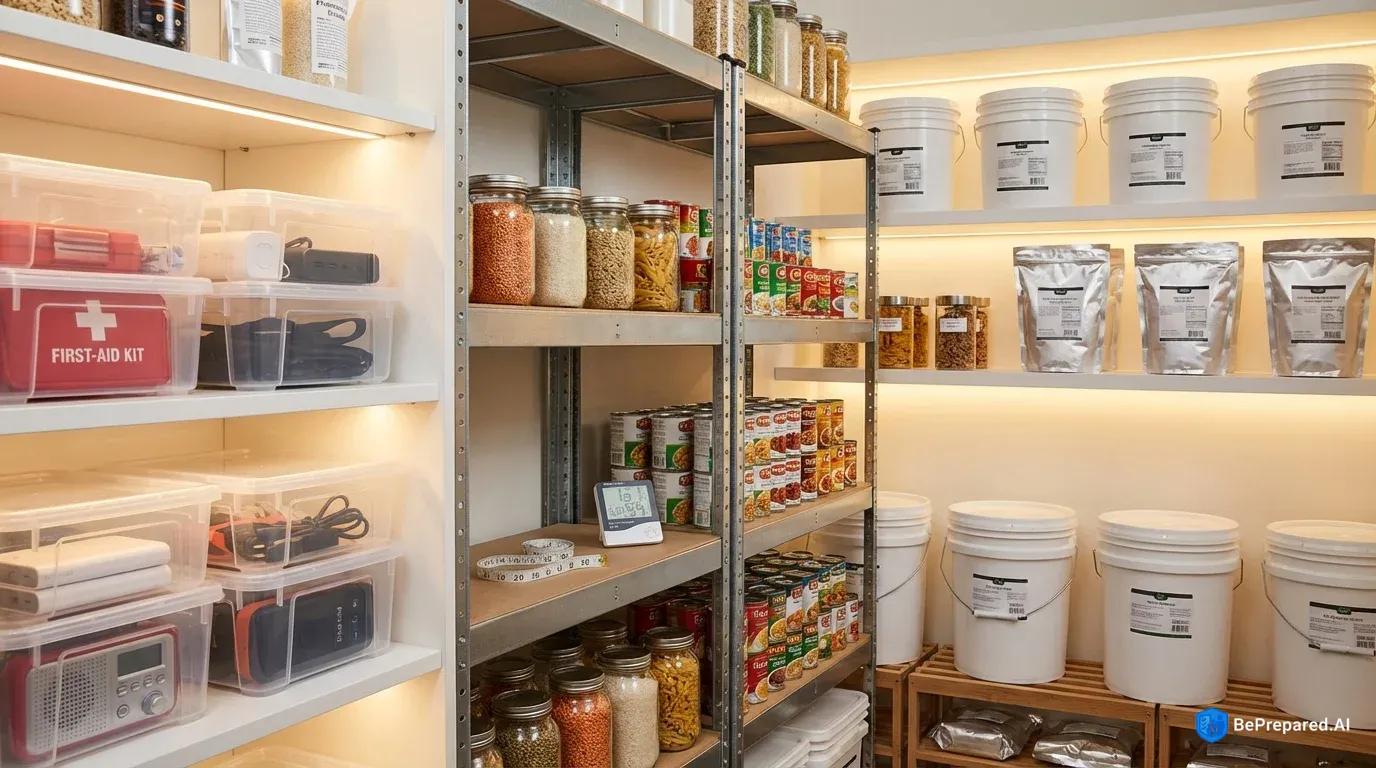
Complete Guide to Long-Term Food Security
Most households run out of food in under a week during disruptions. Calculate your actual needs and build resilient storage across three critical time horizons.

Medical Insurance Gaps: What Your Health Insurance Might Not Cover
31% of insured adults can't afford their deductibles when they need care. Identify the coverage gaps in your plan before medical bills arrive.

Emergency Food Calculator: How Much Does Your Family Need?
Most families panic-buy the wrong foods when disaster strikes. Calculate your household's actual emergency needs before the next crisis hits.
What should we do first after losing a job?
Apply for unemployment benefits and settle your health coverage as early as you can. The U.S. Department of Labor advises contacting your state's unemployment insurance program as soon as possible and filing in the state where you worked. The first payment generally arrives two to three weeks after you file. For health insurance, you may be able to continue your employer plan through COBRA, but you would pay the full premium plus a small administrative fee. Losing job-based coverage can also qualify you for a Special Enrollment Period on the Marketplace, where savings depend on household size and income, not employment status. That window covers 60 days before and after the loss of coverage.
Which documents should a household keep ready for a family emergency?
Keep identification, insurance, income and medical records together, with copies you can reach from anywhere. Ready.gov's list starts with photo IDs, birth certificates, Social Security cards, insurance policies, proof of income and tax statements. For medical needs, add doctors' contacts, health insurance cards, immunization records and a list of current medications. Add phone numbers for your bank, insurance agent, doctors and other service providers. Store originals in a safe deposit box or waterproof container, and keep password-protected digital copies on an external drive or in the cloud. The Emergency Financial First Aid Kit, from FEMA and Operation HOPE, includes checklists to work through it step by step.
How can we build an emergency fund on a tight budget?
Start small and make saving automatic; even a modest amount gives your household some cushion. The Consumer Financial Protection Bureau suggests basing your goal on the unexpected costs you have faced before, such as car repairs or medical bills. Automatic transfers from checking to savings make contributions steady, and some employers can split a direct deposit between two accounts. A tax refund or cash gift is a chance to add a larger sum at once. Keep the fund in a separate bank or credit union account, where it is safe but less tempting to spend. Having it can keep a surprise bill from turning into credit card debt, and if you use it, rebuild it.
Sources
- How Do I File for Unemployment Insurance?, U.S. Department of Labor. Contact your state unemployment insurance program as soon as possible; file in the state where you worked; first benefit check generally two to three weeks after filing.
- Health coverage options if you're unemployed, HealthCare.gov (CMS). COBRA lets you keep employer coverage but you pay 100 percent of premiums plus a small administrative fee; Marketplace savings are based on household income, not employment status.
- Special Enrollment Period, HealthCare.gov (CMS). Losing job-based coverage can qualify you for a Special Enrollment Period if coverage was lost in the past 60 days or will be lost in the next 60 days.
- Financial Preparedness, Ready.gov (FEMA). Documents to safeguard: photo ID, birth certificate, Social Security card, insurance policies, income sources, tax statements, physician and health insurance information, immunization records, medications, household contacts; store in a safety deposit box, external drive or cloud; Emergency Financial First Aid Kit from Operation HOPE and FEMA.
- Build A Kit, Ready.gov (FEMA). Keep important family documents electronically or in a waterproof, portable container.
- Pandemic, Ready.gov (FEMA). Create password-protected digital copies of important documents.
- An essential guide to building an emergency fund, Consumer Financial Protection Bureau. Set a goal based on past unexpected expenses; automatic transfers; split direct deposit; save tax refunds and gifts; keep it in a bank or credit union account; even a small amount provides some security; savings help avoid debt; rebuild after using it.