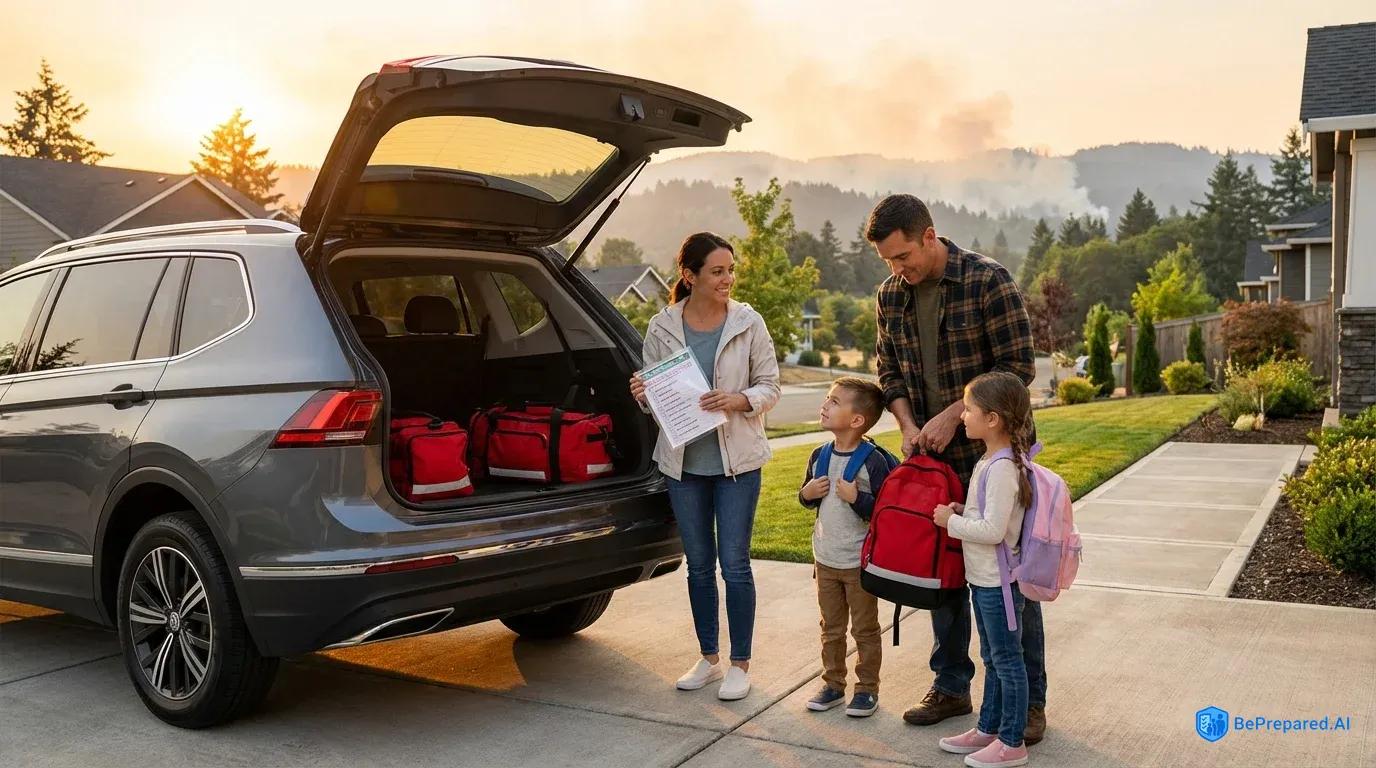
Why You Need a 15-Minute Evacuation Plan
Picture this: You're finishing dinner when your phone buzzes with an emergency alert. A wildfire that was miles away this morning has shifted direction. You have fifteen minutes to evacuate. Your heart races as you look around your home, trying to decide what to grab first. Your mind goes blank.
This scenario plays out across wildfire-prone areas every year. Evacuation windows during wildfires can be incredibly short—sometimes just minutes when conditions change rapidly. When flames move quickly toward your neighborhood, that brief window can shrink even faster. The difference between those who evacuate safely and those who face tragedy often comes down to one thing: preparation.
Here's what most people don't realize until they're in the thick of it—panic is your biggest enemy during an evacuation. When adrenaline floods your system and you're trying to think clearly while neighbors rush past your windows, your brain doesn't work the same way. You'll forget things. You'll waste precious minutes standing in rooms, trying to remember what you meant to grab. You'll second-guess yourself. You'll make choices you later regret.
Pre-planning changes everything. When you've already decided what matters most and where everything is, those fifteen minutes become completely manageable. You'll move with purpose instead of panic, and you'll drive away knowing you did everything right.
The good news? You don't need to become a survival expert or spend thousands of dollars. What you need is a simple plan, practiced enough times that it becomes automatic. Think of it like a fire drill from school—the repetition makes the actions automatic when stress hits. This guide will walk you through creating that plan, step by simple step, so you can feel confident instead of overwhelmed.
- Water Bottles
- 3 one-liter bottles per person, sealed and unexpired
- First Aid Kit
- Basic kit with bandages, antiseptic wipes, and essential medications
- Flashlight
- LED flashlight with spare batteries, waterproof preferred
- Emergency Food
- 3-day supply of non-perishable snacks and ready-to-eat meals
- Important Documents
- Copies of ID, insurance cards, and emergency contacts in waterproof bag
- Multi-Tool
- Compact tool with knife, pliers, and basic screwdrivers
Before the Emergency: Your Go-Bag Essentials
The foundation of any successful evacuation is a go-bag that's already packed, accessible, and ready to throw in your car. Think of it as your insurance policy against chaos. The American Red Cross recommends keeping a three-day supply of essential items ready at all times . This isn't just bureaucratic over-caution. Evacuations often last longer than expected, and stores in evacuation zones close immediately.
Your go-bag should live somewhere you can grab it in seconds—a hall closet near your exit door, the garage, or under your bed. Not in the attic. Not in a storage unit across town. Somewhere you pass every single day.
Here's what needs to be inside:
Water and Food:
- Water for drinking (enough for three days is ideal)
- Non-perishable food items that require no preparation
- Manual can opener
- Energy bars, dried fruit, nuts, and other shelf-stable snacks
- Special dietary items if needed (baby formula, medical nutrition)
- Protein-rich foods that keep you energized
Medical and Hygiene:
- Prescription medications in original bottles
- First aid kit with bandages, antiseptic, pain relievers
- Copies of prescriptions and medical information
- Glasses or contact lenses with solution
- Hygiene items (toothbrush, soap, feminine products, toilet paper)
- N95 masks for smoke protection
- Any medical devices you depend on daily
Clothing and Shelter:
- Change of clothes for each family member
- Sturdy shoes or boots
- Jacket or sweatshirt (temperatures drop at night)
- Emergency blanket or sleeping bag
- Rain poncho
- Hat and gloves if you live in a cold climate
Tools and Supplies:
- Flashlight with extra batteries (or hand-crank version)
- Battery-powered or hand-crank radio
- Phone chargers (wall, car, and portable battery pack)
- Cash in small bills (ATMs may not work)
- Local maps (GPS might fail)
- Whistle for signaling help
- Multi-tool or knife
- Duct tape and plastic sheeting
Personal Items:
- Copies of important documents in waterproof container
- List of emergency contacts
- Photos of family members (for identification/reunification)
- Items for children (small toy, book, comfort item)
- Pet supplies if applicable
- House and car keys
Update your go-bag every six months. Food expires, batteries die, kids outgrow clothes, and medications need refreshing. Mark your calendar for the same day you change your clocks—spring forward, check your bag; fall back, check again. This regular maintenance ensures that when you need your go-bag, everything inside actually works.
Don't let the list overwhelm you. Start with the basics—water, food, medications, and documents. You can build up your go-bag over a few weeks, adding items each time you shop. The perfect go-bag you'll create next month isn't as valuable as the good-enough go-bag you can grab today.
The 15-Minute Action Plan
Now that your go-bag is ready, let's walk through exactly what happens when that evacuation order comes. You've got fifteen minutes, and every single one counts. This isn't the time to start making decisions—you're executing a plan you've already made. Here's how to move through your home efficiently and systematically.
Minute 1-2: Immediate Actions and Family Alert
The moment you receive the evacuation order, start a timer on your phone. This keeps you honest and moving. Immediately alert everyone in your household—no exceptions, no "just one more thing." If family members are separated, use your pre-planned communication method. Text instead of calling when possible; texts get through when networks are overloaded and calls fail. Your message should be simple: "Evacuation order received. Execute plan now. Meet at [predetermined location]."
Grab your go-bag from its designated spot. Put it by the door you'll exit from. This single action sets everything else in motion and gives you a visual reminder that you're leaving soon.
Minute 3-5: Pets and Livestock
Head straight for your pets. They sense danger and may hide, wasting precious minutes if you haven't planned for this. Keep pet carriers accessible year-round, not stored in the back of a garage closet. Place pets in carriers immediately with a familiar blanket or toy to keep them calm. Grab your pre-packed pet go-bag with food, medications, vaccination records, and a recent photo.
If you have livestock or larger animals, this is when you release them or load them according to your pre-made plan. Opening gates to give animals a chance to flee can be a difficult decision, but it may give them their best chance when time is short. Have this decision made before the emergency arrives so you're not wrestling with it under pressure.
Minute 6-8: Bedroom and Bathroom Sweep
Move to bedrooms with purpose. You're not packing for vacation—grab only what's in your evacuation checklist. Medications from bathroom cabinets go in a labeled ziplock bag. Eyeglasses, hearing aids, mobility devices—these irreplaceable medical necessities come now. One change of practical clothes per person if you haven't already packed them.
Skip the jewelry box unless it contains true heirlooms; insurance replaces things, not lives. Think about what you'd regret losing forever versus what you'd just be sad about. Forever-regret items get grabbed. Sad-about items stay behind.
Minute 9-11: Documents and Valuables
Your important documents should already be in a grab-and-go folder or fireproof box. If they're not, this is your wake-up call to fix that after this emergency passes. Grab your computer or external hard drive with photos and files—digital memories matter. One family photo album if you have time, but only one. That shoebox of your grandmother's letters, your child's baby book, the irreplaceable items that insurance can't fix—these get thirty seconds of consideration, no more.
Think small and meaningful. A thumb drive with family photos beats a bookshelf of books you can replace. Your child's handmade Mother's Day card beats expensive furniture. Choose with your heart, but choose fast.
Minute 12-13: Kitchen and Final Sweep
Fill any empty water bottles you have. Grab your car keys, wallet, and phone if they're not already in your pocket. Do a final visual sweep of each room—not to find more things, but to ensure you haven't left a person or pet behind. This sounds obvious, but in the chaos of evacuation, children playing in closets and cats hiding under beds have been overlooked. Call out names and do a physical check of every room.
Count heads. Count pets. Do it twice. This is the most important thirty seconds of your entire evacuation.
Minute 14-15: Exterior Preparation and Departure
If you have even a minute to spare, close all windows and doors (but leave them unlocked for firefighters). Turn off gas at the meter if you know how. Leave exterior lights on so firefighters can see your property in smoke. Move anything flammable away from your house if you can do it in thirty seconds—that propane tank, that pile of firewood.
Keep your car backed into the driveway with the keys in an easily accessible location . This simple habit means you're ready to load and leave without maneuvering or searching for keys. Load your go-bag, your family, your pets, and your documents. Then get in your car and leave.
Don't wait for neighbors, don't do "one more thing," don't convince yourself you have extra time. The evacuation route you're about to take gets more dangerous with every passing minute as more people flood onto the same roads. Traffic jams during evacuations can trap people in the path of danger. Leave now.
Practice this plan at least twice a year. Set a timer and actually move through your house. You'll discover that your pet carrier is harder to reach than you thought, or that gathering medications takes longer than expected. Each practice run makes the real thing smoother. Make it a family activity—kids who practice stay calmer during real emergencies.
Important Documents Checklist
When your house is gone, proving who you are and what you owned becomes surprisingly complicated. Insurance claims stall without documentation. Replacing identification takes months without backup proof. Your important documents folder needs to be as ready as your go-bag, and it needs to fit in a single waterproof container that you can grab in ten seconds.
Essential Identity Documents:
- Birth certificates for all family members
- Social Security cards
- Passports or other government-issued ID
- Marriage certificates and divorce decrees
- Adoption papers
- Citizenship or immigration documents
- Military discharge papers (DD-214)
Financial and Legal Records:
- Insurance policies (home, auto, life, health)
- Property deeds and titles
- Vehicle titles and registration
- Bank account information and recent statements
- Credit card information (account numbers, contact numbers)
- Investment and retirement account records
- Will, power of attorney, living will
- List of all digital account passwords
Medical Information:
- Immunization records for all family members
- Medical history summaries
- Current prescriptions with dosages
- List of allergies and medical conditions
- Health insurance cards (front and back copies)
- Contact information for doctors and specialists
Home and Property Records:
- Home inventory (photos or video of every room and valuable items)
- Recent appraisals
- Major purchase receipts
- Serial numbers for electronics and appliances
- Photos of jewelry and collectibles
- Proof of ownership for valuable items
Vehicle titles and medical records often get forgotten during evacuations. People remember their insurance policy but forget they'll need proof of what they owned to make a claim. Take a video walkthrough of your home this weekend, opening drawers and closets, narrating what you see. Upload it to cloud storage. This fifteen-minute investment becomes priceless when you're trying to remember whether you owned two or three laptops, what brand your TV was, or what was in your garage.
Digital backups matter just as much as physical copies. Scan every document in your important papers folder and save them to at least two locations: an encrypted cloud service and a USB drive that stays with your go-bag. Update these backups annually, or whenever something major changes—new insurance policy, home renovation, vehicle purchase.
Physical documents go in a waterproof, fireproof container or bag. These aren't expensive—a good document bag costs less than replacing a single birth certificate. Replacing everything in your important documents folder could take years and thousands of dollars. Spending fifty dollars on a fireproof document bag is one of the smartest investments you'll make.
Keep a second set of copies with a trusted friend or family member who lives outside your immediate area. Wildfires that threaten your home might threaten your entire neighborhood, making local backup storage risky. Your sister three states away won't face the same emergency, and she can overnight you copies of critical documents when you need them most.
Start small if the full list feels overwhelming. This week, gather your birth certificates and insurance policies. Next week, add medical records. The week after, photograph your home's contents. Breaking this project into small chunks makes it manageable instead of intimidating. Even having half your documents ready is better than having none.
Your Next Steps
The truth about wildfire evacuation is simple: fifteen minutes is enough time if you've already done the thinking. Your future self, standing in your driveway with an evacuation order, will thank your present self for every minute spent preparing.
Start with just one thing this weekend. Maybe that's buying a waterproof document bag. Maybe it's packing a basic go-bag with water and snacks. Maybe it's taking that video of your home's contents. One action is infinitely better than perfect planning that never happens.
Walk through your plan. Pack that go-bag. Scan those documents. Practice your route. Talk with your family about where you'll meet if you're separated. Decide now what you'll do with your pets. Make these choices during a calm Sunday afternoon instead of during a crisis.
The best time to prepare for an emergency is always right now, when you still have the luxury of time to get it right. You don't need to do everything today. You just need to do something. Start small, build gradually, and practice regularly. That's how you transform from someone who would panic during an evacuation into someone who executes a plan with confidence.
Your fifteen-minute evacuation plan isn't about living in fear. It's about living with confidence, knowing that if the worst happens, you're ready. It's about protecting what matters most—your family, your pets, and your peace of mind. Take the first step today.