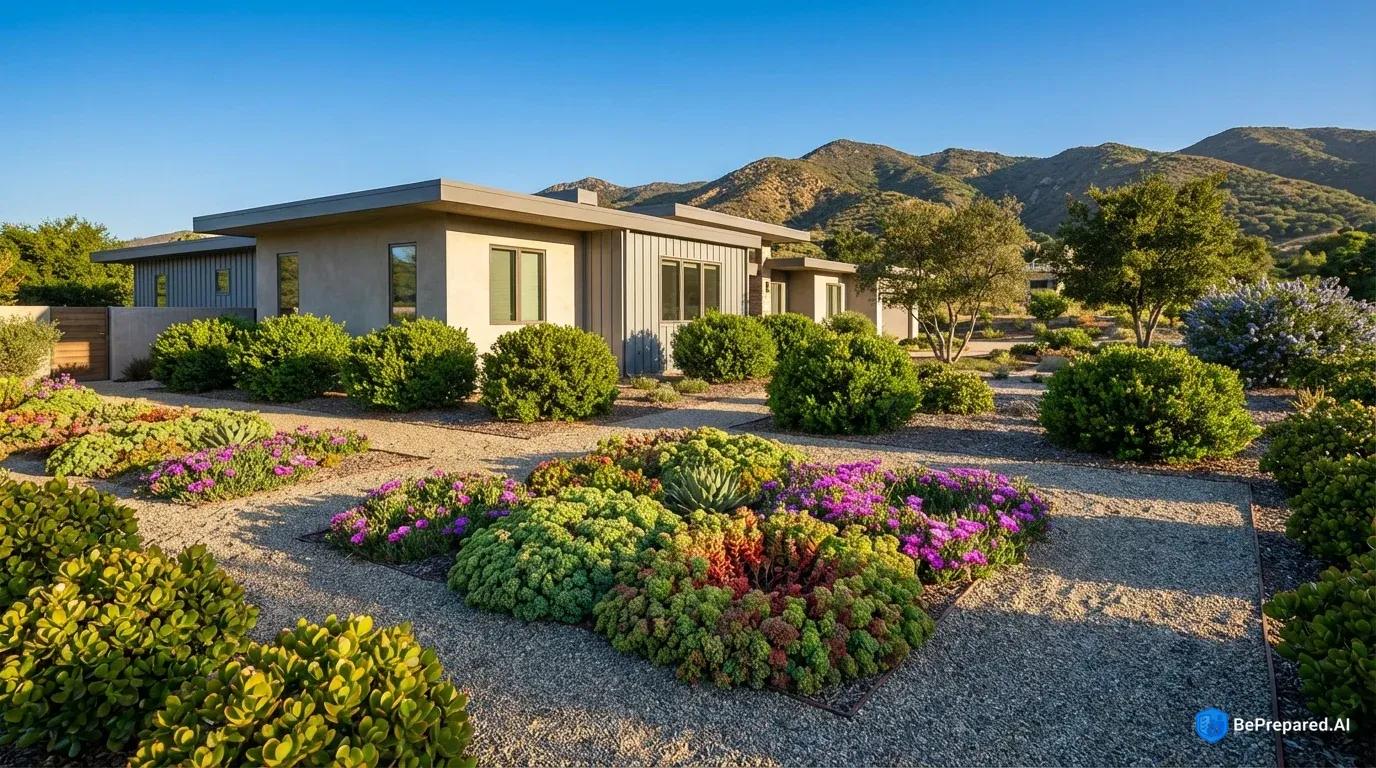
Understanding Fire-Resistant Plants and Their Role in Wildfire Defense
The morning the Caldor Fire roared through El Dorado County in 2021, firefighters noticed something peculiar. While many homes burned to the ground, a handful stood relatively unscathed despite the inferno that surrounded them. The common thread? These properties featured carefully planned landscapes with fire-resistant plants creating critical buffers between the wildfire and the structures. This wasn't luck—it was strategic design meeting botanical science.
Fire-resistant plants are species that possess natural characteristics making them less likely to ignite and burn during a wildfire . These aren't magical, fireproof barriers, but rather living components of a comprehensive wildfire defense strategy. Understanding what makes these plants valuable starts with recognizing what they're not: they won't stop a raging crown fire moving at 60 miles per hour through drought-stricken forest. What they will do is create defensible space that gives your property—and firefighters—a fighting chance .
The role these plants play in wildfire defense operates on multiple levels. First, they act as moisture-rich barriers that can slow or redirect lower-intensity flames. When properly spaced and maintained, fire-resistant plants create zones around your home where fire behavior becomes more predictable and manageable. Think of them as speed bumps rather than walls—they won't stop a fire completely, but they significantly reduce its intensity and rate of spread.
Second, these plants produce less combustible material. While any plant can burn under extreme conditions, fire-resistant species generate fewer volatile oils, resins, and dead material that act as kindling during fire season . This difference becomes critical when embers land on your property or when radiant heat from nearby flames threatens to ignite vegetation close to your home.
The characteristics that make plants fire-resistant center on three primary factors: moisture content, chemical composition, and physical structure. Plants with high moisture content in their leaves and stems require more heat energy to ignite. A succulent ice plant, for instance, contains substantial water by weight, making it exceptionally difficult to burn compared to a dry, resinous juniper.
Chemical composition matters because plants high in oils, resins, and waxes essentially carry their own accelerants. That aromatic rosemary you love for cooking? Its volatile oils make it a potential fire hazard in wildfire country. Physical structure includes factors like leaf size and thickness, bark characteristics, and growth density. Plants with thick, leathery leaves tend to resist ignition better than those with fine, needle-like foliage that provides high surface area for combustion .
Creating defensible space around homes using fire-resistant plants has become a cornerstone of modern wildfire preparedness. The first 100 feet surrounding your home represents your most critical defense line . CAL FIRE and other fire agencies divide this area into specific zones, each with distinct requirements. Fire-resistant plants don't eliminate your responsibility to maintain these zones, but they make the space inherently safer. A well-designed landscape using these plants can mean the difference between a structure that survives ember attacks and one that ignites from radiant heat or direct flame contact .
- Flammable Compounds
- Succulents: Minimal volatile compounds vs. Pines: High terpene and resin content
- Leaf Structure
- Succulents: Thick, fleshy leaves vs. Pines: Thin, dry needles with high surface area
- Debris Accumulation
- Succulents: Limited ground litter vs. Pines: Heavy needle and bark accumulation
- Heat Response
- Succulents: Slow to heat due to water content vs. Pines: Rapid heat absorption and ignition
Key Characteristics of Fire-Resistant Plants
Walk through two gardens after a month without rain, and you'll understand the first critical characteristic of fire-resistant plants immediately. In one garden, the leaves crunch underfoot, brittle and desiccated. In the other, the foliage remains supple, almost succulent to the touch. That tactile difference represents the single most important factor in fire resistance: moisture content.
Plants with moist, supple leaves are more fire-resistant because water is nature's fire suppressant . When flames encounter high-moisture vegetation, much of the fire's energy goes toward evaporating water rather than igniting plant tissue. This isn't just about watering regularly—though that helps. It's about selecting species that naturally maintain high moisture levels in their tissues even during drought conditions.
Sedums, ice plants, and aloe species evolved in arid environments by developing water-storage capabilities. Their thick, fleshy leaves act like biological water tanks. Compare this to ornamental grasses that look beautiful swaying in the breeze but become vertical torches when dried out. The difference becomes stark during fire season when moisture content can determine whether a plant resists ignition or accelerates flame spread.
Growth patterns and maintenance needs separate truly fire-resistant plants from those that merely start out that way. A young, well-watered oleander might seem like a reasonable choice, but left unmaintained, it develops dense, woody interior growth filled with dead leaves and branches—essentially building its own funeral pyre. Fire-resistant plants should ideally exhibit open growth habits that don't accumulate excessive dead material.
They should also respond well to pruning without generating excessive new growth that creates maintenance burdens. Low-growing ground covers like creeping thyme or dymondia naturally stay compact. Certain shrubs like California lilac (Ceanothus) can be fire-resistant when properly maintained but become hazardous when allowed to grow into dense, unpruned masses .
The native versus non-native debate in fire-resistant landscaping involves more nuance than simple regional pride. Native plants adapted to local conditions often have better fire resistance because they've evolved alongside the natural fire regimes of their ecosystems. California native plants, for instance, developed in a Mediterranean climate characterized by wet winters and bone-dry summers punctuated by periodic wildfires.
Many have deep root systems that access moisture unavailable to shallow-rooted ornamentals. They've adapted to survive with minimal summer water, maintaining their fire-resistant properties through drought periods when non-native plants might struggle . This evolutionary advantage means they're more likely to stay green and moist when you need that protection most.
However, "native" doesn't automatically mean "fire-resistant." Many native plants—particularly chaparral species like chamise and manzanita—evolved to burn and regenerate from fire. They're part of fire-adapted ecosystems but aren't appropriate for defensible space around homes. Conversely, some non-native species offer excellent fire resistance.
Ice plant, originally from South Africa, has become a fire-resistant landscaping staple in California despite its non-native status. The key is understanding each plant's characteristics rather than relying solely on its origin. A non-native succulent that stays moist and low-growing beats a native shrub that accumulates dead wood and volatile oils.
The growth rate and maintenance requirements of fire-resistant plants directly impact their long-term effectiveness. Fast-growing plants might quickly fill in a landscape, but they often require frequent pruning and generate substantial green waste. Slower-growing species like many succulents or certain native shrubs need less intervention once established.
This matters because a fire-resistant plant that doesn't get maintained loses its protective properties. The homeowner who chooses low-maintenance species appropriate to their time and commitment level will end up with better fire protection than one who selects high-maintenance plants that eventually become overgrown and hazardous. Your landscape plan should match your realistic maintenance capacity, not your aspirational one.
Pros and Cons of Fire-Resistant Landscaping
Advantages:
- Reduces ignition risk from embers and radiant heat around structures
- Creates defensible space that firefighters can safely work within
- Often requires less water than traditional ornamental landscaping once established
- Can increase property value and insurance eligibility in fire-prone areas
- Provides environmental benefits through native plant habitat and reduced resource use
Disadvantages:
- Initial installation costs can be higher than conventional landscaping
- Requires ongoing maintenance to preserve fire-resistant properties
- Limited plant palette compared to traditional ornamental options
- May take longer to achieve mature, filled-in appearance
- Requires homeowner education and commitment to proper spacing and pruning
Ready to select the right plants for your property? Download our Fire-Resistant Plant Selection Checklist to compare species characteristics and make informed decisions for your specific climate zone and maintenance capacity.
Recommended Fire-Resistant Plants by Zone
Selecting fire-resistant plants requires matching species to your specific climate zone, soil conditions, and maintenance capabilities. What works brilliantly in coastal California may struggle in the high desert of New Mexico. The following recommendations organize plants by category and include regional considerations to help you build an effective, fire-resistant landscape.
Ground Covers and Perennials
Ground covers serve as your first line of defense, creating low-fuel zones immediately adjacent to structures. These plants should stay low to the ground and maintain high moisture content throughout the fire season. The best ground covers spread horizontally rather than vertically, limiting fuel height while providing continuous coverage.
For Mediterranean and Coastal Climates (Zones 8-10):
Ice Plant (Delosperma cooperi): Succulent leaves with high water content make this South African native highly fire-resistant. Spreads readily, requires minimal water once established, and produces vibrant purple or yellow flowers. Works particularly well on slopes where erosion control is needed alongside fire protection . The fleshy leaves stay plump even during drought, maintaining their fire-resistant properties when other plants dry out.
Sedum species: Low-growing varieties like 'Angelina' or 'Dragon's Blood' offer dense coverage with fleshy, water-storing leaves. These perennials thrive in poor soil and full sun, making them ideal for difficult areas. Their shallow root systems mean they won't compete with nearby trees. Most sedums stay under six inches tall, perfect for Zone 0 plantings immediately adjacent to structures.
Yarrow (Achillea millefolium): Native to many regions, yarrow maintains green, ferny foliage through summer with moderate watering. Grows 12-18 inches tall, so works best in outer defensible space zones rather than immediately adjacent to structures . The finely divided leaves retain moisture better than their delicate appearance suggests, and the plant tolerates poor soil and neglect once established.
For Arid and High Desert Regions (Zones 5-8):
Creeping Thyme (Thymus serpyllum): Aromatic but low in volatile oils compared to upright varieties. Forms dense, low mats that tolerate foot traffic. Requires well-draining soil and minimal summer water. The tiny leaves stay relatively moist, and the plant's growth habit creates a tight mat that resists flame penetration.
Trailing Lantana (Lantana montevidensis): Heat-loving perennial that stays low to the ground. Produces continuous blooms and maintains green foliage with occasional deep watering. More fire-resistant than its upright cousin due to lower growth and higher moisture content. Tolerates extreme heat while staying surprisingly succulent.
For Humid and Eastern Regions (Zones 6-9):
Wild Strawberry (Fragaria virginiana): Native ground cover that spreads via runners. Maintains moisture even in summer heat and produces edible berries. Height stays low, making it suitable for areas close to structures. The broad leaves retain water better than fine-textured ground covers.
Ajuga (Ajuga reptans): Broadleaf evergreen ground cover with thick, succulent-like leaves. Tolerates shade and forms dense mats that suppress weeds while providing fire-resistant coverage. The glossy leaves indicate high moisture content, and the plant stays green through dry periods with minimal irrigation.
Shrubs and Trees
Shrubs and trees in defensible space require careful selection since they represent larger fuel loads. The goal is choosing species that naturally stay open, maintain high moisture content, and don't accumulate excessive dead material. Proper selection here makes the difference between plants that protect your property and those that threaten it.
Shrubs for All Regions:
California Lilac (Ceanothus species): Despite the name, various species work across western zones. These natives feature small, thick leaves with high moisture content. Require annual pruning to remove dead interior growth and maintain open structure. Established plants need minimal summer water, making them drought-survivors that don't become tinder . The key is staying on top of maintenance—a well-pruned Ceanothus is fire-resistant, while a neglected one becomes hazardous.
Rockrose (Cistus species): Mediterranean natives that thrive in hot, dry conditions while maintaining moisture in their resinous leaves. The resin is less flammable than that in conifers. Grows 3-5 feet tall and wide, requires minimal maintenance once established. The thick, leathery leaves resist ignition, and the plant's natural form stays relatively open without excessive pruning.
Red-Twig Dogwood (Cornus sericea): For wetter climates and irrigated areas, this deciduous shrub maintains high moisture content. The lack of evergreen foliage means less fuel during peak fire season in many regions. Provides visual interest with red stems in winter. The deciduous habit is a significant advantage—no leaves during fall fire season means dramatically reduced fuel load.
Trees for Fire-Resistant Landscapes:
Coast Live Oak (Quercus agrifolia) and other hardwood oaks: Deep-rooted, deciduous or semi-evergreen trees with thick bark and high moisture content in leaves. Oaks naturally shed lower branches, creating vertical separation from ground fuels. Space at least 30 feet from structures and maintain separation from other trees . The thick bark protects the cambium from low-intensity fires, and the deep roots access water unavailable to shallow-rooted species.
Red Maple (Acer rubrum): Eastern native with high moisture content and deciduous habit. Loses leaves before fall fire season in many regions. Doesn't produce resinous sap or accumulate dead material in crown. The broad leaves stay moist through summer with adequate water, and the smooth bark doesn't harbor accumulated debris.
Aspen (Populus tremuloides): For mountain regions, aspen groves offer fire resistance through high moisture content and smooth bark. These deciduous trees create natural fire breaks in conifer forests. Best used in outer defensible space zones rather than near structures. The high water content in leaves and stems, combined with minimal resin, makes aspens significantly more fire-resistant than surrounding conifers.
Regional Considerations and Zone-Specific Selections
Pacific Northwest (Zones 7-9): The higher rainfall here allows for broader plant selection, but summer drought still demands fire-resistant choices. Western sword fern provides lush ground cover with high moisture content. Vine maple and serviceberry work as understory trees. Salal, despite being native, requires careful maintenance as it can become dense and hazardous . Focus on deciduous species that drop leaves before fire season, and maintain irrigation through dry summers to keep evergreens moist.
Southwest Desert (Zones 7-10): Focus heavily on succulents and desert-adapted species. Prickly pear cactus, agave, and yucca offer excellent fire resistance through water storage and minimal dead material production. Desert marigold and brittlebush provide flowering perennials with low fuel loads. Palo verde trees maintain green bark that photosynthesizes even when leaves drop, keeping the tree alive and moist during drought . The extreme conditions here actually favor fire-resistant plants—species that survive desert summers are inherently adapted to maintain moisture under stress.
Mountain West (Zones 4-7): Shorter growing seasons and cold winters limit options but don't eliminate fire risk. Kinnikinnick (Arctostaphylos uva-ursi) provides evergreen ground cover with thick, leathery leaves. Chokecherry and mountain mahogany work as shrubs when properly maintained. Avoid all conifers in immediate defensible space—their resinous nature makes them fire hazards regardless of species . The challenge here is finding plants that tolerate both winter cold and summer drought while maintaining fire-resistant properties.
Southeast and Humid Regions (Zones 7-9): Higher humidity doesn't eliminate wildfire risk, as drought periods still occur. Southern magnolia, with thick, leathery leaves and high moisture content, works well as a specimen tree when properly spaced. Beautyberry shrubs maintain moisture and provide wildlife value. Native azaleas offer spring color while staying relatively fire-resistant when watered adequately . The key in humid regions is maintaining plant health through occasional droughts—stressed plants lose their fire-resistant properties quickly.
Proper Plant Spacing and Maintenance
You've selected the right fire-resistant plants for your region. Now comes the part that determines whether those plants actually protect your property or become part of the fuel load: proper spacing and ongoing maintenance. A fire-resistant plant placed incorrectly or left unmaintained transforms from asset to liability faster than most homeowners realize.
Horizontal and Vertical Spacing Requirements
Horizontal spacing—the distance between individual plants and groups of plants—controls how fire moves across your landscape. Fire spreads through three mechanisms: direct flame contact, radiant heat, and ember transport. When plants touch or grow too close together, flames can jump from one to the next, creating continuous fuel beds that allow fire to maintain intensity and speed. Even fire-resistant plants will burn when exposed to sufficient heat from neighboring vegetation .
Start by understanding the mature size of each plant species. That three-gallon California lilac at the nursery looks modest, but it'll reach five feet in diameter within three years. Space shrubs so their mature canopies remain separated in high-risk areas. This spacing should increase on slopes—fire moves uphill faster and more intensely, so upslope spacing becomes critical.
On a 40% slope, spacing between tree canopies should be 20 feet . This increased spacing accounts for the accelerated fire behavior on slopes, where flames can preheat vegetation uphill and spread at rates several times faster than on flat ground. For shrubs on the same slope, apply similar principles—double or triple the spacing you'd use on level ground.
Vertical spacing addresses the relationship between ground covers, shrubs, and trees. Fire behavior changes dramatically when flames can move from ground level up into shrub canopies and then into tree crowns—a progression called "laddering." Break these vertical connections by maintaining clearance between the top of shrubs and the lowest branches of trees.
For a tree with low branches, shrubs below should be kept short or removed entirely within the tree's drip line. This prevents ground fires from climbing into tree canopies where they become exponentially more dangerous and difficult to control . The goal is creating distinct horizontal fuel layers with vertical gaps that prevent fire from climbing.
Create distinct spacing zones around your home. In Zone 0 (the first five feet from your structure), use only low-growing, high-moisture ground covers or non-combustible hardscaping. No shrubs, no trees, no mulch. This immediate area should present minimal fuel and maximum resistance to ember ignition.
Zone 1 (5-30 feet from structures) allows carefully spaced fire-resistant shrubs and small trees, with individual plants separated adequately to prevent fire spread between them. Zone 2 (30-100 feet out) can include larger trees and groupings, but maintain critical spacing requirements. Trees should be spaced so their mature canopies remain separated, with all dead and low-hanging branches removed .
Pruning and Cleaning Guidelines
Pruning fire-resistant plants isn't about aesthetics—it's about eliminating fuel and maintaining the characteristics that make these plants fire-resistant in the first place. Dead branches, accumulated leaf litter, and dense interior growth negate all the benefits of selecting fire-resistant species. A well-chosen California lilac becomes a fire hazard when its interior fills with dead twigs and dry leaves.
Begin each pruning session by removing all dead wood. Use the scratch test: scrape bark with your thumbnail. Green underneath means living wood; brown means dead material that needs removal. Dead branches don't just burn easily—they often harbor insects and disease that can kill the entire plant.
Work from the plant's interior outward, opening up the structure to allow air circulation. Dense, twiggy growth creates fuel continuity that allows fire to engulf the entire plant. An open structure with visible gaps between major branches means fire can't easily consume the whole plant . You should be able to see through the shrub, not into a solid mass of foliage.
Remove lower branches on shrubs to create clearance above ground level. For larger shrubs, maintain clear space between the ground and the lowest foliage. This prevents ground fires from easily igniting the shrub. On trees, remove lower branches to break the vertical fuel ladder and protect the tree's crown from ground fires.
Make clean cuts just outside the branch collar—the swollen area where the branch meets the trunk. Avoid leaving stubs that die back and create entry points for disease . Proper pruning cuts heal quickly and don't compromise plant health, while poor cuts can stress plants and reduce their fire-resistant properties.
Clean up all pruning debris immediately. Don't pile it "temporarily" at the property edge or in a corner of the yard. Those piles become concentrated fuel sources. Chip woody material and use it as mulch in low-risk areas, or haul it away entirely.
Rake up fallen leaves and needles from beneath plants, especially during fire season. That natural mulch layer might benefit soil biology, but it also creates a continuous fuel bed. In defensible space zones, keep accumulated debris minimal and rake it back from structures . The goal is eliminating fuel continuity, not creating a sterile landscape—just manage the debris so it doesn't create ignition pathways.
Seasonal Maintenance Schedule
Fire-resistant landscaping requires year-round attention, with specific tasks timed to seasonal conditions and regional fire patterns. This isn't a one-and-done spring cleanup—it's an ongoing commitment that keeps your defensible space functional. The specific timing varies by region, but the principles remain consistent.
Spring (March-May): Conduct major pruning before new growth begins. Remove all dead wood accumulated over winter. Cut back perennials that died to the ground. This is your opportunity for structural pruning on shrubs and trees—shaping plants and removing crossing branches while they're dormant or just beginning growth.
Apply fresh mulch in approved areas, keeping it back from structures and at moderate depth. Spring growth is vigorous; stay ahead of it rather than letting plants overgrow and require severe cutbacks later . Plants recover quickly from spring pruning, putting energy into healthy new growth rather than maintaining dead wood.
Summer (June-August): Focus on irrigation and monitoring. Fire-resistant plants maintain their protective properties only when adequately watered. Deep, infrequent watering encourages deep root systems and maintains plant moisture content. Check irrigation systems weekly—a broken emitter means a dead plant by September.
Remove any dead annuals or perennials. Trim back plants encroaching on structures or pathways. Watch for pest or disease issues that can kill plants and create dead fuel. In high-fire-risk areas, complete all major landscape work by June; don't create large amounts of green waste during peak fire season . Summer maintenance is about preservation, not transformation.
Fall (September-November): This is prime fire season in many western regions, so maintenance focuses on fuel reduction. Rake leaves regularly. Remove annual plants that have completed their lifecycle. Cut back perennials that go dormant.
Conduct a thorough property inspection, looking for any dead plants, accumulated debris, or spacing violations that developed over the growing season. Clear gutters and roofs of leaves and needles—these areas catch embers and ignite structures. Fall is also ideal for planting in many regions; new plants establish root systems over winter and are stronger for the following fire season .
Winter (December-February): Use this lower-risk period for major projects. Remove plants that aren't working—whether because they've outgrown their space, died back repeatedly, or proven too maintenance-intensive. Redesign problem areas. Conduct structural pruning on deciduous trees and shrubs while they're dormant and you can see their branch architecture clearly.
Winter rains in many regions mean you can create brush piles or burn piles (where legal) without the immediate fire risk present in other seasons. Plan your upcoming year's maintenance schedule and budget for any plant replacements or additions needed . Winter is your strategic planning season—use it to address systemic issues rather than just reacting to immediate problems.
The calendar matters less than the principle: fire-resistant landscaping requires consistent attention. A property that looks perfect in June can become a fire hazard by September without ongoing maintenance. The spacing you create in spring gets eroded by summer growth. The pruning you complete in fall gets undone by winter storms dropping branches.
Effective wildfire defense through fire-resistant plants isn't about perfection—it's about persistent, season-appropriate maintenance that keeps your defensible space functional when you need it most. Your landscape is a living system that changes constantly. Your maintenance approach must match that reality, adapting to seasonal conditions while maintaining the core principles of spacing, fuel reduction, and moisture retention that make fire-resistant plants actually resistant to fire.