Understanding Your Emergency Lighting Needs
You're settling in for the evening when suddenly everything goes dark. The hum of appliances fades, and you're left fumbling for your phone to use as a makeshift flashlight. Sound familiar? Power outages happen to everyone, and they're the most common emergency requiring backup lighting . Whether caused by severe weather, equipment failure, or grid overload, these disruptions remind us how much we rely on electricity.
Here's the good news: preparing for power outages doesn't have to be complicated or expensive. With a few smart choices, you can keep your home safely lit during any outage.
The type of emergency you're preparing for influences which lighting solutions make the most sense for your home. A brief evening outage requires different preparation than a multi-day blackout following a hurricane or winter storm. Safety considerations also play a crucial role in your planning. You need enough light to navigate your home safely, locate emergency supplies, and maintain some sense of normalcy without creating new hazards.
Think about the different spaces in your home and what you'd need in each. Your kitchen requires bright task lighting for food preparation. Hallways and stairs need enough illumination to prevent trips and falls. Bedrooms benefit from gentler lighting that won't disrupt sleep patterns, and bathrooms need sufficient brightness for personal care. A well-thought-out emergency lighting plan addresses each of these needs with appropriate solutions rather than relying on a single flashlight to serve every purpose .
Starting with just one or two lights for your most-used spaces makes this manageable. You can always expand your emergency lighting setup over time.
Battery-Powered Options
When most people think about emergency lighting, battery-powered flashlights immediately come to mind, and for good reason. Battery-powered flashlights and lanterns are the safest options for emergency lighting . Modern battery-powered options have evolved dramatically from the heavy, dim flashlights your parents kept in the garage. The revolution centers on LED technology, which has transformed what's possible in portable lighting.
LED flashlights represent a major leap forward in emergency preparedness. LED lights use 75% less energy than traditional incandescent bulbs , meaning your batteries last significantly longer during an extended outage. Even more impressive, LED flashlights last 25 times longer than traditional options before the bulb itself needs replacement. This longevity translates to real-world reliability when you need it most. Instead of worrying whether your flashlight will work after sitting in a drawer for months, LED technology provides confidence that your light source will be ready when called upon.
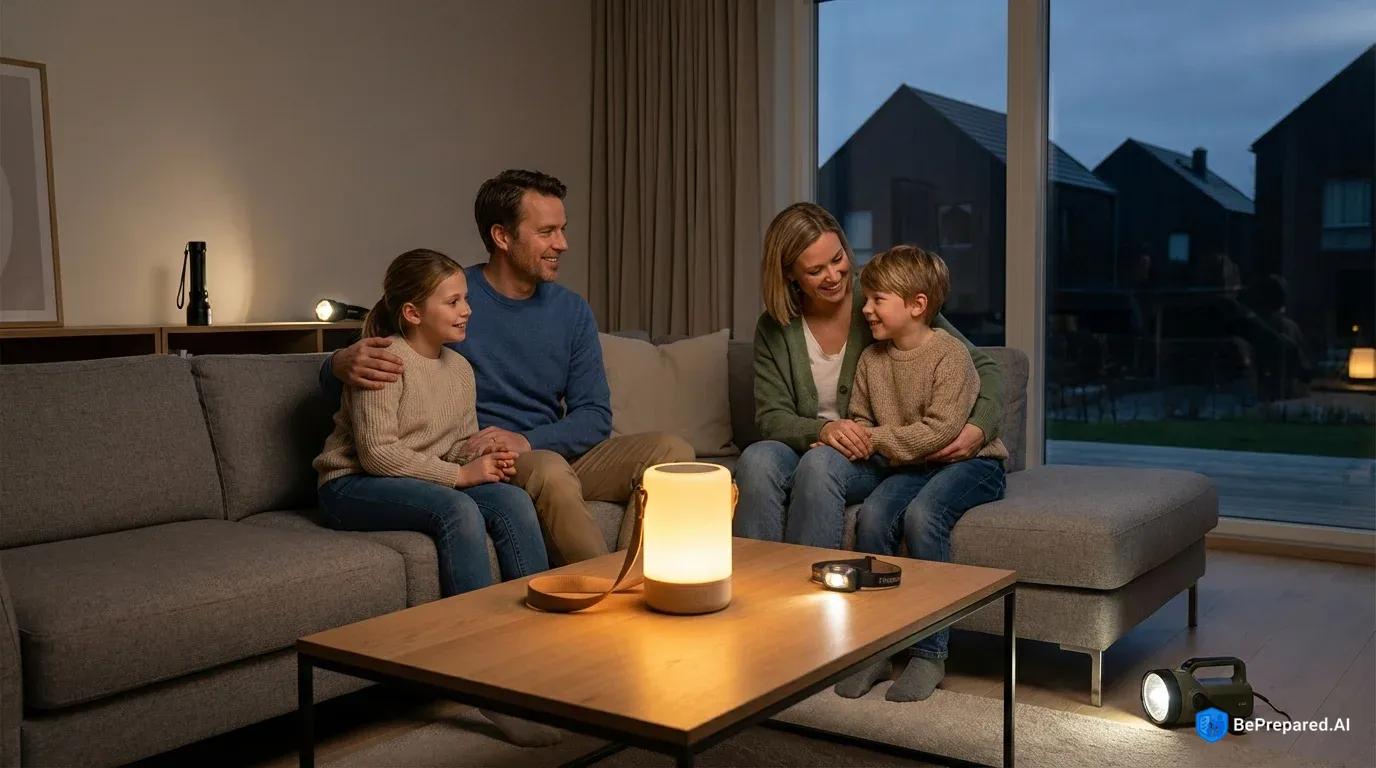
The variety of battery-powered lighting extends well beyond handheld flashlights. LED lanterns offer 360-degree illumination that can light an entire room, making them ideal for family gathering spaces during outages. Unlike directional flashlights, lanterns allow multiple people to share the light for activities like eating dinner, playing games, or simply being together during stressful situations. Many modern LED lanterns include dimming features, letting you conserve battery power when you need just a soft glow versus full brightness.
Reading lights and headlamps fill another important niche in your emergency lighting arsenal. Headlamps keep your hands free for cooking, repairs, or caring for children while providing directed light exactly where you're looking. This hands-free advantage makes them invaluable during emergencies when you're likely juggling multiple tasks simultaneously. Clip-on reading lights serve anyone who finds comfort in reading during stressful times, providing focused illumination without draining the batteries of your primary light sources.
When selecting battery-powered options, look for models that accept common battery sizes like AA or D cells. These are easier to stockpile and find during emergencies. Some premium options include rechargeable battery packs with USB charging capabilities, offering flexibility when power is available. You don't need the most expensive models to start. A basic LED flashlight and lantern will serve you well in most situations.
Battery life varies significantly between different models and brightness settings. LED lanterns typically offer extended runtime depending on brightness settings and battery capacity . Reading product reviews and specifications helps you understand what to expect from different models. Remember that lower brightness settings dramatically extend battery life, so lights with adjustable brightness give you more flexibility during longer outages.
Hand-Crank and Solar Options
Hand-crank and solar-powered lights eliminate the single greatest weakness of battery-powered options: eventual battery depletion. Hand-crank lights provide reliable lighting without battery dependence, making them essential backup options when your primary lights fail or during extended emergencies where battery supplies run low . These mechanical devices convert your physical effort directly into electrical energy stored in small internal capacitors or rechargeable batteries.
The reliability factor of hand-crank lights stems from their independence from external resources. As long as you can turn the crank, you'll have light. While cranking times and light duration vary by model, these devices provide genuine peace of mind knowing you'll never be completely without light. Many emergency radios incorporate hand-crank lighting features, combining two critical emergency functions in a single device.
Hand-crank lights work best as backup options rather than primary lighting sources. The physical effort required makes them less practical for extended use. However, having one or two hand-crank devices ensures you're never left completely in the dark, even if all your batteries die.
Solar lanterns and lights harness the sun's energy, offering another battery-independent option for emergency preparedness. Solar lights can provide several hours of illumination on a full charge, with duration varying by model and battery capacity . The charging requirements vary by model and weather conditions. Direct sunlight charges most solar lights more quickly, while cloudy conditions require longer charging times for a complete charge. This weather dependency represents both an advantage and limitation—you're not buying batteries, but you need adequate sunlight to maintain functionality.
Solar lights work particularly well if you have outdoor space where you can charge them during the day. Some people keep solar lights in sunny windows during normal times, ensuring they're always charged and ready. This approach turns solar lights into a set-it-and-forget-it solution that requires minimal maintenance.
Durability considerations become paramount with hand-crank and solar options since they often serve as your last-resort lighting when everything else fails. Quality models feature ruggedized construction with water-resistant or waterproof housings, protecting sensitive solar panels and internal mechanisms from damage. The mechanical components in hand-crank models represent potential failure points, so selecting units with metal gears rather than plastic internals significantly improves long-term reliability. Solar panels should be protected by impact-resistant covers, as cracked panels dramatically reduce charging efficiency.
Many preparedness experts recommend testing these devices monthly and storing them where temperature extremes won't degrade internal batteries or electronic components. This regular testing ensures your backup lighting actually works when you need it.
- Store Batteries Separately
- Keep batteries out of emergency lights during storage to prevent corrosion and leakage. Store in a cool, dry place.
- Monthly Testing Routine
- Test all emergency lights once per month by clicking them on/off to verify function and check battery levels if applicable.
- Avoid Heat Exposure
- Never store emergency lights in hot cars, attics, or direct sunlight - heat damages batteries and plastic components.
- Keep Accessible
- Store emergency lights in easy-to-reach locations that all family members know about, not buried in storage.
Safety and Maintenance
Proper storage of emergency lighting equipment determines whether it functions when needed or becomes another source of frustration during a crisis. Store flashlights and lanterns in consistent, easily accessible locations that every family member knows. The bedroom, kitchen, and main living area should each have dedicated emergency lighting readily available. Avoid storing lights in locations where temperature extremes could damage batteries or electronic components—that garage shelf might seem convenient, but summer heat accelerates battery degradation.
Battery care represents the most critical maintenance task for emergency lighting preparedness. Checking your batteries regularly helps ensure they haven't leaked, corroded, or depleted . Alkaline batteries can last several years in storage when kept at room temperature, but this lifespan decreases in hot environments. Consider this regular check a recurring appointment on your calendar, similar to changing smoke detector batteries. During these inspections, test each light to verify functionality and replace any questionable batteries immediately.
Store spare batteries in their original packaging to prevent contact with metal objects that could cause shorts or discharge. Keeping a dedicated box or drawer for emergency lighting supplies makes everything easier to find and maintain.
Establishing a testing schedule goes beyond battery checks. Regular testing of hand-crank and solar lights ensures mechanical components remain functional and familiarizes family members with operation. Run each battery-powered light for several minutes during tests, rotating through brightness settings if available. This testing serves multiple purposes: verifying functionality, preventing battery terminal corrosion through occasional use, and building muscle memory for operation during high-stress situations.
Document your testing in a simple log—a notebook or smartphone app works equally well—noting any issues or items needing replacement. This record helps you track which items need attention and when you last replaced batteries.
Safety warnings deserve serious attention, particularly regarding what not to use during power outages. Never use gas or propane-powered lights indoors, as they produce carbon monoxide . This warning extends to camping lanterns, portable heaters with lighting features, and any combustion-based lighting. Carbon monoxide poisoning is a real danger that can happen quickly in enclosed spaces.
Similarly, candles present significant fire hazards, especially during emergencies when you're distracted or stressed. If you choose to keep candles as backup lighting, use them only under direct supervision, placed in sturdy holders on stable surfaces away from flammable materials. Battery-powered LED candles offer the ambiance without the fire risk, making them worth considering for families with children or pets.
Create your emergency lighting plan using our printable checklist to ensure you've covered all essential preparation steps and maintenance schedules. Having a written plan removes the guesswork and helps you stay organized.
Taking Your First Steps
Starting your emergency lighting preparation doesn't require a huge investment or complicated planning. Begin with one quality LED flashlight and one LED lantern for your main living space. Add a headlamp if you want hands-free lighting. This basic setup handles most short-term outages and gives you a solid foundation to build on.
Once you have these basics, you can gradually add lights for other rooms, backup batteries, and alternative power options like hand-crank or solar lights. Spreading out your purchases over time makes the process affordable and less overwhelming.
Regular maintenance transforms emergency lighting from theoretical preparedness into practical readiness. The difference between fumbling in the dark and confidently navigating an outage comes down to these consistent tasks performed when everything's working fine. Your future self, standing in a darkened home, will thank you for the time invested in proper preparation.
Remember, every small step you take improves your readiness. You don't need a perfect system from day one. Start simple, test your equipment regularly, and expand your setup as you learn what works best for your household. With reliable emergency lighting in place, you'll face the next power outage with confidence instead of stress.