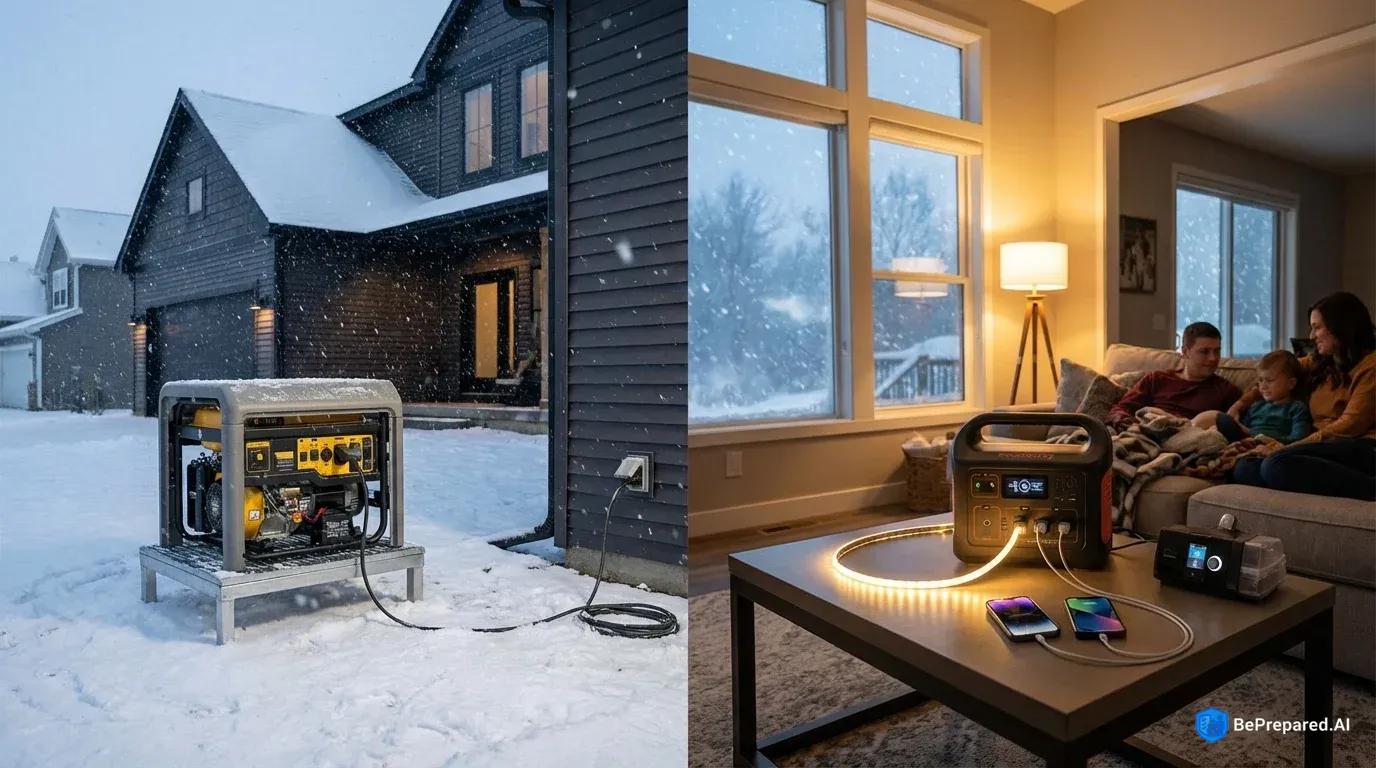
Understanding Your Winter Power Backup Options
The thermometer had plunged to minus fifteen when Sarah's lights flickered twice and went dark. Outside, an ice storm had transformed her suburban street into a crystalline nightmare, and somewhere in the darkness, a transformer had given up the fight. She reached for her phone's flashlight, then stopped—her backup power system hummed to life automatically. While her neighbors scrambled for candles and worried about their freezers, Sarah's refrigerator continued running, her furnace blower kept circulating warm air, and her medical equipment never missed a beat.
This scenario plays out thousands of times each winter across North America. Power outages spike during winter months, driven by ice accumulation on power lines, wind damage from winter storms, and increased electrical demand overwhelming aging infrastructure . When temperatures drop below freezing, a power outage transforms from an inconvenience into a genuine emergency. Without electricity, your furnace blower won't circulate heat even if you have gas heat. Water pipes can freeze and burst in as little as six hours when temperatures plummet. For anyone relying on electrically powered medical devices like oxygen concentrators or CPAP machines, backup power isn't optional—it's essential.
The good news is that portable backup power technology has evolved dramatically in recent years, giving you two distinct options: traditional gas-powered generators and modern battery-powered stations. Each brings specific advantages and limitations to your winter preparedness strategy. The gas generator sitting in your neighbor's garage can power their entire home for days on end, but it requires outdoor operation in brutal weather and constant fuel management. The sleek power station you've seen advertised online operates silently indoors without emissions, but its battery capacity limits what you can run and for how long.
Choosing between these technologies isn't about finding the "best" option—it's about matching the right tool to your specific needs, living situation, and capabilities. Safety must drive this decision above all else. Generator misuse is a leading cause of carbon monoxide deaths during power outages, while frozen pipes cause billions in property damage . Your backup power solution needs to keep you safe first, comfortable second.
Gas Generators: Power and Performance
Gas-powered generators represent the traditional backbone of residential backup power, and for good reason—they deliver substantial electrical output that can keep an entire household running through extended outages. Modern portable generators range from compact 2,000-watt units to robust 12,000-watt models . This raw power capacity makes generators the go-to choice for homeowners who need comprehensive backup coverage or live in rural areas where outages routinely stretch into days rather than hours.
Understanding generator capacity requires some basic electrical math. A typical refrigerator draws between 600-800 watts during operation, though it requires a surge of 1,200-1,500 watts when the compressor kicks on. Your furnace blower might consume 600-900 watts. Add a few lights, your internet router, phone chargers, and perhaps a space heater, and you're looking at a continuous load of 2,000-3,000 watts with surge requirements pushing higher. A mid-sized 5,000-watt generator handles this scenario comfortably, leaving headroom for additional loads. Larger 7,000-12,000 watt units let you run your home almost normally, powering multiple rooms, a water heater, and even some luxury items like your television or coffee maker.
Portable generators can provide 3,000-8,000 watts for 8-12 hours on a single tank . The fuel equation becomes critical during winter outages. Generators consume gasoline at rates directly proportional to their load—a 5,000-watt generator running at half capacity typically burns through a gallon of fuel every three to four hours. During a three-day winter storm outage, you might need twenty to thirty gallons of gasoline to maintain essential power around the clock. This fuel requirement creates multiple challenges. Gasoline storage demands proper containers, stabilizer additives for long-term storage, and safe storage locations away from living spaces. In winter conditions, you'll be trudging through snow and ice to refuel every few hours, a task that becomes genuinely miserable at two in the morning when the temperature has dropped to single digits and the wind is howling.
Generator operation during winter presents unique challenges beyond fuel management. These machines must operate outdoors, and the Consumer Product Safety Commission is unequivocal: generators must remain at least twenty feet from any building opening—doors, windows, or vents . This distance requirement exists because generators produce lethal concentrations of carbon monoxide, an odorless, colorless gas that kills without warning. During winter outages, carbon monoxide poisoning from generators becomes a leading cause of storm-related deaths, claiming lives when well-meaning people move generators into garages, covered porches, or basements to protect them from weather or reduce noise .
Setting up a generator twenty feet from your house in a blizzard tests your commitment to preparedness. You'll need a clear path through snow, proper electrical connections via heavy-duty outdoor-rated extension cords or a transfer switch installation, and some method to protect the generator from accumulating snow and ice while maintaining adequate ventilation. The generator itself must be positioned on a stable, level surface—challenging when everything is covered in snow and ice. You'll also discover that gasoline engines don't appreciate extreme cold. Starting a generator when temperatures drop below zero often requires multiple attempts, and some models need to be stored in slightly warmer locations or equipped with cold-weather starting aids.
Maintenance represents another significant consideration. Generators require regular oil changes, spark plug replacements, air filter cleaning, and fuel system maintenance. Before winter storm season, you should test-run your generator under load, verify that your fuel is fresh and properly stabilized, and confirm that all extension cords and connections remain in good condition. Many people purchase generators with the best intentions, then discover them non-functional when actually needed because they've sat unused for months or years without proper maintenance. The machine that could save your home from frozen pipes becomes a useless hunk of metal because stale fuel gummed up the carburetor.
Generator Advantages
Gas generators deliver unmatched power output for whole-home backup. They run indefinitely as long as you have fuel available. They handle high-draw appliances like well pumps, electric water heaters, and central air conditioning without breaking a sweat. The upfront cost remains lower than comparable power station setups. For rural properties or areas with frequent extended outages, generators provide the runtime and capacity that battery systems simply cannot match.
Generator Limitations
The outdoor operation requirement becomes brutal during winter storms. Carbon monoxide risk demands constant vigilance and proper setup. Noise levels make sleep difficult and alert neighbors to your powered status. Fuel storage and management add complexity and ongoing costs. Cold weather starting can be frustrating or impossible without preparation. Regular maintenance requires time, knowledge, and expense. The physical demands of setup, refueling, and operation may exceed capabilities of some users.
- Power Requirements Assessment
- Calculate total wattage needs and peak load demands for your application
- Space & Installation Constraints
- Evaluate available physical space, ventilation requirements, and installation limitations
- Budget Analysis
- Compare initial costs, operational expenses, and long-term maintenance requirements across solutions
- Maintenance Capability
- Assess internal technical expertise and availability of local service providers
- Environmental Factors
- Consider temperature ranges, humidity levels, and environmental regulations
- Reliability Requirements
- Determine acceptable downtime tolerance and need for backup systems
Portable Power Stations: Clean and Quiet
Portable power stations represent the new generation of backup power technology, essentially oversized battery packs equipped with multiple outlet types and sophisticated charging systems. Unlike generators, these units produce zero emissions, operate in complete silence, and can be used safely anywhere—including inside your bedroom if needed. The largest consumer models currently top out around 2,000-3,000 watts of continuous output, with some newer units offering expandable battery capacity through modular add-ons that can push total storage above 10,000 watt-hours .
The fundamental difference between power stations and generators lies in their operational model. A generator creates electricity continuously as long as you feed it fuel—it's an active power source. A power station stores electricity in batteries for later use—it's a reservoir that eventually runs dry. This distinction shapes everything about how you use them. That 2,000-watt-hour power station might run your refrigerator for six to eight hours, or power a small space heater for two hours, or keep your internet router, phone chargers, and LED lights running for a day or more. The math depends entirely on what you're powering and for how long.
Battery capacity gets measured in watt-hours (Wh), which tells you the total energy stored. A 1,000Wh power station can theoretically deliver 1,000 watts for one hour, or 500 watts for two hours, or 100 watts for ten hours. In practice, efficiency losses and battery protection systems reduce these numbers by roughly 15-20%. When comparing power stations, you'll see models ranging from compact 300Wh units designed for camping to substantial 3,000Wh systems intended for serious backup power. Larger capacity means longer runtime, but also significantly higher cost and weight—a 3,000Wh power station can weigh eighty pounds or more.
The indoor operation capability fundamentally changes winter outage dynamics. When the storm hits and power fails, you simply move your power station to wherever you need electricity. Run your refrigerator from the kitchen counter. Power a space heater in your bedroom. Charge medical equipment from your nightstand. No trudging through blizzards to refuel, no carbon monoxide risk, no noise disturbing your sleep. This convenience factor cannot be overstated when you're dealing with multi-day outages in brutal winter conditions. Power stations excel at running small electronics and medical devices, while generators are better suited for high-draw appliances .
Charging options give power stations remarkable flexibility compared to generators' single-fuel dependency. Most units accept charging from three sources: standard wall outlets (when grid power is available), 12-volt car charging ports, and solar panels. The solar charging capability creates genuine energy independence—given enough solar panels and sunny weather, you can recharge your power station during the day and use that stored energy through the night, indefinitely. However, winter solar charging presents challenges. Short daylight hours, low sun angles, and frequent cloud cover during winter storms significantly reduce solar panel output. That 200-watt solar panel might only generate 50-75 watts on a cloudy winter day, meaning recharging a depleted 2,000Wh power station could take two full days of available daylight.
Temperature affects battery performance substantially. Lithium batteries—the type used in virtually all modern power stations—lose capacity in cold conditions. Below freezing, you may experience noticeable capacity reduction compared to room temperature performance. At extreme temperatures below zero, capacity can drop significantly. Most power stations include battery management systems that prevent charging when temperatures fall too low, protecting the cells from damage. This means your power station needs to be kept relatively warm to function optimally—another advantage of indoor operation, but a consideration if you store it in an unheated garage.
The silent operation delivers unexpected benefits during outages. You can sleep normally while your power station maintains your refrigerator. You can hold conversations, hear important weather alerts, or detect unusual sounds that might indicate problems with your home. Generator owners often describe the constant engine noise as oppressive during multi-day outages, creating stress and making communication difficult.
Power Station Advantages
Zero emissions allow safe indoor operation anywhere in your home. Silent running means no noise disruption during sleep or daily activities. No maintenance requirements beyond keeping the unit charged. Instant power availability without starting procedures or warm-up periods. Multiple charging options including solar for true energy independence. Compact storage in climate-controlled spaces. Portability allows evacuation with your power source. No fuel storage or management headaches.
Power Station Limitations
Limited capacity restricts runtime compared to fuel-based generators. Higher upfront costs for equivalent runtime on essential loads. Battery degradation over time regardless of usage patterns. Cold weather reduces battery performance and may prevent charging. Solar recharging becomes unreliable during winter storms. Insufficient capacity for whole-home backup or high-draw appliances. Recharge time can be lengthy, especially via solar or car charging. Not suitable as sole backup solution for extended outages without substantial investment in multiple batteries.
Real-World Performance Comparison
Walking through the practical realities of generator versus power station ownership reveals costs and considerations that extend far beyond the initial purchase price. A quality portable generator in the 5,000-7,000 watt range typically costs $600-$1,200, while power stations with comparable runtime for essential loads range from $1,500-$3,000 depending on capacity. This initial investment gap narrows when you factor in required accessories. That generator needs heavy-duty extension cords or a professionally installed transfer switch ($500-$1,500), fuel storage containers, oil, and spare parts. The power station arrives ready to use, though you might invest in solar panels ($300-$800) for recharging capability.
Operating costs tell a different story. During a typical three-day winter outage, running a generator to maintain essential circuits—refrigerator, furnace blower, some lights and electronics—consumes approximately twenty-five gallons of gasoline. At current fuel prices averaging $3.50 per gallon, that's $87.50 per outage. The same outage powered by a large power station recharged via solar panels (weather permitting) costs essentially nothing beyond the initial equipment investment. However, if you're recharging from grid power between outage periods or using a car to recharge, you're paying for electricity or gasoline, though typically less than direct generator operation.
Maintenance requirements diverge dramatically between these technologies. Generators demand regular attention: oil changes every 50-100 hours of operation, air filter cleaning or replacement, spark plug replacement annually, fuel system maintenance, and carburetor cleaning if fuel sits too long. You'll spend $50-$100 annually on maintenance supplies, plus several hours of your time. Many generator owners also pay for annual professional servicing ($100-$200) to ensure reliability. Power stations require virtually zero maintenance—keep them charged, protect them from temperature extremes, and they're ready whenever needed. Battery degradation occurs gradually over years, with most lithium batteries maintaining good capacity after hundreds of charge cycles, but this represents normal wear rather than maintenance.
Lifespan calculations reveal interesting economics. A well-maintained generator typically delivers 2,000-3,000 hours of operation before requiring major service or replacement. If you average twenty hours of use per year during outages, that's potentially fifteen to twenty years of service—impressive longevity. Power stations have shorter absolute lifespans, with batteries degrading over time regardless of use. Expect seven to ten years of reliable service before battery capacity drops enough to necessitate replacement. However, power station manufacturers are beginning to offer replaceable battery modules, potentially extending useful life significantly.
Winter-specific performance differences become apparent during actual outages. Since the average winter power outage lasts 4 hours , power stations handle most situations effectively. Generators excel at extended runtime—as long as you have fuel, they keep running. During a week-long outage following a severe ice storm, a generator with adequate fuel supply maintains power continuously. A power station, even a large one, will need recharging multiple times. If you lack solar panels or the weather prevents effective solar charging, you're limited to car charging (slow and fuel-intensive) or waiting for grid power restoration. This limitation makes power stations less suitable as sole backup solutions in areas prone to extended winter outages.
The noise factor affects more than just comfort. Generator operation alerts everyone in the neighborhood that you have power, potentially creating security concerns during extended outages when resources become scarce and tensions rise. The silent power station keeps your preparedness private. Conversely, generator noise can provide psychological comfort—you can hear it running, confirming operation without checking. Power stations operate silently, requiring you to verify operation through display screens or by confirming that connected devices are receiving power.
Storage and portability considerations matter year-round. Generators require outdoor storage or well-ventilated garage space, protection from weather and pests, and fuel storage away from living areas. They're heavy—a 7,000-watt generator weighs 150-200 pounds—making relocation difficult. Power stations can be stored anywhere climate-controlled, take up minimal space, and remain portable enough for one person to move. This portability means you can evacuate with your power station if needed, bringing backup power to wherever you shelter.
Cold-start reliability presents a crucial winter consideration. Quality generators with electric start systems and fresh fuel typically start reliably even in cold weather, though you might need several attempts below zero. Pull-start generators become genuinely difficult to start in extreme cold, requiring significant physical effort when you're already stressed and cold. Power stations simply turn on—no starting procedure, no warm-up period, instant power availability. This reliability advantage shines at three in the morning when the power fails during a blizzard and you need immediate power to keep your pipes from freezing.
Making Your Decision
Selecting your winter backup power solution starts with honest assessment of your actual needs rather than worst-case scenarios. Begin by identifying your critical loads—the equipment that absolutely must continue operating during an outage. Walk through your home and list every essential item: refrigerator, freezer, furnace blower, well pump if applicable, medical equipment, phone charging, internet router for communication. Research the wattage requirements for each item. Your refrigerator nameplate or manual provides this information, as do online resources for common appliances.
Calculate your total essential load by adding the running wattage of everything you might operate simultaneously. Don't assume you'll run everything at once—you won't run the microwave while the space heater operates. Identify your highest likely simultaneous load, then add 20% for safety margin and surge requirements. This number determines your minimum power capacity. If your calculation shows 2,500 watts of essential load, you need either a 3,000+ watt generator or a power station with sufficient capacity and multiple batteries to maintain that load for your target duration.
Duration expectations shape your choice significantly. If outages in your area typically last four to twelve hours, a moderately sized power station (1,500-2,000Wh) can maintain essential loads through the crisis, especially if you practice load management—running the refrigerator for thirty minutes each hour rather than continuously, using LED lights instead of incandescent, heating one room rather than the whole house. If you regularly face multi-day outages, generator runtime advantages become compelling unless you invest in substantial power station capacity plus solar charging.
Budget analysis must include total cost of ownership, not just purchase price. A $800 generator plus $300 in accessories and fuel storage equals $1,100 initial investment, then $75-$100 annually in maintenance and fuel costs. Over ten years, you're looking at $1,850-$2,100 total. A $2,000 power station with $500 in solar panels costs $2,500 initially with minimal ongoing costs, totaling perhaps $2,600 over ten years including one battery replacement. The numbers often end up closer than initial prices suggest, though generators maintain an edge for budget-conscious buyers who can handle the maintenance requirements.
Your physical capabilities and living situation impose practical constraints. Generators require physical strength to move, start (if pull-start), and refuel. They demand outdoor space at least twenty feet from your home with protection from weather. If you're elderly, have mobility limitations, or live in an apartment or condo, these requirements may be insurmountable. Power stations accommodate virtually any living situation and physical capability—if you can move a heavy suitcase, you can manage a power station.
Storage space availability affects your options. Generators need protected outdoor storage or garage space, plus separate fuel storage meeting safety codes. Power stations require only a closet or corner of a room. If you're space-constrained, the compact nature of power stations provides significant advantage.
Download our Winter Power Solution Comparison Checklist to evaluate your specific needs against both technologies systematically, ensuring you account for all relevant factors before making this important investment.
Risk tolerance plays a role that's often overlooked. Generators carry inherent carbon monoxide risks that demand strict adherence to safety protocols. If you're confident in your ability to always maintain proper distance, ensure adequate ventilation, and operate safely even when exhausted during a multi-day outage, generators remain viable. If you have any doubts—perhaps you have children who might move the generator, or you worry about making mistakes when stressed and tired—the zero-risk profile of power stations provides peace of mind worth the additional cost.
Climate and weather patterns in your specific location influence the decision. If you live in the Pacific Northwest where winter outages occur during cloudy, rainy conditions, solar recharging becomes unreliable, reducing power station effectiveness. If you're in Colorado where winter brings cold but often sunny weather, solar charging remains viable even during outages. If your region experiences severe, extended winter outages regularly, generator fuel independence provides security that battery systems cannot match.
The optimal solution for many households involves both technologies working in complementary roles. A power station handles short outages and provides immediate backup power without hassle, while a generator remains available for extended emergencies. This dual approach costs more initially but provides maximum flexibility and redundancy. You use the convenient power station for 90% of outages, reserving the generator for genuine long-term crises.
Your decision ultimately reflects your specific circumstances, priorities, and resources. The suburban homeowner with garage space and physical capability might choose a 7,000-watt generator for comprehensive backup power at reasonable cost. The condo dweller needs a power station as their only viable option. The rural resident facing week-long outages requires generator capacity and fuel storage. The retiree prioritizing safety and convenience finds power stations worth the premium.
Neither technology is universally superior—each excels in particular scenarios and fails in others. Your task is matching the right tool to your unique situation, ensuring that when the next winter storm knocks out power, you're ready with a solution that keeps you safe, warm, and functional until the lights come back on.