Understanding Food Safety When the Power Goes Out
You're settling in for the evening when suddenly, everything goes dark. The hum of your refrigerator stops. Your first thought might be about finding flashlights or candles, but here's something else to consider—the clock just started ticking on everything in your fridge and freezer.
Food safety during a power outage isn't just about avoiding an upset stomach. It's about understanding how quickly bacteria can transform your groceries from safe to hazardous. The science is straightforward: bacteria multiply fastest in temperatures between 40°F and 140°F (danger zone) . When your refrigerator loses power, it begins warming up. Your food enters this risky temperature range where harmful bacteria like Salmonella, E. coli, and Listeria thrive.
The good news? You have some time. An unopened refrigerator will keep food cold for about four hours . Your freezer gives you even more breathing room. A full freezer maintains temperature for approximately 48 hours if kept closed, while a half-full freezer holds temperature for about 24 hours . These windows of safety are your lifeline during an outage. They're also surprisingly short when you consider how long some power disruptions can last.
Understanding these timeframes transforms how you approach an outage. Instead of opening your refrigerator every hour to check on things (which only speeds up warming), you'll know to keep it sealed tight. Instead of assuming everything is fine because it still feels cool to the touch, you'll use a thermometer to make informed decisions. This knowledge is the foundation of keeping your family safe when the power grid fails you.
- Produce Zone (40°F)
- Crisper drawers for fruits and vegetables. Use within 1-2 weeks. Yellow color-coding for medium priority.
Keep Your Food Cold Longer: Essential Tips
Once the power goes out, every action you take either preserves your food's safety or shortens its lifespan. Think of your refrigerator and freezer as insulated coolers. They work beautifully when sealed, but lose their effectiveness the moment you break that seal.
The single most important rule is deceptively simple: keep those doors closed. Every time you open the refrigerator door, cold air—which is denser and heavier than warm air—literally falls out. Warmer room-temperature air rushes in to replace it . It's like opening a window on a winter day and watching your home's warmth escape. Before the power goes out, make a mental inventory of what's inside. That way you're not standing there with the door open, deciding what to eat.
If you know a storm is coming or have warning of potential power issues, prepare your refrigerator and freezer strategically. Group foods together in both appliances. This isn't just about organization—it's physics. Foods grouped closely together help keep each other cold, similar to how a group of people huddled together stays warmer than individuals standing apart . A tightly packed freezer maintains its temperature far better than one with items scattered around with air gaps between them.
Consider using your freezer as a cold-production facility. If you have advance warning, freeze containers of water or gel packs. These ice blocks serve double duty. They help your freezer stay colder longer, and you can transfer them to your refrigerator to extend its safe temperature range beyond those critical four hours. You can also move items from your refrigerator into your freezer. Milk, eggs, and other perishables will stay safe longer in the colder environment.
Have coolers ready and know where to find ice. If the outage extends beyond a few hours, you can transfer your most valuable perishables into coolers packed with ice. This strategy works best for items you'll need to access regularly. It prevents you from opening your refrigerator repeatedly. Keep a thermometer in your cooler too—maintaining that crucial 40°F threshold is just as important in a cooler as it is in your refrigerator .
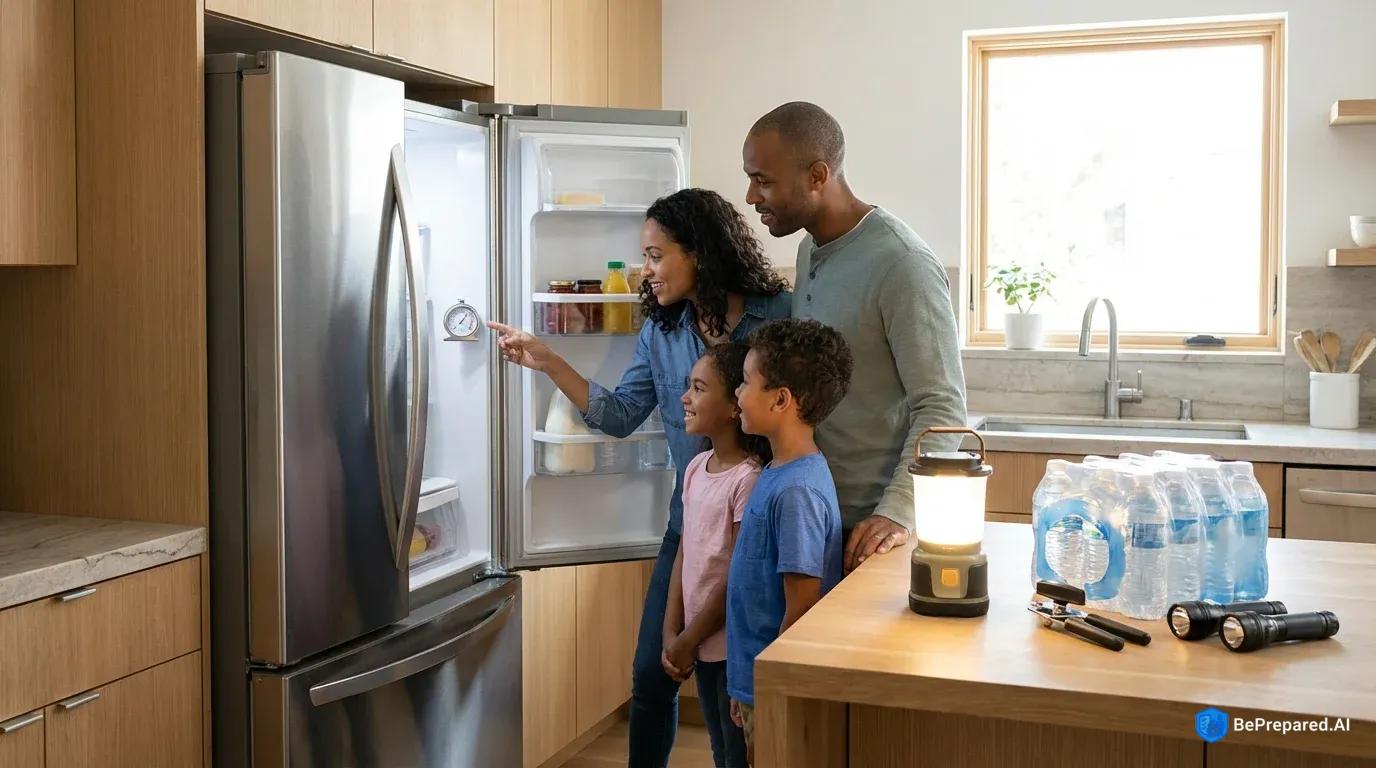
One simple step you can take right now: place an appliance thermometer in both your fridge and freezer. These inexpensive tools take the guesswork out of food safety decisions. When the power comes back on, you'll know immediately whether your food stayed in the safe zone.
How to Tell If Food Is Still Safe
When the power finally comes back on, you face a critical decision point: what stays and what goes? This moment requires objectivity, not optimism. The "when in doubt, throw it out" rule exists for good reason. Foodborne illness can be serious, even life-threatening for young children, elderly adults, and those with compromised immune systems .
Temperature is your primary guide:
Use an appliance thermometer to check your refrigerator's temperature. If it stayed at or below 40°F throughout the outage, your food is safe . For individual food items, use a food thermometer to check internal temperatures. Any perishable food that has been above 40°F for more than two hours should be discarded . If your freezer temperature stayed at or below 0°F, your frozen foods remain safe. Quality may have declined if partial thawing occurred .
Visual and sensory inspection has limits:
Never taste food to determine if it's safe . Harmful bacteria don't always change the taste, smell, or appearance of food . Discard any food with an unusual odor, color, or texture. Understand that food can be dangerous even when it looks and smells fine. Check for ice crystals on frozen foods. If food still contains ice crystals and feels as cold as if refrigerated, you can safely refreeze it. Quality may suffer, though .
Specific foods require different approaches:
Hard cheeses, butter, and margarine can often tolerate brief temperature increases. Soft cheeses, milk, and cream should be discarded if they've been above 40°F for over two hours . Raw meat, poultry, and seafood are highly perishable. If there's any doubt about temperature exposure, these should be the first to go. Condiments like ketchup, mustard, and commercially prepared salad dressings are generally safe due to their high acid content, even after temperature fluctuations .
The financial sting of throwing away a refrigerator full of food is real. But it's minor compared to medical bills or the misery of food poisoning. Document your losses with photos for insurance purposes. Then make the hard calls based on temperature data, not wishful thinking.
Smart Food Storage Before Power Outages
Sarah learned about emergency food storage the hard way. After a hurricane knocked out power to her neighborhood for five days, she watched helplessly as her refrigerator and freezer contents spoiled. She'd stocked up on fresh vegetables, meat, and dairy products before the storm—all the wrong choices. When power returned, she'd lost over $400 worth of groceries. She'd survived on gas station snacks and whatever shelf-stable items she could scrounge from her mostly-empty pantry.
The experience transformed her approach. She realized that true food security during emergencies doesn't come from a well-stocked refrigerator. It comes from strategic planning and the right kinds of supplies. Now, she maintains what emergency preparedness experts recommend: a minimum three-day supply of non-perishable food for each person in her household . This isn't just canned soup and crackers, though those have their place. It's a thoughtfully curated selection of foods her family actually enjoys eating.
Her pantry now includes canned proteins like tuna, chicken, and beans. She keeps canned fruits and vegetables, peanut butter, whole grain crackers, dried fruits and nuts, granola bars, and comfort foods like hot chocolate mix and cookies. She learned that properly stored canned goods remain safe and nutritious for extended periods, making them ideal for emergency supplies that you rotate through regular use . Every few months, she uses the oldest items in her regular cooking and replaces them with fresh stock. This system ensures nothing expires and her emergency supply stays current.
Storage containers matter more than Sarah initially realized. She invested in airtight containers for items like rice, pasta, and flour. These protect them from moisture and pests. She keeps a manual can opener in an accessible spot—a lesson learned when she discovered her electric can opener was useless without power. She also stores several gallons of water, knowing that some emergencies affect water supply alongside electricity.
The smartest move Sarah made was creating a dedicated emergency shelf in her pantry, separate from everyday items. This psychological boundary prevents her from raiding emergency supplies for regular meals. It ensures she always knows exactly what she has available when disaster strikes. She keeps a simple inventory list taped inside the pantry door. She updates it whenever she rotates stock. This system has given her something invaluable: peace of mind knowing that when the next storm comes, her family won't go hungry, regardless of what happens to the power grid.
Your First Steps to Food Security
You don't need to overhaul your entire kitchen today. Start small and build your confidence. Here's how to begin without feeling overwhelmed:
This week: Buy one or two extra cans of food you already eat regularly. Tuna, beans, or soup are great starting points. Grab a package of crackers or granola bars. You've just started your emergency supply.
This month: Pick up an appliance thermometer for your fridge and freezer. Add a few more non-perishable items each time you shop. Focus on foods your family actually likes. Emergency food that nobody wants to eat isn't helpful.
Before the next storm warning: Fill a few containers with water and tuck them in your freezer. Make that mental inventory of what's in your fridge. Locate your manual can opener and flashlight.
The difference between food security and food crisis during a power outage comes down to preparation and knowledge. Understanding how temperature affects food safety, knowing how to maximize your refrigerator and freezer's cold-holding capacity, making informed decisions about what to keep or discard, and maintaining a solid foundation of non-perishable supplies—these aren't complicated skills. They're practical, learnable strategies that protect both your family's health and your budget.
You're not preparing for the end of the world. You're simply making sure a power outage doesn't derail your week. That's not paranoid—that's smart. The next time the lights go out, you'll be ready.