Why Every Car Needs a Winter Emergency Kit
Picture this: you're driving home from work on a Tuesday evening in January when the light snow flurries suddenly intensify into a full-blown winter storm. Visibility drops to nearly zero, and before you can safely pull over, your car slides off the road into a snow-filled ditch. Your phone shows one bar of battery, and you're five miles from the nearest town. This scenario plays out thousands of times each winter across the country, and it's exactly why every vehicle needs a properly stocked winter emergency kit.
The numbers tell a serious story. AAA receives over 7 million winter rescue requests annually . Even more concerning, approximately 70% of winter weather-related fatalities occur in automobiles . These aren't just statistics—they represent real people who found themselves unprepared when winter weather turned dangerous.
Here's the good news: you can prevent most winter car emergencies with basic preparation . A well-stocked emergency kit serves two purposes that make it invaluable. First, it helps you handle common winter challenges like getting stuck in snow or dealing with a dead battery. Second, if you're forced to wait inside your vehicle during a storm, these same supplies become your lifeline until help arrives. Spending a few hours and modest money to assemble a winter kit can literally mean the difference between a minor inconvenience and a dangerous situation.
The beauty of winter car preparedness is its simplicity. You don't need expensive specialized gear or extensive survival training. What you need is a thoughtful collection of basic supplies that address the fundamental challenges of winter emergencies: staying warm, remaining visible to rescuers, maintaining your energy, and getting your vehicle moving again when possible.
Think of it this way: you're not preparing for the worst-case scenario. You're simply making sure you're comfortable and safe if you get delayed. That shift in mindset makes preparation feel less overwhelming and more practical.
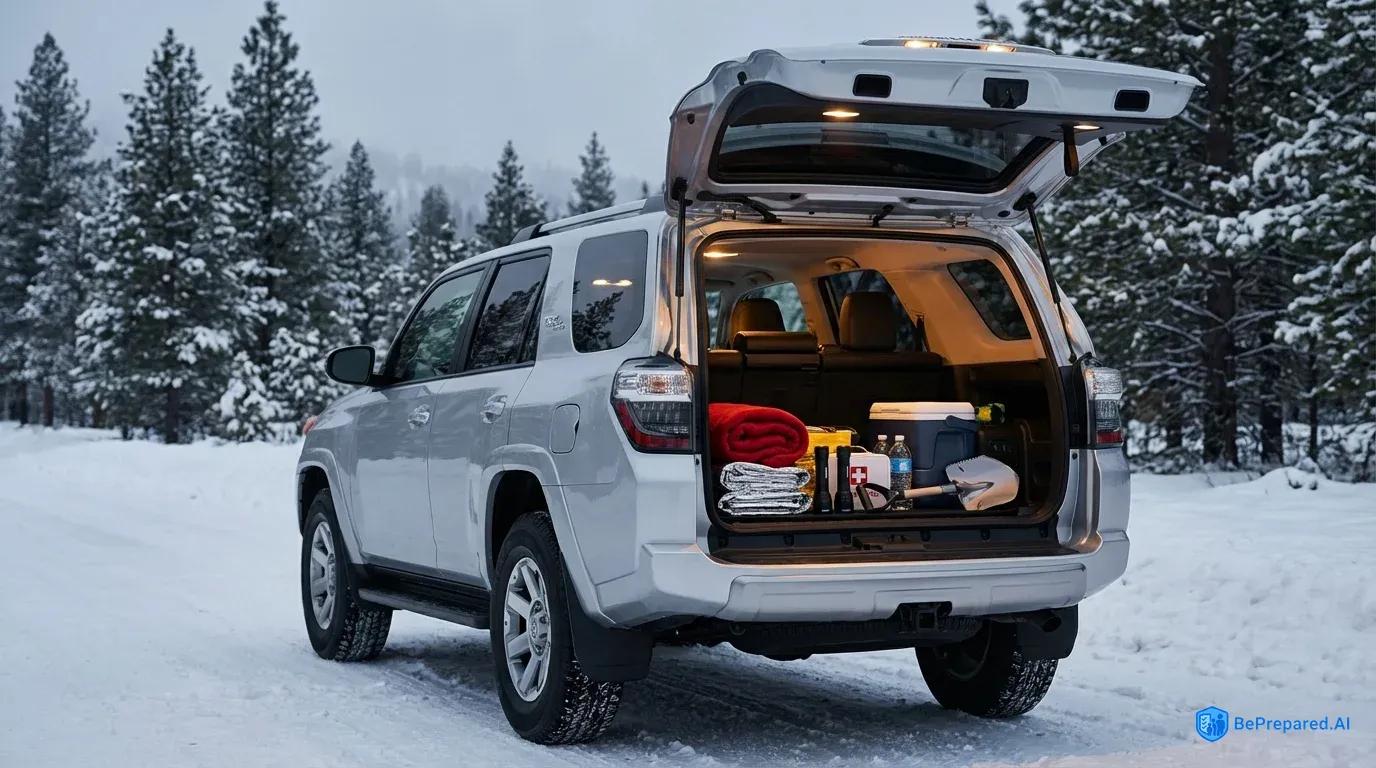
- Emergency Blanket
- Compact thermal blanket keeps you warm if stranded, takes minimal space in glove box
- Flashlight
- Battery-powered light source with fresh batteries for nighttime emergencies
- First Aid Kit
- Basic medical supplies for minor injuries, including bandages and antiseptic wipes
- Small Snow Shovel
- Collapsible shovel to dig out tires if stuck in snow or slush
Essential Survival Items
When you're stranded in winter conditions, your first priority is maintaining body heat and ensuring rescuers can find you. The right survival items transform your vehicle from a metal box into a viable emergency shelter.
Warmth and Shelter:
- Heavy blankets or sleeping bags (one per passenger)
- Extra winter clothing including hats, gloves, and wool socks
- Hand and foot warmers (chemical heat packs)
- Emergency space blankets (reflective mylar)
- Waterproof tarp or emergency bivvy
Research shows that proper blankets and layered clothing can prevent hypothermia even when temperatures plunge below zero . Your car's interior provides some insulation from wind, and quality blankets trap your body heat effectively. Space blankets might look flimsy, but their reflective properties help retain your body heat—critical when you're conserving fuel and can't run the engine continuously.
Don't overthink the blanket selection. An old comforter from your linen closet works just as well as anything you'd buy new. The goal is warmth, not style points.
Emergency Signaling Tools:
- Road flares or LED emergency beacons
- Reflective warning triangles
- Brightly colored cloth or flag
- Whistle for attracting attention
- Flashlight with extra batteries
Emergency flares remain visible even in heavy snow conditions , making them invaluable for alerting other drivers and rescue personnel to your location. LED alternatives offer the advantage of being reusable and safer to store. Traditional flares burn hotter and can be seen through worse conditions, but either option works well for most situations.
First Aid and Medical Supplies:
- Comprehensive first aid kit
- Prescription medications (rotate regularly)
- Basic pain relievers and anti-inflammatory drugs
- Sunscreen and lip balm (snow reflects UV rays)
Winter emergencies often involve minor injuries from slips on ice or frostbite on exposed skin. A well-stocked first aid kit addresses these immediate medical needs while you wait for professional help. You can buy a pre-made kit or assemble your own—both approaches work fine.
Download our printable winter car emergency kit checklist to ensure you haven't missed any critical items when assembling your kit.
Food and Water Supplies
Sarah learned about the importance of emergency food supplies the hard way. Last February, she got stuck on a highway outside Denver during a surprise blizzard. What should have been a 20-minute commute turned into an 11-hour ordeal as traffic completely stopped and emergency crews worked to clear multiple accidents. She had a full tank of gas and warm clothes, but by hour six, her stomach was growling painfully and her mouth felt like cotton. She'd skipped lunch that day, planning to eat when she got home. Now "home" seemed impossibly far away.
This experience highlights why food and water aren't optional extras—they're fundamental survival supplies. Emergency management experts recommend keeping enough food and water in your vehicle to last several days during winter months. That might sound excessive until you consider that major winter storms can close highways for extended periods, and rescue operations prioritize life-threatening emergencies over people who are simply stranded but safe.
Water poses a unique challenge in winter conditions because it freezes. Store water in plastic bottles rather than glass, and keep them in an insulated bag or cooler. Paradoxically, insulation works both ways—it keeps cold out and warmth in. If your bottles do freeze, you can thaw them by keeping them close to your body or running your car's heater periodically. Experts often suggest planning for about one gallon of water per person when preparing emergency supplies. In a pinch, you can melt clean snow, though this requires fuel to run your heater and takes longer than you'd expect.
For food, focus on high-energy, non-perishable options that don't require preparation. Granola bars, trail mix, nuts, dried fruit, and energy bars pack dense calories into small packages. These high-energy foods provide essential fuel that helps your body generate heat in cold conditions . Chocolate, peanut butter, and beef jerky are excellent additions. Avoid foods with high water content that will freeze solid, and choose items you'd actually enjoy eating—stress and cold already challenge your body, and familiar comfort foods provide psychological benefits alongside nutrition.
Store your food supplies in a waterproof container or sealed plastic bags, and rotate them every six months. Mark your calendar to check expiration dates each spring and fall. Keep a manual can opener if you include canned goods, and don't forget utensils or napkins. Small conveniences matter enormously when you're stressed and uncomfortable.
Here's a simple starting point: grab an extra box of granola bars next time you're at the grocery store and toss it in your trunk. That's literally all it takes to begin. You can build from there as you think of other items, but even that one box puts you ahead of most drivers.
Vehicle Recovery and Traction Aids
Getting your vehicle unstuck and back on the road transforms a potential overnight emergency into a minor delay. The right tools and knowledge make this possible even without professional assistance.
Step 1: Assess Your Situation Safely
Before attempting any recovery, put on your hazard lights and set up warning triangles or flares behind your vehicle. Visibility in winter storms is severely limited, and you don't want another vehicle sliding into yours while you work. Put on your warmest clothes and gloves—you'll be outside for a while, and you'll work more effectively if you're not shivering.
Step 2: Clear Snow and Create Traction Pathways
Use a folding shovel to clear snow from around your tires, creating a path in the direction you want to move. Dig out snow from under the vehicle's chassis if it's high-centered. Many winter car problems can be addressed with basic tools like a quality shovel . Don't skimp on this step—the more snow you remove, the less resistance your tires face.
A small folding shovel takes up minimal trunk space and costs less than twenty dollars. That's a pretty good investment for something that might save you hours of waiting in the cold.
Step 3: Apply Traction Materials
This is where cat litter, sand, or commercial traction mats prove their worth. Cat litter or sand can provide critical traction in icy conditions by creating friction between your tires and the slippery surface . Spread your traction material generously in front of your drive wheels (front wheels for front-wheel drive, rear for rear-wheel drive, all four for all-wheel drive). Traction mats—specialized plastic or metal grids—work even better by creating a temporary roadway your tires can grip.
Step 4: Rock Your Vehicle Free
Get in your car and gently shift between drive and reverse, allowing the vehicle to rock back and forth. Don't gun the engine—spinning your tires just digs you deeper and can overheat your transmission. Gentle, steady pressure is key. If you have a passenger, have them push while you apply light throttle, but ensure they stand to the side, never directly behind the vehicle.
Step 5: Use Recovery Equipment if Needed
A tow strap rated for your vehicle's weight can be a lifesaver if another motorist stops to help. Attach it to proper tow points—never to bumpers or suspension components. A small portable jump starter solves dead battery problems without requiring another vehicle, addressing one of the most common winter car issues. Keep basic tools including a tire pressure gauge, as cold weather drops tire pressure significantly, reducing traction.
Step 6: Know When to Stay Put
Sometimes the safest choice is remaining with your vehicle rather than attempting recovery in dangerous conditions. If visibility is near zero, temperatures are extreme, or you're on a busy highway, your car provides shelter and makes you visible to rescuers. You can run your engine periodically to stay warm, but make sure your exhaust pipe remains clear of snow to prevent carbon monoxide buildup.
Keep your gas tank at least half full during winter months . This simple habit ensures you have enough fuel to run your heater if you get stranded, and it prevents fuel line freeze-ups that can happen when tanks run low in extreme cold.
Taking Your First Steps
Your winter emergency kit transforms your vehicle into a mobile survival shelter. With proper supplies for warmth, nutrition, signaling, and recovery, you're prepared to handle whatever winter throws at you—whether that means getting yourself unstuck in 20 minutes or staying safe and comfortable while waiting out a major storm.
The small investment in preparation pays enormous dividends in safety and peace of mind every time you turn the key on a winter day. You don't need to assemble everything at once. Start with one category—maybe throw a blanket and some granola bars in your trunk this weekend. Add a shovel and some cat litter next week. Build your kit gradually, and before you know it, you'll be more prepared than most drivers on the road.
Remember, you're not preparing because something bad will definitely happen. You're preparing so that if something does happen, it stays a minor inconvenience instead of becoming a scary situation. That's the difference between feeling helpless and feeling capable, and it all starts with a few simple supplies in your trunk.