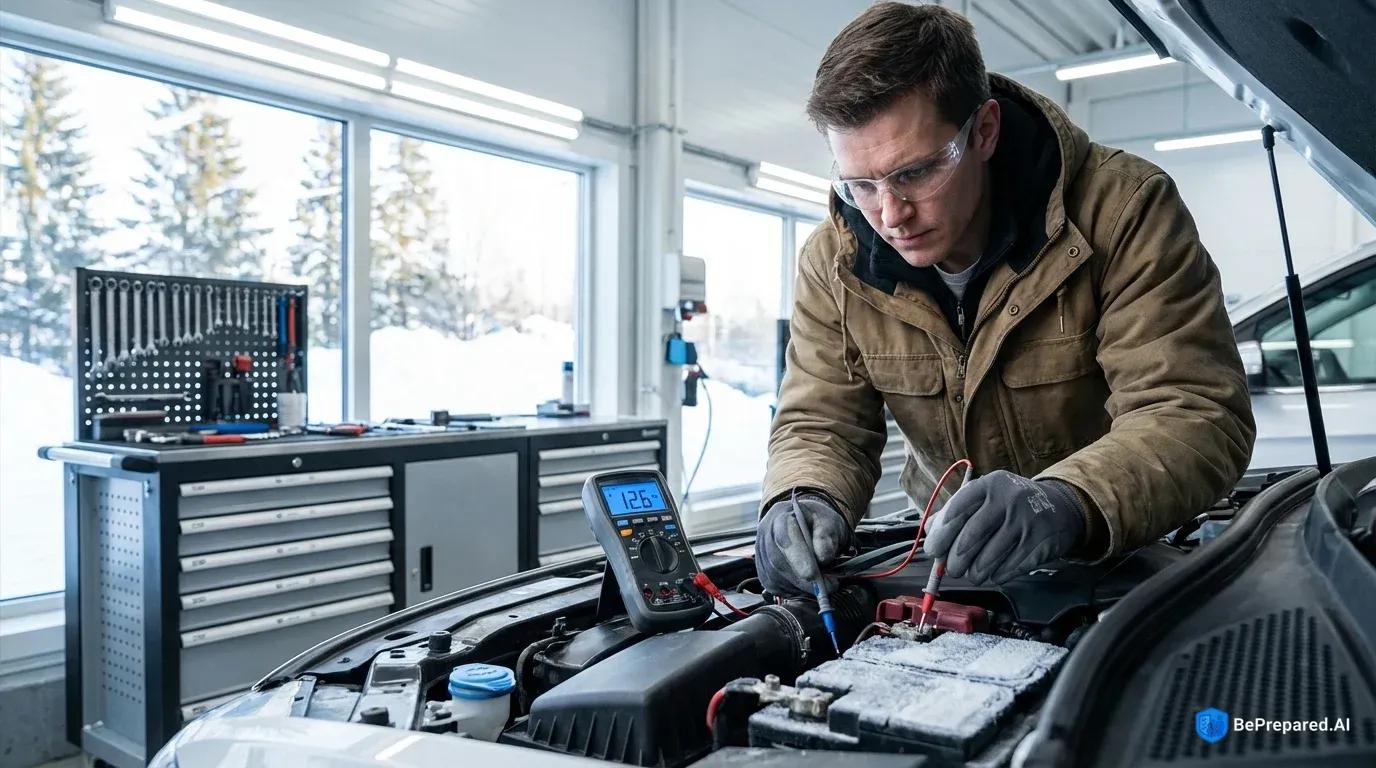
Understanding Winter's Impact on Vehicle Batteries
The morning Sarah turned her key and heard nothing but a pathetic clicking sound, she realized her mistake. The temperature had plummeted to 5°F overnight, and her three-year-old battery—which had seemed perfectly fine during autumn—was now completely dead. She wasn't alone in her driveway frustration that morning; across cold-climate regions, winter claims more batteries than any other season, leaving drivers stranded and scrambling for solutions.
Cold weather transforms your vehicle's battery from a reliable power source into a struggling component fighting against basic chemistry. When temperatures drop, the chemical reactions inside your battery that produce electrical current slow dramatically. This isn't a minor inconvenience—it's a fundamental change in how your battery operates. At 32°F, your battery loses approximately 33% of its available power compared to its performance at 80°F . The situation becomes even more dire as temperatures continue falling. Once the thermometer hits 0°F, your battery has lost more than 50% of its cranking power .
The cruel irony of winter battery performance lies in the simultaneous increase in power demand. While your battery struggles to produce electricity in the cold, your engine requires significantly more power to start. Cold oil thickens to the consistency of molasses, forcing your starter motor to work harder. The engine itself resists turning over, creating additional electrical demand. This perfect storm of reduced battery capacity and increased power requirements explains why batteries that performed flawlessly in summer suddenly fail on the coldest morning of the year.
Battery age compounds these cold-weather challenges exponentially. The average car battery lasts between three and five years under normal conditions , but severe weather accelerates the aging process. A battery approaching the end of its lifespan might still manage to start your car during moderate temperatures, masking its declining health. Winter exposes these weakened batteries mercilessly. Internal corrosion, sulfation on the plates, and reduced electrolyte effectiveness all worsen with age, and cold temperatures amplify every existing weakness.
Understanding common winter battery failure scenarios helps you recognize warning signs before complete failure strands you. The most frequent pattern involves gradual cranking degradation—your engine turns over more slowly each morning until one day it doesn't turn at all. Another common scenario strikes vehicles that sit unused for several days during cold snaps. The battery slowly self-discharges in the cold, and when you finally attempt to start the vehicle, there's insufficient power remaining. Perhaps most frustrating are the batteries that fail intermittently, starting the car one morning but dying the next, creating unpredictable reliability that makes planning difficult. Each scenario stems from the same root cause: cold temperatures pushing an already-stressed battery beyond its operational limits.
Preventive Battery Maintenance
Walking through a systematic battery maintenance routine before winter arrives eliminates most cold-weather failures. Think of this process as a comprehensive health check that identifies problems while you still have time to address them on your schedule rather than during a roadside emergency.
Start your inspection with a thorough visual examination of the battery itself. Look for physical damage to the battery case—cracks, bulges, or warping indicate internal problems that will worsen in cold weather. Check the manufacturing date stamped on the battery casing, usually formatted as a letter-month and number-year code. If your battery has celebrated its third birthday, consider it a candidate for replacement regardless of apparent performance. The top of the battery should be clean and dry; moisture combined with dirt creates a conductive path that slowly drains power even when the vehicle sits idle.
Terminal connections deserve special attention during your inspection. Remove the negative cable first (always disconnect negative before positive to prevent short circuits), then remove the positive cable. Examine both terminals and cable ends for the telltale blue-green corrosion that builds up where dissimilar metals meet. This corrosion acts as an insulator, preventing proper electrical contact.
Mix a solution of baking soda and water—about one tablespoon of baking soda per cup of water—and use an old toothbrush to scrub away corrosion from both terminals and cable ends. The solution will fizz and bubble as it neutralizes the acidic corrosion. Rinse with clean water and dry thoroughly. Before reconnecting cables, apply a thin layer of dielectric grease or petroleum jelly to the terminals. This protective coating prevents future corrosion from forming. Reconnect the positive cable first, then the negative, ensuring each connection is tight enough that you cannot twist the cable end on the terminal post.
Battery charge level determines not just starting ability but also freeze resistance—a critical factor many drivers overlook. A partially charged battery can freeze at 32°F . When battery electrolyte freezes, it expands and can crack the battery case, causing permanent, irreparable damage. This means a weak battery sitting in your driveway during a cold snap might destroy itself even before you attempt to start the vehicle. A fully charged battery, by contrast, resists freezing at temperatures well below zero, making freeze damage unlikely in most inhabited regions.
Testing battery health provides the most valuable preventive information you can gather. Modern battery testers analyze not just current charge level but also the battery's ability to hold a charge and deliver cranking amperage. Many auto parts stores offer free battery testing, making this critical check accessible to everyone. The test takes about five minutes and provides a printout showing battery condition, charging system performance, and starter draw. Regular testing helps identify weak batteries before they fail completely, giving you advance warning to replace a battery on your timeline rather than winter's schedule.
Load testing specifically measures how well your battery performs under the stress of starting your vehicle. The tester applies a load equivalent to half the battery's cold cranking amp (CCA) rating for fifteen seconds while monitoring voltage. A healthy battery maintains voltage above 9.6 volts during this test. Results below this threshold indicate a battery struggling to meet demands—a battery that might start your car in October but will likely fail in January.
Check the alternator's charging performance simultaneously with battery testing. A failing alternator undercharges your battery, leaving it perpetually weak and vulnerable to cold weather. The charging system typically maintains voltage between 13.7 and 14.7 volts while the engine runs, though specific ranges vary by vehicle. Readings significantly outside this range may indicate charging problems that will drain even a new battery. Address charging system issues immediately—installing a new battery won't solve problems caused by a faulty alternator.
Ready to ensure your battery survives winter? Download our comprehensive Winter Battery Maintenance Checklist for a printable guide you can take to your garage. This detailed checklist walks you through every inspection point and includes a seasonal maintenance schedule to keep your battery healthy year-round.
- Battery Terminal Cleaner
- Dual-sided wire brush tool with protective housing for corrosion removal and contact optimization
Emergency Battery Solutions
Despite your best preventive efforts, you may eventually face a dead battery situation. Knowing proper emergency procedures transforms a potential disaster into a manageable inconvenience. The key lies in having the right equipment and understanding correct procedures that protect both you and your vehicle's sensitive electronics.
Traditional jumper cables remain the most common emergency solution, but using them correctly requires more care than many drivers realize. Modern vehicles contain sophisticated computer systems and sensitive electronics that improper jump-starting can damage permanently. Begin by positioning the functioning vehicle close enough that jumper cables reach comfortably between batteries, but ensure the vehicles don't touch—metal-to-metal contact can create dangerous electrical situations. Turn off both vehicles completely, including all lights, radios, and accessories.
Connect the cables in the precise sequence that prevents electrical system damage. Attach one red clamp to the positive terminal of the dead battery, then connect the other red clamp to the positive terminal of the good battery. Attach one black clamp to the negative terminal of the good battery. Here's where proper procedure diverges from common practice: attach the final black clamp to an unpainted metal surface on the dead vehicle's engine block or frame, away from the battery. This grounding point prevents sparks near the battery, which could ignite hydrogen gas that batteries emit.
Start the functioning vehicle and let it run for several minutes, allowing its alternator to charge the dead battery slightly. Then attempt to start the dead vehicle. Once running, remove cables in reverse order: ground clamp, negative from good battery, positive from good battery, positive from dead battery.
Modern portable jump starters have revolutionized roadside battery emergencies, eliminating the need for another vehicle entirely. These compact devices, roughly the size of a hardcover book, contain powerful lithium batteries capable of delivering the high amperage needed to crank an engine. Quality portable jump starters can typically start several vehicles on a single charge, depending on engine size and conditions . They include built-in safety features that prevent reverse polarity connections and sparking, making them significantly safer than traditional cables for inexperienced users.
Using a portable jump starter follows a simpler procedure than traditional jumping. Ensure the jump starter is fully charged—most units include LED indicators showing charge status. Connect the red clamp to your battery's positive terminal and the black clamp to the negative terminal or a ground point on the engine block. Turn on the jump starter, wait about thirty seconds for the charge to flow into your battery, then attempt to start your vehicle. Once running, disconnect the jump starter promptly to prevent overcharging. Recharge your portable unit as soon as possible after use so it's ready for the next emergency.
Pros and Cons of Emergency Battery Solutions
Traditional Jumper Cables:
- Pros: Inexpensive, widely available, no charging required, work indefinitely if stored properly
- Cons: Require another vehicle, higher risk of incorrect connection, can damage electronics if misused, awkward to use in tight spaces
Portable Jump Starters:
- Pros: No second vehicle needed, built-in safety features, compact and portable, often include USB charging ports and flashlights
- Cons: Require regular charging, lose charge over time when stored, more expensive upfront, limited number of starts per charge
Your vehicle's emergency kit should contain specific items for battery-related failures beyond just jumping equipment. Include a headlamp or flashlight—battery problems often occur in dark parking lots or before dawn. Add insulated work gloves for handling cold metal components and cables. A wire brush helps clean corroded terminals in the field. Include a small container of baking soda for emergency terminal cleaning. Pack emergency contact numbers for roadside assistance services, and ensure your cell phone car charger works properly.
Recognize situations that require professional assistance rather than DIY solutions. If your battery repeatedly dies after jumping, the problem extends beyond a simple dead battery—you're dealing with a charging system failure or parasitic drain that requires diagnostic equipment. If you smell sulfur (rotten eggs) near your battery, stop immediately and call for professional help; this odor indicates dangerous overcharging. Visible battery damage, including cracks, leaks, or severe bulging, means the battery is unsafe to jump-start. When temperatures drop below -20°F, even healthy batteries struggle, and attempting to jump-start a frozen battery risks explosion. In these scenarios, professional towing to a warm garage provides the safe solution.
Long-term Battery Care Strategies
Michael learned an expensive lesson about battery care during his first winter in Minnesota. He kept his car parked outside, made only short trips to the grocery store twice weekly, and couldn't understand why he replaced batteries every eighteen months. His neighbor, driving an identical vehicle, got five years from each battery with a simple difference in approach: garage parking and regular highway drives. The contrast illustrates how daily habits dramatically impact battery longevity.
Where you park your vehicle creates one of the largest variables in winter battery life. Garage parking significantly extends battery life in extreme weather conditions . Even an unheated garage provides substantial protection compared to outdoor parking. The structure blocks wind, preventing the wind-chill effect that makes ambient temperatures feel even colder to exposed components. The garage moderates temperature swings, preventing the repeated freeze-thaw cycles that stress battery chemistry.
If you lack garage access, consider a battery blanket—an insulated wrap with a built-in heating element that maintains optimal battery temperature. These blankets plug into standard outlets and draw minimal power while keeping your battery warm enough to maintain full capacity. Some models include thermostats that activate heating only when temperatures drop below certain thresholds, reducing electricity consumption.
Your driving patterns influence battery health more than most people realize. Short trips—those under twenty minutes—prevent your battery from fully recharging after the heavy draw of starting the engine. Each start consumes significant power, and the alternator needs sustained running time to replenish that charge. If your typical routine involves multiple short trips separated by long parked periods, your battery exists in a constant state of partial discharge.
This chronic undercharging leads to sulfation, where lead sulfate crystals build up on the battery plates and gradually reduce capacity. Combat this pattern by combining errands into single longer trips when possible, and periodically take your vehicle on extended highway drives that allow the charging system to fully replenish battery reserves. A thirty-minute highway drive every week or two can make the difference between a battery that lasts three years and one that reaches five.
Temperature extremes in both directions stress batteries, but winter reveals damage that summer heat initiated. High temperatures accelerate the chemical reactions inside batteries, speeding up both normal operation and degradation processes. A battery that endured a brutal summer arrives at winter already weakened by heat damage. This seasonal tag-team effect explains why batteries in extreme climates—both hot summers and cold winters—fail more frequently than those in moderate regions.
You can't control weather, but you can adjust your replacement schedule accordingly. In harsh-climate regions, consider replacing batteries proactively at three years rather than waiting for the typical four-to-five-year lifespan. The cost of premature replacement is often less than a single towing charge or missed work day.
Develop a seasonal maintenance schedule that addresses battery care during critical transition periods. Before winter arrives—ideally in October—conduct the comprehensive battery inspection and testing described earlier. Clean terminals, check charge levels, and test battery health while you still have time to replace a failing battery on your schedule. As spring approaches, repeat the inspection. Winter stress often damages batteries that limp through the cold season but fail as temperatures warm and you resume normal driving.
Summer preparation should focus on ensuring the battery remains secure in its mounting bracket—vibration from rough roads damages internal components. Check that heat shields remain in place, protecting the battery from engine heat. Verify that the battery case shows no signs of swelling or warping from heat exposure.
Recognize the signs that indicate replacement time has arrived regardless of battery age. Slow engine cranking, especially on the first start of the day, signals declining capacity. Dim headlights at idle that brighten when you rev the engine suggest the battery can't maintain proper voltage. If you find yourself jump-starting more than once in a season, stop treating the symptom and replace the failing battery.
Dashboard warning lights for the battery or charging system demand immediate attention—continuing to drive with a failing battery risks becoming stranded and may damage the alternator as it struggles to compensate. The swollen battery case indicates internal damage from overcharging or freezing and requires immediate replacement. Any visible leaking of battery acid creates both a performance problem and a safety hazard that warrants urgent replacement.
When replacement time comes, invest in a battery that matches or exceeds your vehicle's requirements. The cold cranking amps (CCA) rating indicates starting power in cold conditions—higher numbers provide better cold-weather performance. Match your climate to CCA requirements: moderate climates need minimum specifications, but extreme cold regions benefit from batteries with CCA ratings 20-30% above minimum requirements.
Reserve capacity indicates how long the battery can run essential systems if the alternator fails—higher reserve capacity provides a larger safety margin. Choose batteries with strong warranties, but understand that pro-rated warranties provide diminishing value over time. The difference in cost between economy and premium batteries often amounts to less than one towing charge, making quality batteries a sensible investment.
Battery care extends beyond the battery itself to the entire electrical system. Parasitic drains—electrical components that draw power when the vehicle is off—slowly deplete batteries during parked periods. Modern vehicles have normal parasitic draws for computers, clocks, and alarm systems, typically measured in milliamps. However, aftermarket accessories, faulty modules, or trunk lights that don't shut off can drain batteries overnight.
If your battery repeatedly dies after the vehicle sits for a few days, have a mechanic test for excessive parasitic draw. Identifying and fixing these drains prevents repeated battery failures and the frustration of unpredictable starting problems. Common culprits include aftermarket stereos, poorly installed alarm systems, glove box lights with faulty switches, and malfunctioning door sensors.
Actionable Recommendations
Your battery represents a critical link in your vehicle's reliability chain. Unlike many automotive components that fail gradually with clear warning signs, batteries can transition from adequate to dead with startling speed, especially in cold weather.
Immediate Actions:
- Test your battery before winter arrives, especially if it's over three years old
- Clean battery terminals and apply protective coating
- Verify your emergency kit includes jump-starting equipment
- Check your vehicle's charging system voltage
Seasonal Habits:
- Combine short trips into longer drives to allow full battery recharging
- Park in a garage or use a battery blanket during extreme cold
- Conduct visual battery inspections during oil changes
- Monitor cranking speed for signs of declining battery health
Long-term Planning:
- Replace batteries proactively at three years in extreme climates
- Choose replacement batteries with CCA ratings appropriate for your region
- Address charging system problems immediately to protect battery life
- Keep records of battery installation dates and test results
The investment in preventive maintenance—cleaning terminals, testing capacity, maintaining proper charge—takes less time than a single roadside emergency and costs nothing compared to towing fees and missed commitments. Understanding how temperature affects battery chemistry, recognizing your vehicle's specific vulnerabilities, and developing habits that support battery health transforms winter from a season of automotive anxiety into just another driving condition you've prepared to handle confidently.