Why You Need a Quarantine Food Supply
Picture this: It's 6 PM on a Tuesday when your phone buzzes with an emergency alert. A public health order has just been issued requiring everyone in your area to shelter in place for the next two weeks. Your mind immediately races to your kitchen—what's actually in there? A half-empty box of pasta, some condiments, and maybe yesterday's leftovers. Sound familiar?
This scenario isn't as far-fetched as it might seem. The COVID-19 pandemic taught us that quarantine orders can happen with little warning. When they do, grocery stores become chaotic battlegrounds of panic buying. The American Red Cross now recommends maintaining a minimum two-week supply of food and essentials specifically for quarantine situations . This isn't about doomsday prepping or hoarding—it's about smart, responsible planning that protects both your family and your community.
Having a dedicated quarantine food supply transforms a stressful situation into a manageable one. When you're already stocked up, you don't need to venture out during the critical early days of an outbreak or emergency. You're not contributing to the panic buying that leaves shelves bare and supply chains struggling. Instead, you're calmly settled at home with everything you need. You can focus on your family's health and wellbeing rather than scrambling for basics.
The benefits extend beyond emergencies too. A well-maintained quarantine supply doubles as a buffer against everyday disruptions. Unexpected illness, severe weather, or even just a hectic week where grocery shopping falls through the cracks—your supply has you covered. Think of it as insurance you can eat. You're investing in peace of mind, knowing that whatever happens, your household won't go hungry.
Building this supply doesn't require a massive upfront investment or a basement full of freeze-dried meals. With systematic planning, anyone can create a practical, affordable quarantine food supply that fits their space and budget. You can start small and build gradually. Every item you add to your pantry is one less thing to worry about when an emergency strikes.
- Shelf-Stable Proteins
- Canned tuna, beans, peanut butter - 2 lbs protein sources per person
- Grains & Starches
- Rice, pasta, oats - 5 lbs total per person
- Comfort Snacks
- Crackers, dried fruits, nuts - 2 lbs mixed snacks per person
- Basic Condiments
- Salt, cooking oil, honey - 1 of each item per household
Essential Food Categories for Your Supply
Building a quarantine food supply isn't about randomly grabbing canned goods off the shelf. FEMA recommends maintaining at least a three-day supply per person as an absolute minimum, though two weeks is far more practical for quarantine scenarios . The key is balancing nutrition, shelf stability, and foods your family will actually eat. Let's break down the essential categories that form the foundation of any effective quarantine pantry.
Non-perishable staples form your supply's backbone. These are the foods that provide calories, energy, and versatility without requiring refrigeration. Rice and pasta can anchor dozens of different meals. Canned vegetables and fruits ensure you're getting essential vitamins even when fresh produce isn't available. Dried beans and lentils offer incredible nutritional value and shelf life, though they require cooking time and water.
Don't overlook basics like cooking oil, flour, sugar, and salt. These ingredients transform simple staples into satisfying meals. Properly stored in cool, dry conditions, most of these items maintain quality for a year or longer. Rotate food supplies every six months to keep everything fresh and prevent waste .
Protein sources deserve special attention since they're often the first items to disappear during supply shortages. Canned meats like tuna, chicken, and salmon provide ready-to-eat protein that requires no refrigeration. Peanut butter offers both protein and comfort while lasting months in storage. Canned beans serve double duty as both protein and fiber sources.
If you have the budget and space, shelf-stable milk alternatives and protein powders can round out your options. The goal is variety—eating the same protein source for two weeks straight gets old fast. This can affect morale during an already stressful time.
Comfort foods might seem like luxuries, but they're actually essential for mental health during isolation. Quarantine is stressful. Familiar, enjoyable foods provide genuine psychological relief. Stock crackers, cookies, coffee, tea, hot chocolate, and favorite snacks. These items make shelter-in-place orders more bearable, especially for children who don't understand why their routine has been disrupted.
Comfort foods also use up minimal preparation energy on days when stress has you exhausted. Sometimes a familiar snack or warm cup of cocoa makes all the difference in maintaining a positive outlook during challenging times.
Special dietary needs require advance planning since specialty items often sell out first during emergencies. If anyone in your household has allergies, intolerances, or specific dietary requirements, prioritize those items in your supply. This includes baby formula, gluten-free products, diabetic-friendly foods, or any prescription nutritional supplements. Don't assume you'll find these items during a crisis—stock what you need now.
The WHO recommends maintaining at least a 1-month supply of necessary medications . Apply this same thinking to any special nutritional products your family depends on. Having these items on hand prevents the anxiety of running out during a period when shopping isn't possible.
Storage and Organization Tips
You've purchased your quarantine supplies, and now boxes and cans are piled on your counter. Proper storage determines whether these items remain safe and edible for months or spoil prematurely, wasting your money and effort. Smart storage practices can significantly extend shelf life compared to items kept in warm or humid environments. Let's walk through setting up a storage system that maximizes both space and shelf life.
Step one: Identify your storage location. Find the coolest, driest area in your home away from direct sunlight and heat sources. Basements work wonderfully if they're not damp. A dedicated pantry is ideal, but a closet, under-bed storage, or even a corner of a bedroom can work. Avoid storing food near furnaces, water heaters, or in garages where temperatures fluctuate dramatically.
Consistent, moderate temperatures preserve quality longest. Check your chosen spot for any signs of moisture or pest activity before committing to it. Even a small leak or evidence of mice can ruin your entire supply.
Step two: Implement a FIFO (First In, First Out) rotation system. This prevents waste by ensuring older items get used before newer purchases. Arrange items so the oldest products sit at the front and new additions go to the back. When you buy more rice, for example, move the existing bag forward and place the new one behind it.
Label everything with purchase dates using a permanent marker. You think you'll remember, but six months later, you won't. This rotation system means you're constantly refreshing your supply by using and replacing items. Nothing sits untouched until it expires. Remember to rotate food supplies every six months to maintain freshness .
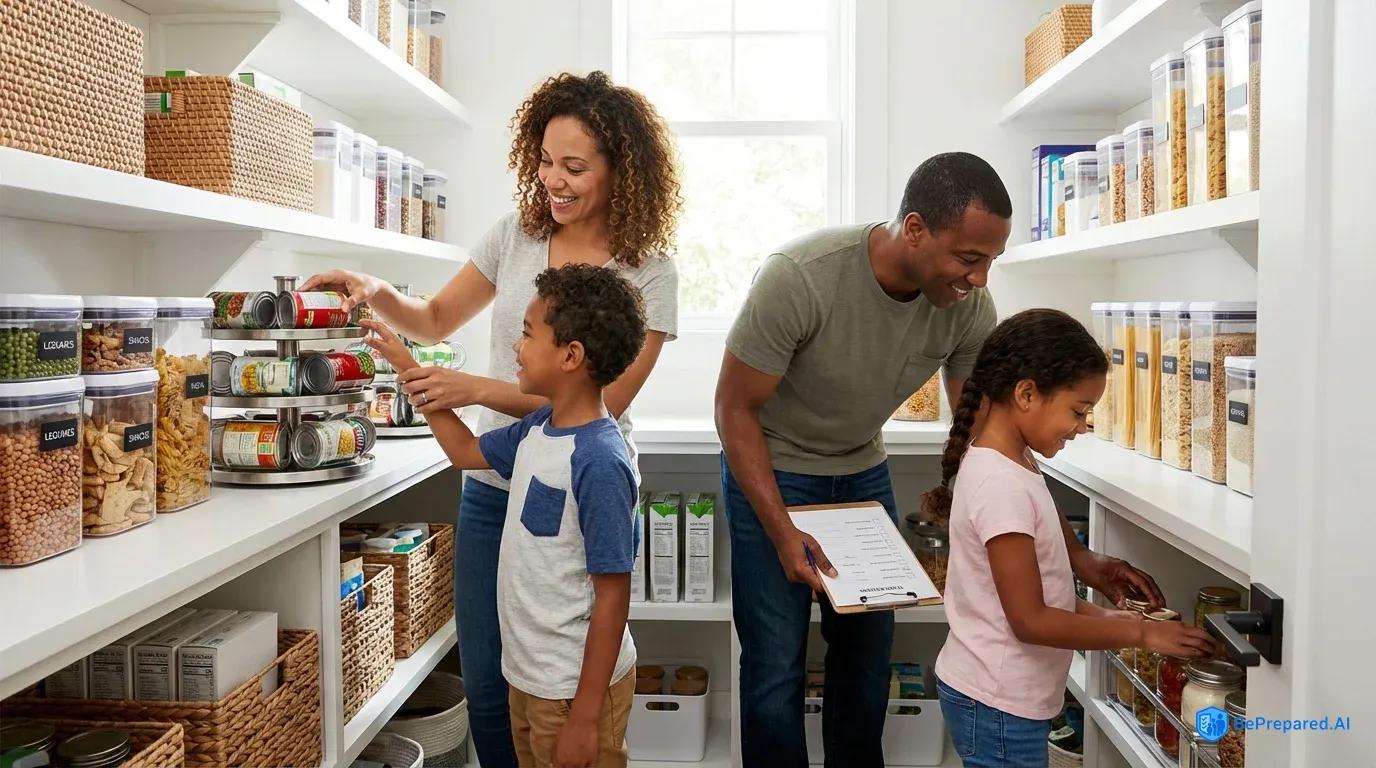
Step three: Organize by category and create an inventory list. Group similar items together—all canned vegetables in one section, grains in another, proteins in a third. This organization lets you quickly assess what you have and what needs replenishing. Maintain a simple inventory list (a spreadsheet or even a notebook works) noting what you have and approximate quantities.
Update it monthly. This practice prevents both over-buying items you already have and discovering gaps in your supply during an actual emergency. A quick glance at your list tells you exactly where you stand.
Step four: Maximize vertical space and use appropriate containers. Shelf risers double your storage capacity in the same footprint. Clear plastic bins protect items from pests and moisture while letting you see contents at a glance. Transfer opened packages of rice, flour, or pasta into airtight containers to extend freshness.
Stack cans efficiently but safely—never more than three or four high to prevent avalanches. Under-shelf baskets utilize wasted space beneath shelves. These space-saving methods let even apartment dwellers maintain a substantial quarantine supply without surrendering an entire room.
Consider power outage scenarios too. Foods kept in a closed refrigerator will stay cold for about 4 hours . Knowing this helps you plan which refrigerated items to use first if the power goes out during your quarantine period. Your shelf-stable supply becomes even more valuable when you can't rely on refrigeration.
Shopping List and Budget Planning
The prospect of building a two-week food supply might sound expensive, but here's the encouraging truth: you don't need to break the bank or buy everything at once. The secret isn't a massive shopping trip—it's building your supply gradually while taking advantage of sales and bulk purchasing. Shopping strategically can save you significant money compared to buying small quantities at regular prices.
Compare the gradual approach versus the all-at-once method. Buying everything in a single shopping trip creates sticker shock and often leads to panic purchases of items you don't actually need. Instead, add 5-10 extra shelf-stable items to your regular weekly grocery shopping. This week, grab extra rice and canned tomatoes. Next week, add pasta and tuna.
This gradual building spreads the cost over several months and feels far more manageable. You won't notice a huge dent in your budget, but within a few months, you'll have a solid supply. The all-at-once approach does have one advantage—you're immediately prepared—but it requires significant upfront capital that many families simply don't have available.
Compare shopping venues for the best value. Warehouse clubs like Costco or Sam's Club offer excellent bulk prices on staples. A 25-pound bag of rice costs roughly the same as three smaller bags at a regular grocery store. However, membership fees and large package sizes don't work for everyone.
Discount grocery chains like Aldi provide excellent value on shelf-stable goods without requiring bulk purchases or memberships. Dollar stores work well for canned goods and snacks, though unit prices vary—always check. Regular supermarkets offer the most convenience and variety but typically charge premium prices unless you shop sales aggressively.
Ethnic grocery stores often have the best prices on rice, beans, and spices. The smartest approach combines venues: bulk staples from warehouse clubs, weekly deals from regular grocers, and specialty items from discount chains.
Here's a starter shopping list organized by priority and budget tier:
For a basic two-week supply, focus on essential staples: rice (10 pounds), pasta (5 pounds), canned mixed vegetables (20 cans), canned beans (10 cans), canned tuna or chicken (6 cans), peanut butter (2 jars), cooking oil (1 large container), salt and basic spices, canned fruit (10 cans), crackers (1 box), coffee or tea, and multivitamins.
For an enhanced supply, add variety and comfort: different protein options (canned salmon, additional meat choices), diverse grains (quinoa, oats), dried fruits and nuts, favorite snacks, condiments and sauces, shelf-stable milk, soup varieties, and baking supplies.
For a premium supply, include specialty items: foods for specific dietary needs, premium proteins, extensive snack variety, multiple comfort foods, hot chocolate and treats, additional cooking ingredients for from-scratch meals, and backup supplies of frequently used items.
Start with the basics and build from there. You don't need the premium tier to be prepared. Even the basic supply will see you through a two-week quarantine comfortably. Focus on foods your family already eats and enjoys. There's no point stocking items that will sit unused because nobody likes them.
Download our printable quarantine food supply checklist to take the guesswork out of shopping and ensure you don't forget critical items. Having a physical list you can check off makes the process feel less overwhelming and more achievable.
The beauty of systematic planning is that anyone can achieve meaningful preparedness. Start where you are, use what you have, and build gradually. Every can added to your pantry is one less thing to worry about when an emergency strikes. You're not preparing for the end of the world—you're simply giving yourself options and peace of mind.
Think of it this way: you're already buying groceries every week. You're just being a bit more intentional about what goes in your cart. A few extra cans here, an extra bag of rice there, and before you know it, you've built a solid foundation of food security.
Your future self, sheltering safely at home with a well-stocked pantry, will thank you for the foresight and planning you're doing today. You've got this. Take it one step at a time, and remember that every small action you take today builds toward greater security tomorrow.