Why Calculate Your Pandemic Medical Supplies?
Picture this: It's March 2020, and Sarah stands in front of her bathroom medicine cabinet, counting pills. The news is filled with reports of lockdowns spreading across the country, and she realizes with growing anxiety that she has only five days of her blood pressure medication left. The pharmacy, when she calls, has a three-week backlog for prescription refills. This scenario played out in countless households during the early days of COVID-19, and it taught us a crucial lesson about medical preparedness that many had never considered before.
The importance of calculating and maintaining your pandemic medical supplies isn't about hoarding or panic—it's about thoughtful self-sufficiency during times when normal supply chains break down. When communities face lockdowns or quarantine orders, every trip outside your home becomes a calculated risk. The CDC recommends maintaining at least a 30-day supply of medications specifically to avoid these vulnerable situations . During the COVID-19 pandemic, many people discovered the hard way that accessing routine medical supplies became unexpectedly difficult when pharmacies were overwhelmed, delivery services were backlogged, and simply leaving home posed health risks .
The emotional benefits of medical preparedness deserve recognition too. Knowing you have adequate medical supplies creates a foundation of calm during chaotic times. When you've done the math and know your household has what it needs for the next month or two, you can focus your mental energy on other challenges rather than worrying about running out of essential medications. This peace of mind extends to your entire household—parents don't have to stress about their children's allergy medications, and adult children can rest easier knowing their elderly parents have their prescriptions covered.
The calculation process itself forces you to take inventory of your household's actual medical needs. This often reveals gaps you hadn't noticed during normal times. You might discover that while you have plenty of pain relievers, you're completely out of antihistamines. Or that your first aid kit hasn't been restocked in years. These discoveries help you build a more complete picture of what your family truly needs.
Taking this step-by-step approach helps de-overwhelm the entire process. You don't need to buy everything at once or create a perfect system overnight. Start with one category, do the math, and build from there. Each small step forward puts you in a better position than you were yesterday.
- Pain & Fever Relief
- Acetaminophen, ibuprofen, aspirin (30-day supply each)
- Wound Care
- Antibiotic ointment, hydrogen peroxide, medical scissors, tweezers (2-3 of each)
Essential Medical Supply Categories
Understanding what to include in your pandemic medical supply calculation requires breaking down your needs into distinct categories. Each category serves a different purpose in maintaining your household's health during extended periods of isolation or limited access to medical facilities.
Prescription Medications form the cornerstone of your medical supply planning. These are non-negotiable items that you or your family members need to maintain health and manage chronic conditions. This category includes daily maintenance medications for conditions like diabetes, hypertension, thyroid disorders, asthma, and mental health conditions. Don't forget prescription eye drops, inhalers, insulin, or any other specialized medications that require a doctor's authorization. Many insurance companies will allow early refills or extended supplies specifically for emergency preparedness—you just need to ask. A 90-day supply of chronic medications is recommended during a pandemic .
Over-the-Counter Medications provide your first line of defense against common ailments that don't require prescription intervention. Mayo Clinic recommends stocking fever reducers, pain relievers, cough and cold medications, anti-diarrheal medicines, and antacids . You'll also want to include antihistamines for allergic reactions, hydrocortisone cream for skin irritations, and any OTC medications that family members use regularly for recurring issues. During a pandemic, even minor symptoms take on new significance. Having these supplies on hand means you can address them without exposure risk.
First Aid Supplies become even more critical when medical facilities are overwhelmed or difficult to access safely. Your calculation should include various sizes of adhesive bandages, sterile gauze pads and rolls, medical tape, antiseptic wipes and solutions, and antibiotic ointment. You'll also want tweezers, scissors, instant cold packs, elastic bandages, and a thermometer. Think beyond just treating cuts and scrapes—consider supplies for burns, sprains, and other common household injuries that might otherwise send you to urgent care.
Medical Monitoring Devices gained new importance during COVID-19, when home health monitoring became essential for managing illness without hospitalization. Pulse oximeters became critical tools during COVID-19 home care, allowing patients to monitor their blood oxygen levels and know when to seek emergency help . Depending on your household's needs, you might also require blood pressure monitors, glucose meters and test strips, or peak flow meters for asthma management. These devices help you make informed decisions about whether symptoms can be managed at home or require professional intervention.
Calculate Your Supply Needs
The mathematical approach to pandemic medical supply planning removes guesswork and ensures you have precisely what your household needs. This calculation process involves three interconnected factors: the number of people in your household, the duration you're planning for, and the specific consumption rate of each item.
Start by creating a comprehensive list of every person in your household and their individual medical needs. For prescription medications, the calculation is relatively straightforward but requires attention to detail. If someone takes two pills daily of a particular medication, they need sixty pills for a thirty-day supply. The Red Cross recommends maintaining a one-month supply of prescription medications as a minimum baseline . Many preparedness experts suggest extending this to a ninety-day supply when possible. The formula looks like this: (number of doses per day) × (number of days) = total units needed. A person taking one blood pressure pill daily needs thirty pills for a month. Someone taking medication three times daily needs ninety pills for that same period.
Over-the-counter medications require different calculation methods because usage is episodic rather than scheduled. Rather than calculating based on daily consumption, estimate based on potential illness scenarios. A household of four might go through a bottle of pain reliever in two weeks if multiple people have the flu simultaneously. That same bottle might last months during healthy periods. A practical approach involves calculating for worst-case scenarios: assume each household member might need the maximum recommended daily dose for a week-long illness, then multiply by the number of people. For a four-person household, if each person might take eight ibuprofen tablets daily for seven days during an illness, that's 224 tablets total—nearly two standard bottles.
Duration-based planning requires honest assessment of your risk factors and likely scenarios. A thirty-day supply represents the minimum recommended threshold. This provides a buffer if pharmacies face temporary disruptions or if you need to quarantine unexpectedly. During a genuine pandemic with sustained supply chain issues, a ninety-day supply offers significantly more security. The calculation shifts dramatically at this extended timeline. That blood pressure medication? You now need ninety pills instead of thirty. Your household ibuprofen needs? Triple your previous calculation.
Storage considerations directly impact your calculations because they impose practical limits on what you can actually maintain. Some medications require special storage conditions and may need refrigeration. Insulin, certain antibiotics, and some other medications have strict temperature requirements that might limit how much you can stockpile based on your available refrigerator space. Calculate not just the quantity you need, but also the physical space required to store it properly. A ninety-day supply of medications for a family of four might require a dedicated storage container or even a small cabinet. Liquid medications take up more space than pills, and some supplies like first aid materials can be bulky.
Consider rotation requirements in your calculations as well. If you're maintaining a ninety-day supply of a medication you take daily, you'll be constantly using the oldest stock and replacing it with new prescriptions. This "first in, first out" system means your calculation needs to account for overlap. You might actually need to purchase enough to have 120 days on hand to maintain a consistent ninety-day reserve while using thirty days.
Remember, you don't have to calculate everything perfectly on your first try. Start with your most essential medications and work your way through the list. Each calculation you complete gives you a clearer picture of your needs and helps you feel more prepared.
Storage and Rotation Strategy
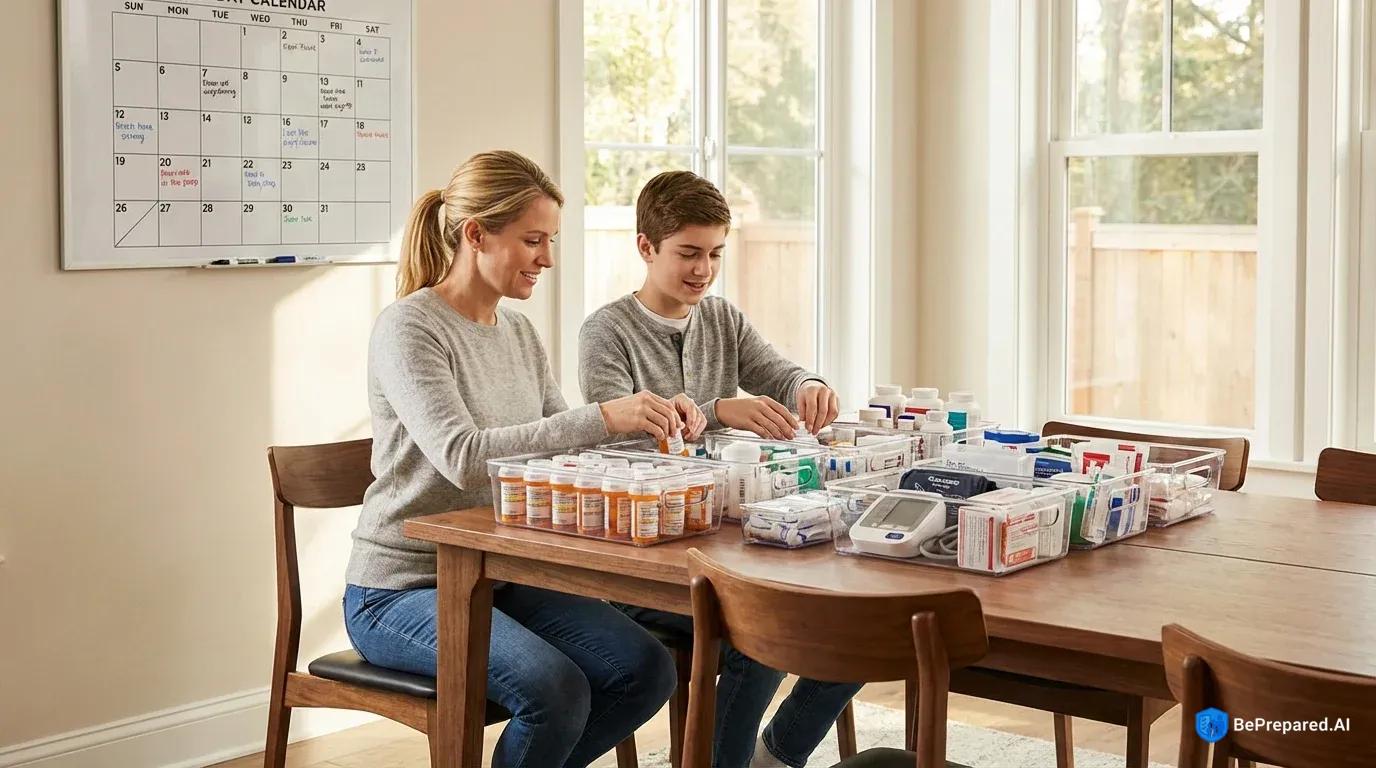
Proper storage transforms your calculated medical supplies from a simple stockpile into a reliable emergency resource. The most sophisticated calculation becomes useless if medications degrade due to improper storage or if you can't find supplies when you actually need them.
Create a dedicated medical supply storage area that meets environmental requirements. Many medications remain stable when stored in cool, dry, dark locations away from temperature extremes. Your bathroom medicine cabinet, despite its traditional role, is actually one of the worst storage locations due to humidity and temperature fluctuations from showers. Instead, choose a bedroom closet, linen closet, or dedicated storage container in a climate-controlled area of your home. Keep prescription medications in their original labeled containers for easy identification and to maintain important information about dosing and expiration dates.
Set up an inventory management system that tracks expiration dates and usage. This doesn't need to be complicated—a simple notebook works just as well as a spreadsheet. Create a simple spreadsheet or use a notebook to record each item, its expiration date, and the quantity on hand. Schedule quarterly reviews where you check expiration dates, rotate stock, and identify items needing replacement. During these reviews, move medications approaching expiration to the front of your storage area for use first. Place newly purchased items in the back.
Establish a rotation schedule that keeps your supplies fresh. For prescription medications you take daily, this happens naturally—each month when you refill your prescription, add the new bottle to your stockpile and take from the oldest bottle. For OTC medications and first aid supplies used less frequently, set reminders to check and rotate stock every three to six months. Mark purchase dates on items that don't have clear expiration dates. Replace them according to manufacturer recommendations or general guidelines suggesting replacement every one to two years for most over-the-counter products.
Label everything clearly with both the contents and the date added to your stockpile. For items you've decanted into storage containers, include all relevant information from the original packaging. This means active ingredients, dosing instructions, and warnings. Consider creating a master list posted on the inside of your storage cabinet door that shows where everything is located. This makes it easy for any household member to find what they need quickly during an emergency. This organizational step proves invaluable during stressful situations when clear thinking becomes difficult.
Start with just one storage container or one shelf in a closet. You don't need a perfect system from day one. As you add to your supplies, your organization system will naturally evolve to meet your needs. The goal is progress, not perfection.
Download our free medical supply inventory tracker spreadsheet to simplify this entire process with automated expiration alerts and reorder reminders. This tool takes the guesswork out of tracking and helps you maintain your supplies without constant mental effort.