Understanding the First 24 Hours After an EMP
Picture this: you're scrolling through your phone when suddenly the screen goes dark. Not just your phone—every electronic device around you dies in the same instant. Car alarms fall silent mid-wail. The constant hum of civilization simply stops. This is what an electromagnetic pulse event looks like, and understanding those critical first hours can make the difference between panic and purposeful action.
An EMP can instantly disable most electronic devices across large geographic areas . The pulse itself is invisible and silent, but its effects are immediately obvious. Modern cars might coast to a stop. Traffic lights go dark. Cell towers cease functioning. The electrical grid that powers our entire way of life could fail across hundreds or even thousands of miles. Recovery efforts could take months to years depending on the severity of the damage .
During those first confusing hours, most people will assume it's just a regular power outage. They'll check their phones—which won't work. They'll try to call for help—but there's no signal. The gradual realization that something far more serious has occurred will ripple through communities as neighbors emerge from their homes, looking for answers that aren't coming.
Your basic safety priorities in these initial hours are straightforward but crucial. First, stay calm and assess your immediate situation. Are you safe where you are? Is anyone injured? Next, gather your family members and take stock of what you have: food, water, medications, and supplies.
Avoid driving if your vehicle has stopped working—roads will quickly become congested with disabled cars. Finally, resist the urge to panic-buy or rush to stores. The chaos of those first hours often creates more danger than the event itself. Instead, secure your home, connect with immediate neighbors, and begin implementing the basic survival priorities we'll discuss next.
Download our printable 30-day EMP survival checklist to ensure you're ready before disaster strikes.
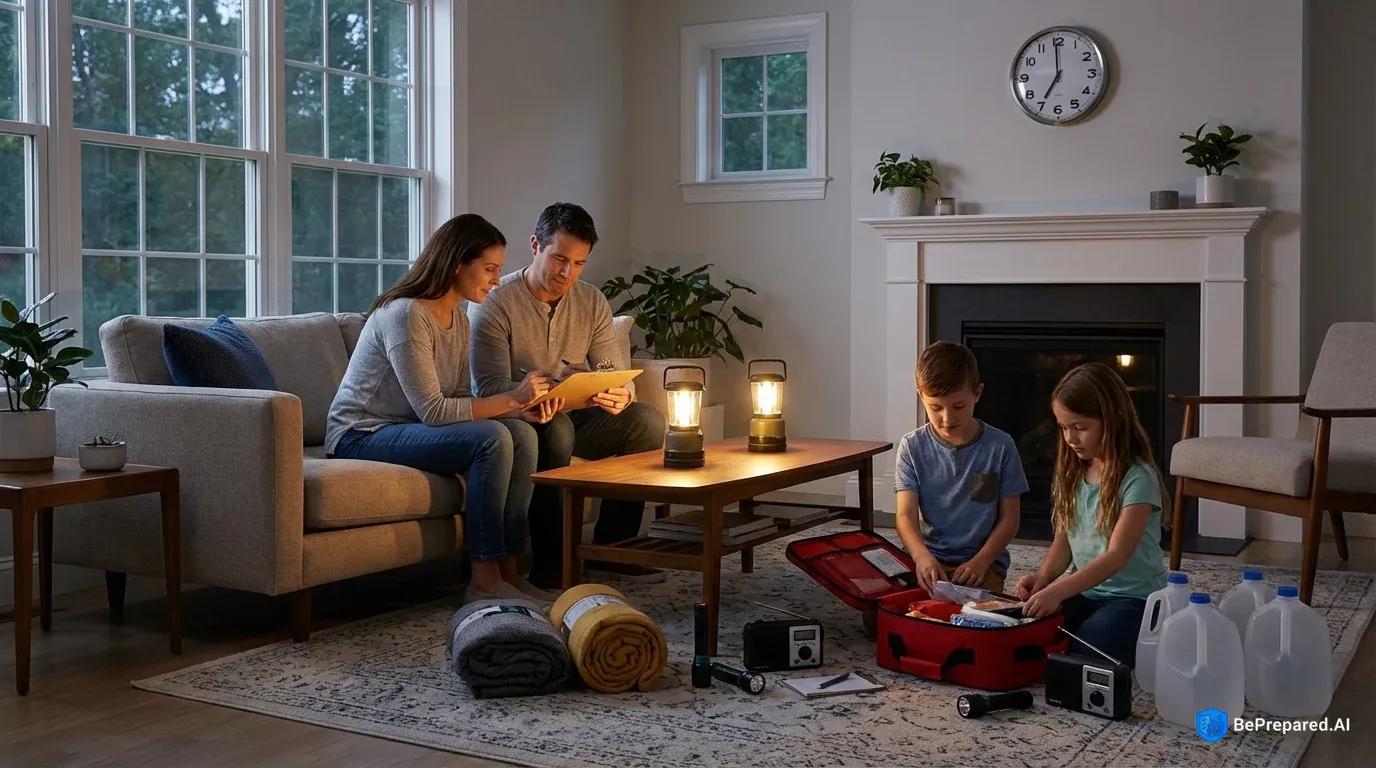
- Manual Can Opener
- Reliable hand-operated opener plus basic eating utensils
- Warm Blankets
- 2 emergency blankets per person plus warm clothing layers
- First Aid Kit
- Basic kit with bandages, antiseptic wipes, and essential medications
Immediate Survival Priorities: Water, Food, and Shelter
The human body is remarkably resilient, but it has non-negotiable needs that must be met in a specific order. Water comes first, always. Each person needs one gallon of water per day for drinking and basic sanitation . This isn't a suggestion—it's a biological requirement your body won't negotiate.
Step 1: Secure Your Water Supply Immediately
Within the first hour after you realize what's happened, fill every container you can find with tap water. This includes bathtubs, sinks, pots, pans, cleaned trash cans, and any food-grade containers. Water pressure in municipal systems typically continues for several hours after power loss as elevated tanks drain by gravity.
This is your window to capture clean, treated water before the taps run dry. Once you've filled containers, protect them from contamination by covering them with plastic wrap, lids, or clean towels. Label containers with the date so you know which water to use first.
Step 2: Assess and Preserve Your Food
Refrigerated food stays cold for about four hours after power loss . Full freezers maintain temperature for 48 hours if unopened . These timeframes become your countdown clock. Start by keeping refrigerator and freezer doors closed as much as possible. When you do open them, work quickly and purposefully.
Make a mental inventory of what you have and prioritize consuming the most perishable items first: dairy, fresh meat, and prepared foods. Transfer items from your refrigerator to your freezer if there's space—the colder environment will buy you extra time.
Consider moving frozen items outside if outdoor temperatures are below 40°F, but protect them from animals. If you have access to dry ice from a local supplier in those first hours, it may help extend the life of your frozen goods, though availability will likely be limited.
Step 3: Address Shelter and Temperature Control
Without HVAC systems, your home becomes subject to outside temperatures. In cold weather, seal off unused rooms and concentrate your family in one or two spaces that are easier to heat. Hang blankets over doorways to create insulated zones.
In hot weather, the opposite applies—open your home to cross-ventilation during cooler morning and evening hours, then seal it during peak heat. Move sleeping areas to basements where temperatures remain more stable.
Layer clothing in cold conditions rather than relying on a single heavy coat—trapped air between layers provides better insulation. In extreme cold, you'll need alternative heating methods, but outdoor cooking equipment should never be used indoors because it produces carbon monoxide, an odorless gas that can be deadly in enclosed spaces .
In heat, stay hydrated, minimize physical activity during the hottest hours, and use damp cloths on pulse points to cool your body. Focus on protecting the most vulnerable members of your household—young children, elderly family members, and anyone with medical conditions.
Adapting to Life Without Modern Conveniences
The sudden absence of electricity reveals just how dependent we've become on devices that hum quietly in the background of our lives. Yet humans lived for millennia without any of these conveniences, and you can adapt more easily than you might think. The key is understanding what manual alternatives can replace your electronic dependencies.
Take cooking, something most of us do multiple times daily with electric or gas stoves. Alternative cooking methods include outdoor grills (propane, charcoal, or wood), camping stoves, solar ovens, or even simple fire pits. A charcoal grill that normally serves for weekend barbecues becomes your primary kitchen.
A camping stove that gathered dust in your garage transforms into essential equipment. The difference between modern and alternative cooking isn't capability—it's convenience and speed. A pot of beans takes the same time to cook over charcoal as it does on your stovetop; you just need to tend the heat source more carefully.
Cleaning without running water or washing machines requires a return to methods your great-grandparents knew well. Manual dishwashing becomes a two-basin system: one for washing with heated water and minimal soap, another for rinsing. You'll heat water in pots over your alternative cooking source.
A single gallon of heated water, used carefully, can wash an entire family's dishes. For laundry, a large bucket or tub, a washboard or plunger-style manual washer, and a clothesline replace your electric machines. The process takes longer and requires more physical effort, but clothes get just as clean. The trade-off is time and muscle power for the electricity you no longer have.
Entertainment and daily activities shift dramatically without screens, internet, or electronic devices. Where modern families might spend evenings on separate devices, post-EMP life brings people together around analog activities. Board games, card games, and conversation replace streaming services.
Books become precious entertainment resources. Manual tools—hand-crank can openers, manual coffee grinders, push lawn mowers, hand saws—replace their electric counterparts. These tools don't work faster, but they work just as effectively. A manual can opener takes thirty seconds instead of five, but your can still opens.
The adjustment is psychological as much as practical: accepting that tasks take longer but still get done. You'll find a rhythm that works for your household. Some tasks that seemed impossible at first become routine within days.
The real revelation comes when you realize how many "essential" electronic devices weren't actually essential at all. You don't need an electric alarm clock when sunrise becomes your natural wake-up call. You don't need a dishwasher when you have hands, water, and soap.
You don't need a clothes dryer when you have sun and wind. The conveniences we've built our lives around turn out to be exactly that—conveniences, not necessities. This realization can be empowering rather than frightening. You're more capable than you think.
Planning for Weeks 2-4
As the initial shock wears off and you settle into a new rhythm, your focus shifts from immediate crisis response to sustainable routines. The second through fourth weeks after an EMP test your ability to maintain systems and work cooperatively with others.
Here's something that might surprise you: 90% of civilian deaths in a prolonged outage could come from societal breakdown rather than direct effects . This means that communities working together have dramatically better survival rates than individuals trying to go it alone. Your neighbors become your most valuable resource.
Long-term water solutions become your primary concern:
- Rainwater collection systems: Set up tarps, gutters, or any sloped surface to channel rain into clean containers. Filter and purify all collected water before drinking.
- Natural water sources: Identify nearby streams, ponds, or lakes. Always purify water from these sources through boiling, chemical treatment, or filtration.
- Water purification rotation: Establish a daily routine for purifying water so you always have clean drinking water available. This becomes as regular as making coffee once was.
- Conservation practices: Reduce water usage through careful planning. Cooking water can be reused for cleaning. Washing water can water gardens.
When boiling water for purification, bring it to a rolling boil and maintain that boil for at least one minute according to CDC guidelines . At higher altitudes, boil for three minutes. Let the water cool naturally, then store it in clean, covered containers.
Community cooperation transforms from nice-to-have to survival-critical:
- Skill sharing: Your neighbor might know carpentry while you understand gardening. Another neighbor might be a nurse while someone else knows mechanics. Pool knowledge and help each other.
- Security cooperation: Organize neighborhood watch rotations. Groups provide better security than isolated households.
- Resource trading: Barter becomes the new economy. Your extra canned goods might trade for someone's manual tools or medical supplies.
- Information sharing: Without internet or phones, word-of-mouth becomes your lifeline. Establish regular community meetings to share information about resources, threats, or opportunities.
Start these conversations early. The second week is the perfect time to organize your street or apartment building. People will be past the initial panic but not yet so stressed that cooperation becomes difficult.
Sustainable daily routines prevent burnout and maintain morale:
- Establish regular sleep schedules: Without electric lights, align your schedule more closely with daylight hours. This conserves resources and matches your body's natural rhythms.
- Create task rotations: Divide necessary chores among family or community members so no one person bears all the burden of water hauling, cooking, or security watches.
- Maintain hygiene standards: Basic sanitation prevents disease spread . Establish handwashing stations, proper waste disposal systems, and regular cleaning schedules.
- Plan for mental health: Include time for rest, play, and social connection. Survival isn't just physical—maintaining hope and purpose keeps communities functional.
- Document and learn: Keep a journal of what works and what doesn't. You're building knowledge that will serve you for months ahead.
The transition from crisis response to sustainable living happens gradually during these weeks. You'll discover which systems work for your household and which need adjustment. You'll learn that some modern conveniences you thought were essential really weren't, while some things you took for granted—like easy access to clean water—were more precious than you ever imagined.
Think of this period as your learning curve. Every day you'll get a little better at managing without electricity. Tasks that took an hour in week two might take thirty minutes by week four. You'll develop muscle memory for new routines. Your family will find their rhythm.
Basic preparation dramatically improves survival chances, but adaptation and community cooperation determine long-term success. The good news? You don't need to be perfect. You just need to be willing to learn, adjust, and work with others. Start with one small step today—fill a few extra water containers, meet a neighbor you haven't talked to before, or learn to use a manual can opener. Each small action builds your confidence and capability for whatever challenges might come.