Understanding Earthquake Risks at Home
Picture this: You're standing in your kitchen making dinner when the ground starts to shake. The wine glasses hanging from your overhead rack begin to clink together, then suddenly crash down around you. The refrigerator lurches forward. That heavy antique mirror in the hallway? It's now shattered on the floor exactly where you were standing moments ago.
This scenario plays out more often than you might think. Research shows that approximately 60% of all earthquake-related injuries are caused by falling objects . Here's the real eye-opener: most of these injuries don't happen out in the streets or in collapsed buildings like we see in dramatic news footage. They happen right in our homes, in the spaces where we feel safest.
Your home is filled with hidden earthquake dangers that you walk past every day without a second thought. That bookshelf leaning slightly against the wall in your living room becomes a hazard when the ground starts moving. The water heater standing freely in your garage can topple over, rupturing gas lines and flooding your home at the same time. Even that beautiful china cabinet your grandmother gave you poses a threat during seismic activity.
Studies confirm that most earthquake-related injuries result from collapsing walls, flying glass, and falling objects . Heavy furniture tipping over accounts for many of these injuries, especially televisions, dressers, and bookcases. Understanding these risks is the first step in protecting yourself and your family. Once you know what to look for, you can start making your home safer, one room at a time.
The good news? You don't need to tackle everything at once. Small changes in each room add up to major protection. Let's break this down into manageable steps you can take this weekend.
- Kitchen Fire Prevention
- Shows smoke detector placement, fire extinguisher location, and safe storage of flammable cleaning supplies with clear 3-foot cooking zone
- Bedroom Escape Routes
- Highlights window security bars with quick-release mechanisms, emergency ladder placement, and clear pathways to doors
- Garage Chemical Storage
- Demonstrates proper ventilation points, locked cabinets for hazardous materials, and carbon monoxide detector placement
Room-by-Room Safety Checklist
The kitchen often presents the most concentrated collection of earthquake hazards in any home. Think about what's in there: heavy appliances, sharp knives, breakable dishes, and potentially dangerous chemicals under the sink.
Start by securing your refrigerator to the wall using appliance straps. These inexpensive devices can prevent hundreds of pounds from toppling onto someone during shaking. Install latches on cabinet doors, especially upper cabinets where you store dishes and glassware. These childproof-style latches keep doors from flying open and sending contents airborne.
Move heavy items like cast iron cookware and small appliances to lower shelves where they're less likely to become projectiles. Store breakable items toward the back of cabinets. Consider using museum putty to secure decorative items on open shelving. These simple changes take an afternoon but provide years of protection.
Your bedroom deserves special attention because this is where you'll likely be during a nighttime earthquake. You're most vulnerable when sleeping, so let's make this space as safe as possible.
The most important step is positioning your bed away from windows. Make sure no heavy furniture or mirrors hang above where you sleep . That framed artwork might look perfect centered over your headboard, but during an earthquake, it becomes a falling hazard.
Secure tall dressers and armoires to wall studs using furniture straps. These pieces are notorious for tipping forward when drawers slide open during shaking. Here's a life-saving tip from emergency preparedness experts: keep a flashlight, sturdy shoes, and a whistle in a bag attached to your bed frame . Broken glass on the floor is one of the most common post-earthquake injuries. Those shoes could mean the difference between safely evacuating and getting seriously hurt.
Living rooms and family rooms typically house your heaviest furniture and electronics. That massive flat-screen TV mounted on a stand? It needs to be secured to both the stand and the wall. Modern televisions are top-heavy and tip easily.
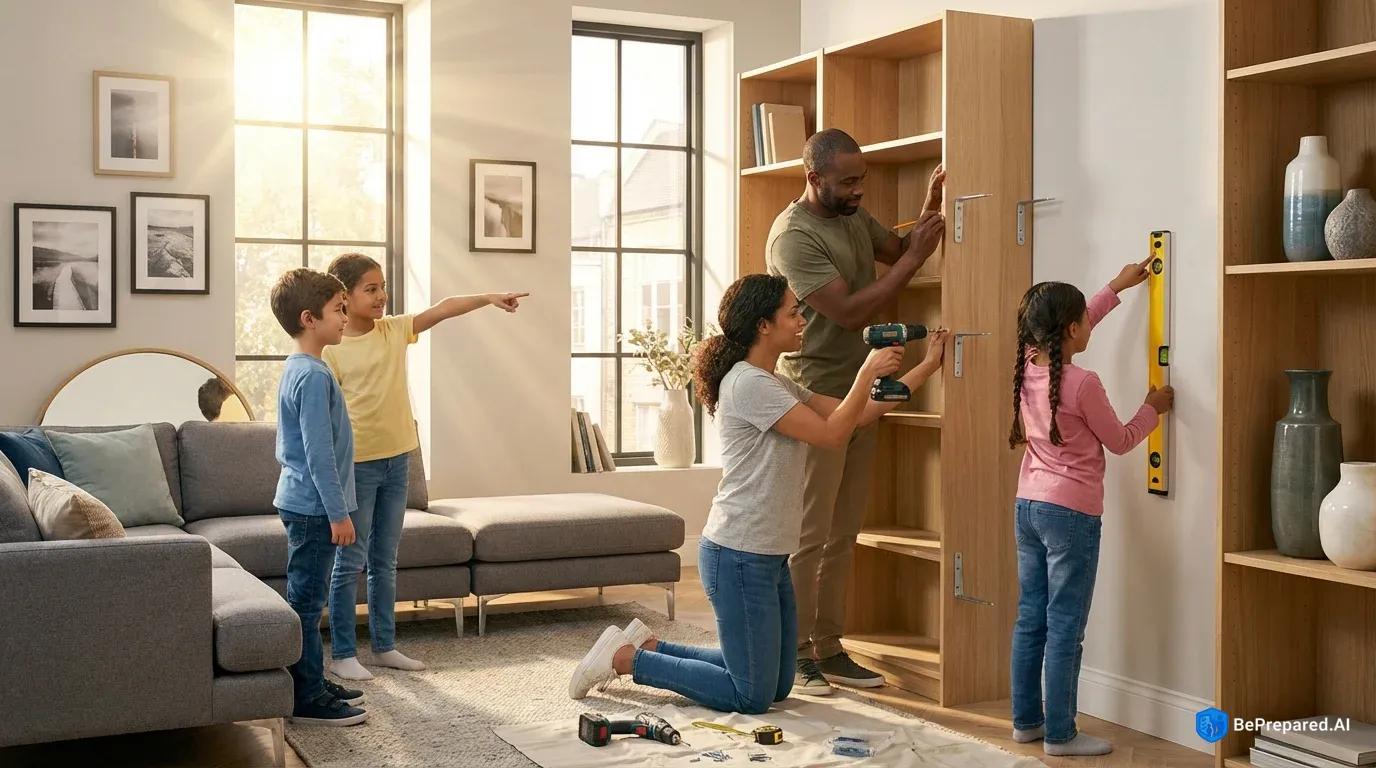
Experts recommend that you secure heavy furniture, appliances, and hanging items to prevent them from falling . Use L-brackets or furniture straps to attach bookcases, entertainment centers, and display cabinets to wall studs. Pay attention to what's on your walls too. Large mirrors and heavy picture frames should have secure hanging systems, not just a single nail.
If you have a brick fireplace or chimney, consider having it inspected by a professional. These structures are particularly vulnerable to earthquake damage and can collapse into living spaces.
Don't overlook your garage and storage areas. Some of the most dangerous items often sit unsecured in these spaces, and a few simple fixes can prevent major disasters.
Water heaters are a common concern in earthquake preparation. Consider strapping your water heater to wall studs with metal strapping at the top and bottom portions of the tank. This modification can help prevent the tank from tipping, which could rupture gas lines and water lines at the same time. For added protection, install flexible pipe fittings to avoid gas or water leaks .
Store heavy tools and equipment on lower shelves. Never stack heavy items high where they can fall. Flammable liquids like gasoline, paint thinner, and pesticides should be in closed cabinets. Ideally, use a flammable storage cabinet to prevent spills and potential fires.
Securing items in your garage reduces injury risk significantly. This is where people often store the heaviest, most dangerous items without proper securing.
Download our printable earthquake safety checklist to start securing your home today. Work through each room systematically over the next few weeks. You don't have to do everything in one day. Even securing one room makes your home safer than it was yesterday.
When to Shelter in Place vs. Evacuate
The moments immediately after an earthquake stops are confusing and stressful. You'll need to make a critical decision quickly: is it safer to stay in your home or evacuate? Understanding the difference can save your life.
Most modern homes built to current building codes are safe for sheltering in place during aftershocks, even if the main quake was significant . If your home shows no signs of structural damage, staying put is usually the safest option.
Look for these green lights: doors and windows still open and close normally, you don't see new cracks in walls or foundations, and the floor feels level and stable. You shouldn't smell gas or see sparking electrical fixtures. If water and gas lines appear intact and you can safely turn off utilities if needed, your home is likely sound enough for temporary shelter while you assess the broader situation.
However, certain warning signs demand immediate evacuation. No questions asked, no delays.
Structural damage requires immediate evacuation. This includes visible cracks in foundation walls, tilting or leaning walls, or sagging rooflines. Doors and windows that are jammed in their frames due to shifting are another red flag .
If you smell natural gas or propane, leave immediately. Don't stop to gather belongings. The same goes if you see sparking from electrical systems or exposed wiring. Large cracks in chimney masonry, especially if bricks have fallen, indicate serious instability. Standing water where it shouldn't be might signal broken water mains or compromised foundations.
Make your decision within the first few minutes after shaking stops. Do a quick sixty-second assessment: Can you safely walk through your home without navigating around fallen debris? Are there sounds of creaking, groaning, or settling that suggest ongoing structural movement?
Trust your instincts. If something feels dangerously wrong, it probably is. When in doubt, get out. You can always return once professionals have deemed the structure safe. You can't undo injuries from a collapsing wall during an aftershock.
Having predetermined evacuation routes and meeting points, which we'll discuss next, makes this decision and the action that follows much smoother.
Creating Your Earthquake Action Plan
The Martinez family learned the hard way that good intentions aren't enough. When a 5.8 magnitude earthquake struck their area, they knew they should meet somewhere. Nobody could remember where.
Mom thought it was the big oak tree out front. Dad headed to the neighbor's driveway. The teenagers assumed everyone meant the corner store. It took forty-five stressful minutes to reunite everyone. Those minutes felt like hours.
Your earthquake action plan needs to be written down, discussed regularly, and practiced until it becomes second nature. Let's break this into simple steps you can complete this week.
Start with a family communication plan that accounts for different scenarios. Designate two meeting places: one right outside your home for immediate emergencies, and a second location in your neighborhood in case you can't return home . Make sure everyone knows both locations and understands when to use which one.
Choose somewhere memorable and accessible. The mailbox at the end of your driveway works well. So does the big tree in the park two blocks away, or the community center on Main Street. Pick places your family already knows and can easily find even in stressful conditions.
Next, create an emergency contact list that includes a designated out-of-state contact person. During local disasters, local phone lines often become overloaded. Long-distance calls sometimes go through more easily .
Choose someone who lives far enough away that they won't be affected by the same earthquake. Make sure every family member has this person's phone number memorized or written down in their wallet. Include important local numbers too: your utility companies, insurance agent, doctor, and veterinarian if you have pets.
Store copies of this list in multiple places. Put them in your emergency kit, your car, your workplace, and your phone. Redundancy ensures you'll have access when you need it.
If you or a family member becomes trapped, remember this: use emergency whistles and/or knock three times repeatedly if trapped . This signal helps rescuers locate you more quickly than shouting, which can exhaust you and damage your voice.
Regular earthquake drills improve response time dramatically. They transform panic into practiced action . Consider practicing every few months, similar to how schools conduct fire drills. The exact timing matters less than making it a regular habit.
Practice "Drop, Cover, and Hold On" in different rooms and at different times of day. Run through your evacuation routes. Practice your communication plan by actually calling your out-of-state contact. Time how long it takes to grab your emergency kit and reach your meeting point.
Written plans increase survival chances. Practiced plans turn those chances into certainties. Make it engaging for kids by timing each drill and trying to improve your family's response time. Let them take turns calling the drill.
The difference between families who navigate earthquakes successfully and those who struggle often comes down to this preparation. When the ground starts shaking, you won't have time to think. You'll only have time to react. Make sure those reactions are the right ones by building muscle memory through practice.
Your plan should evolve too. Review and update it once a year, especially when family circumstances change. A new baby, an elderly parent moving in, or kids going off to college all require plan adjustments.
The few hours you invest in creating and practicing your earthquake action plan could be the most important investment you ever make in your family's safety. Start small. Pick one task from this article to complete this weekend. Maybe it's securing your bedroom furniture, or maybe it's just having the conversation with your family about where to meet.
Every step forward is progress. You don't need to be perfect. You just need to be better prepared than you were yesterday.