Why You Need an Earthquake Supply Kit
Picture this: it's 3 AM when the shaking starts. Your bed lurches sideways, picture frames crash to the floor, and the power cuts out mid-rumble. When the ground finally stops moving, you reach for your phone—no signal. You flip the light switch—nothing. You turn on the tap to get a glass of water—just a sputter and drip. This scenario plays out somewhere in the United States far more often than most people realize.
The truth is, earthquakes don't just happen in California. According to the United States Geological Survey, seismic activity can occur in all 50 states . Whether you're in the Pacific Northwest bracing for "The Big One," along the New Madrid Seismic Zone in the central US, or even in seemingly stable areas like the East Coast, earthquake risk exists. The question isn't whether you might experience an earthquake—it's whether you'll be ready when it happens.
Here's what catches most people off guard: after a significant earthquake, you may find yourself relying on your own resources while emergency services work to reach everyone. Emergency responders will be overwhelmed, stretched thin across countless calls. Roads may be impassable. Communication networks often fail. Your local grocery store? Either closed or cleaned out within hours. During disasters, average emergency response times can extend dramatically, sometimes from minutes to days . First responders have to triage entire communities, prioritizing the most critical, life-threatening situations first.
That's where self-sufficiency becomes your lifeline. The Federal Emergency Management Agency emphasizes that individuals and families who can take care of their basic needs during the critical first days significantly improve their chances of staying safe and healthy . Your earthquake supply kit isn't about paranoia—it's about practicality. It's about having water when the pipes are broken, light when the power grid is down, and food when stores are inaccessible. It's about transforming from a victim waiting for rescue into a survivor who can weather the storm and even help neighbors who weren't as prepared.
- Essential Items List
- 3-4 key items listed under each category as examples
- Storage Tips
- Basic storage requirements for each category (temperature, light, moisture)
Essential Supplies: The Core Kit
Building your earthquake kit might seem overwhelming at first, but think of it like packing for a camping trip where you can't run to the store if you forget something. Start with the absolute essentials—the items that address your most basic survival needs—and you'll have a solid foundation to build upon. You don't need to buy everything at once. Pick up a few items each week, and before you know it, you'll have everything you need.
Water: Your First Priority
Water tops every emergency supply list for good reason. The human body can survive weeks without food but only days without water. FEMA recommends storing at least one gallon of water per person per day . For a family of four, that's twelve gallons for a three-day supply, just for drinking, cooking, and basic hygiene. If you have space, aim for a two-week supply. Store water in food-grade plastic containers, and don't forget about your pets—they need water too.
Consider your climate as well. If you live in a hot area, you'll need more. Include water purification tablets or a portable filter as backup. When your stored supply runs out, you'll need a way to make questionable water sources safe to drink. These backup methods give you peace of mind and extend your water supply indefinitely.
Food That Lasts
Your earthquake kit isn't the place for fresh produce or frozen dinners. You need shelf-stable foods that require minimal preparation, especially since you might not have power or gas for cooking. Stock up on canned goods like beans, vegetables, tuna, and chicken. Peanut butter provides protein and calories without refrigeration. Whole grain crackers, dried fruit, nuts, and granola bars offer quick energy.
Don't forget a manual can opener—an electric one won't help when the power's out. According to the American Red Cross, keep a minimum three-day supply of non-perishable food and water . Choose foods your family actually eats. A crisis isn't the time to discover your kids hate canned peaches. Familiar foods provide comfort when everything else feels chaotic and uncertain.
First Aid and Medications
A well-stocked first aid kit addresses injuries that commonly occur during earthquakes: cuts from broken glass, bruises from falling objects, and burns from disrupted utilities. Your kit should include various sizes of bandages, sterile gauze pads, adhesive tape, antiseptic wipes, antibiotic ointment, scissors, tweezers, and disposable gloves. Add pain relievers, anti-diarrheal medication, antacids, and any over-the-counter medicines your family regularly uses.
The Centers for Disease Control recommends including a first aid manual, as you might need to treat injuries beyond your normal experience . A simple guide can walk you through basic wound care, splinting, or recognizing when someone needs professional medical attention. Knowledge weighs nothing and takes up minimal space in your kit.
Light and Communication
When darkness falls and your phone battery dies, you'll desperately need reliable light sources. Pack multiple flashlights with extra batteries, or better yet, hand-crank flashlights that never need batteries. Headlamps free up your hands for tasks. Include glow sticks for safe, flame-free light that won't ignite gas leaks.
A battery-powered or hand-crank radio becomes your connection to the outside world when cell towers are down. FEMA emphasizes that a NOAA Weather Radio provides critical emergency information, including aftershock warnings and evacuation orders . Add a portable phone charger or solar charger to keep your primary communication device functional. Your smartphone contains important contacts, maps, and information you'll need during recovery.
Money and Important Tools
When credit card systems go down and ATMs stop working, cash becomes king. Include cash in small bills and quarters for phones/vending machines . Tuck away at least a hundred dollars in various denominations. Add a basic tool kit with a wrench for turning off utilities, a multi-tool, duct tape, and plastic sheeting. These simple items solve countless problems when professional help isn't available.
Download our free earthquake kit checklist to get started today and ensure you don't miss any critical supplies.
Personal & Special Needs Items
Beyond the universal basics, every household has unique needs that deserve equal attention in your emergency planning. These personalized items can make the difference between merely surviving and maintaining health, dignity, and relative comfort during a crisis. Take a few minutes to think about what makes your family unique, and you'll know exactly what to add.
Prescription Medications and Medical Equipment
If you or a family member takes daily medications, an earthquake kit without them is incomplete. Health experts recommend maintaining an extra supply of all prescription medications in your emergency kit. Talk to your doctor and pharmacist about getting an extra supply specifically for emergency preparedness—many insurance companies now accommodate this. Don't forget medical equipment like glasses, contact lenses and solution, hearing aid batteries, or mobility aids.
Include copies of prescriptions and a list of medications with dosages. This information helps if you need emergency medical care or prescription refills from an unfamiliar pharmacy. Write down any allergies or medical conditions too. When you're stressed and shaken, having this information written down prevents dangerous mistakes.
Critical Documents in Waterproof Protection
When disaster strikes, proving your identity, insurance coverage, and property ownership becomes crucial for recovery. Make copies of essential documents and store them in waterproof, portable containers. Your document kit should include identification like driver's licenses, passports, and Social Security cards. Add insurance policies for your home, auto, and health. Include bank account information, property deeds or rental agreements, and medical records.
According to the Red Cross, digital copies stored on a password-protected USB drive provide an excellent backup . Include family photos too—they're irreplaceable and provide comfort during stressful times. Seeing familiar faces can lift spirits when everything else feels uncertain and scary.
Supplies for Vulnerable Family Members
Babies and elderly family members require specialized items. For infants, pack formula, baby food, diapers, wipes, bottles, and comfort items like pacifiers or favorite blankets. Stock more than you think you'll need—babies can't wait when they're hungry or need changing. Elderly family members might need incontinence supplies, denture care items, or specialized nutritional supplements.
Don't overlook pets—they're family too. Store pet food, water, medications, vaccination records, a leash, and a carrier. The CDC notes that having supplies for all family members, including pets, prevents impossible choices during evacuation . You won't want to leave anyone behind, so plan for everyone now.
Comfort and Hygiene Essentials
Personal hygiene items maintain health and morale when normal facilities aren't available. Include toilet paper, feminine hygiene products, soap, toothbrushes and toothpaste, hand sanitizer, and moist towelettes. Pack a change of clothes and sturdy shoes for each family member. Add blankets or sleeping bags for warmth. A deck of cards or small games can help pass anxious hours.
These items might seem less critical than food and water, but maintaining basic hygiene prevents illness and preserves dignity during an already stressful situation. Feeling clean and having familiar routines helps everyone, especially children, cope with the disruption. Small comforts matter more than you'd expect when everything else has been turned upside down.
Storage and Maintenance
Building your earthquake kit represents an important first step, but a kit that sits forgotten in the garage for years becomes unreliable when you need it most. Proper storage and regular maintenance transform your emergency supplies from a one-time project into a dependable safety system. The good news? Maintaining your kit takes less time than you think.
Step 1: Choose an Accessible Location
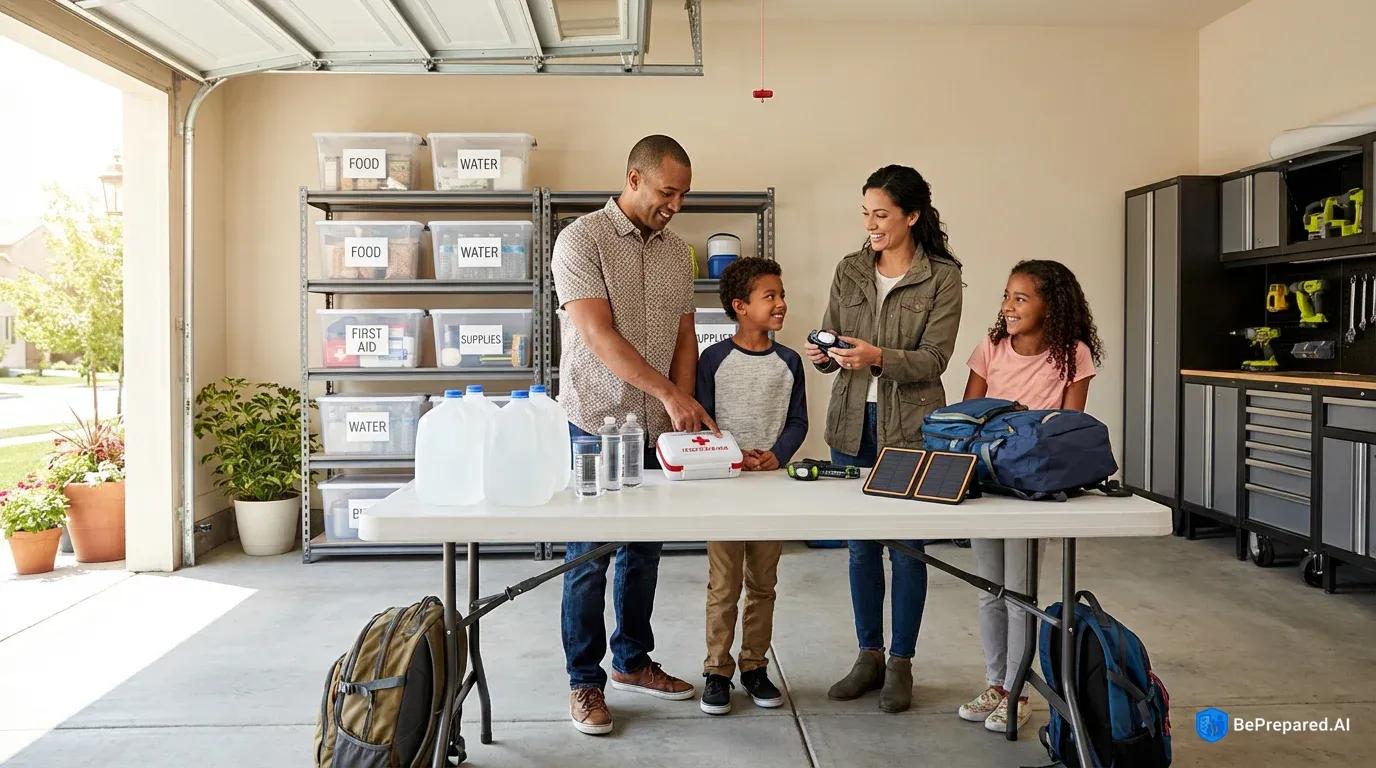
Store your earthquake kit somewhere you can reach it quickly, even in darkness or if parts of your home become blocked. Many people keep their main kit near an exit or in the garage, with smaller kits in bedrooms and vehicles. Avoid basements that might flood or upper floors you can't reach if stairs are damaged. Keep supplies in sturdy, portable containers with handles—you might need to grab them and move fast.
Clearly label everything so family members know exactly what's inside each container. Use a permanent marker to write contents and dates on the outside. Consider keeping a smaller "grab and go" bag near your bed with essentials like a flashlight, shoes, and a whistle. When the shaking starts, you won't have time to search through boxes.
Step 2: Establish a Rotation Schedule
Food and water don't last forever. Update your kit every six months; replace expired items . Mark your calendar with specific dates—perhaps when you change your clocks for daylight saving time. Use the old supplies in your daily life and replace them with fresh items. This rotation ensures nothing expires and keeps you familiar with your supplies.
Check batteries quarterly. They can corrode and leak, damaging flashlights and radios. Replace them before they fail. Test your hand-crank devices to make sure they still work. A few minutes of checking now prevents discovering dead equipment when you desperately need it.
Step 3: Conduct Regular Inspections
Twice a year, open your kit and inspect everything thoroughly. Verify that medications haven't expired—they often need updating more frequently than food. Confirm that documents are still current and legible. Test your flashlights and radio to ensure they work. Check that clothing still fits growing children. Review your family's needs—has anyone started new medications? Did you adopt a pet? Has someone developed allergies?
Update your kit to reflect these changes. Your family's needs evolve, and your emergency supplies should evolve with them. Write down what needs replacing so you remember during your next shopping trip. Keeping a simple checklist inside your kit makes inspections faster and more thorough.
Step 4: Practice and Familiarize
Once yearly, conduct a family drill. Show everyone where the kits are stored, what's inside, and how to use items like the hand-crank radio or water purification tablets. Let kids practice opening containers and finding supplies. This familiarity eliminates panic and confusion during a real emergency. Make it fun—turn it into a game or scavenger hunt for younger children.
Consider it an investment in your family's safety. A well-maintained kit that everyone knows how to use becomes automatic muscle memory when the ground starts shaking and clear thinking becomes difficult. Talk through different scenarios: What if the earthquake happens at night? What if you're separated? Where will you meet? These conversations feel awkward at first, but they build confidence and preparedness that lasts.
Taking Your First Step Today
You've learned what you need and why it matters. Now comes the easiest part: getting started. You don't need to buy everything today or spend hundreds of dollars at once. Begin with water. Pick up a case of bottled water this week. Next week, grab some canned goods and a manual can opener. The week after that, add a flashlight and batteries.
Breaking the project into small, manageable steps removes the overwhelm. Before you know it, you'll have a complete kit without straining your budget or your schedule. Each item you add brings more peace of mind. You're not preparing for disaster—you're preparing for confidence. You're choosing to be ready instead of hoping you'll be lucky.
Your future self will thank you. When the ground shakes and the lights go out, you'll reach for your kit with calm assurance instead of panic. You'll have what your family needs. You'll be the neighbor who can share supplies and help others. That's not paranoia—that's responsibility, care, and love in action.
Start today. Start small. Just start.