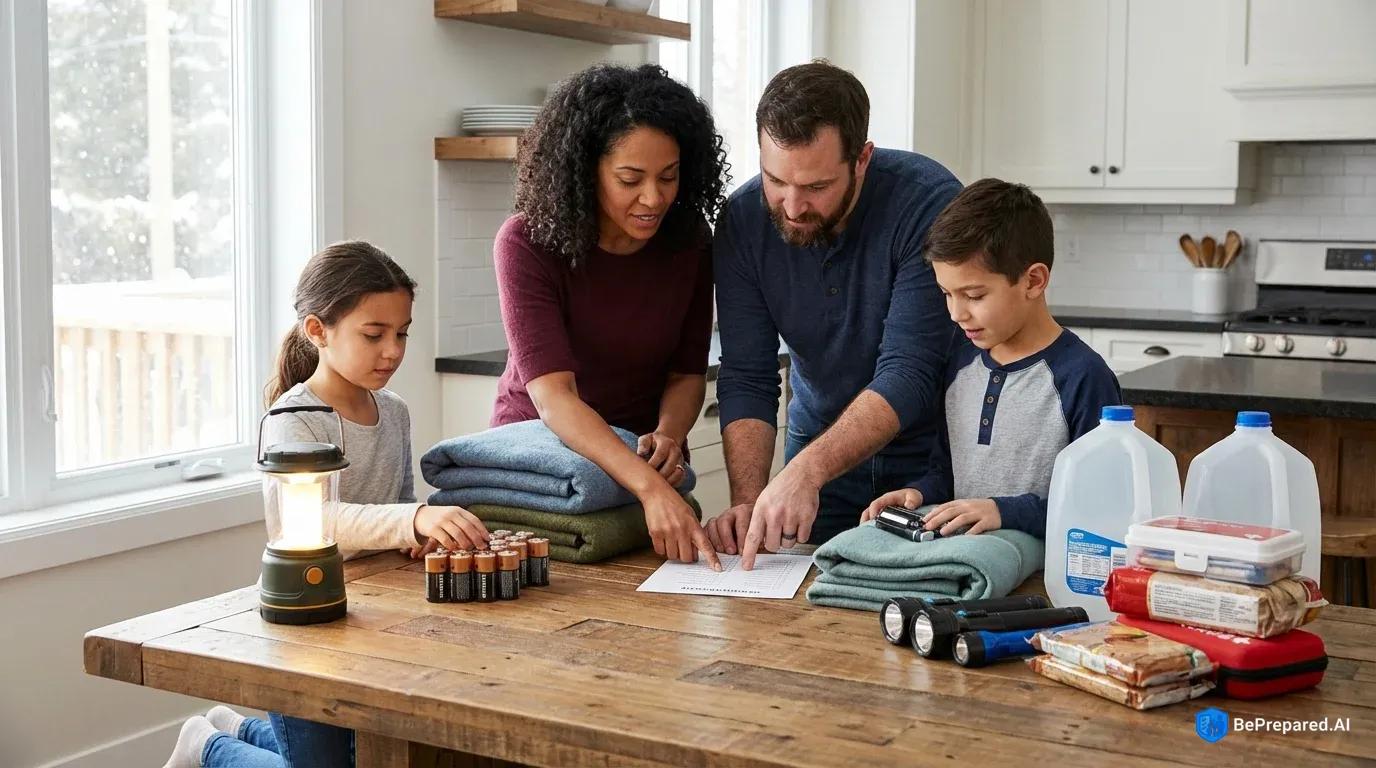
Why You Need a Winter Power Outage Kit
Picture this: It's 2 AM on a frigid January night when the lights suddenly go dark. Your furnace stops humming. The temperature inside your home begins its slow, relentless descent toward the 15-degree freeze outside. This scenario plays out for millions of Americans every winter, and most people aren't ready for it.
According to FEMA, winter storms cause power outages affecting millions of households annually across the United States . While losing power during summer might mean a few uncomfortable hours, winter outages present a genuine survival challenge. When your home loses heat during a blizzard, you're essentially camping in sub-zero conditions, except you probably don't have camping gear nearby.
The difference between a winter power outage being a minor inconvenience versus a life-threatening emergency comes down to one thing: preparation. Having the right supplies gathered before the storm hits means you can focus on staying safe and warm rather than scrambling through dark closets looking for flashlights with dead batteries.
The good news? Building a winter power outage kit doesn't require a huge investment or complicated planning. With some basic items and a systematic approach, you can protect yourself and your family from the dangers that winter storms bring. Think of it as insurance you build yourself—the kind that's actually there when you need it most. You don't need to do everything at once. Start with a few essentials this week, add more next month, and before you know it, you'll be completely prepared.
- Warmth Essentials
- Blankets, sleeping bags, and warm clothing layers for each family member
- Shelf-Stable Food
- 3-day supply of non-perishable foods that don't require cooking
- Water Supply
- 1 gallon per person per day for 3 days, stored in clean containers
- First Aid Kit
- Basic medical supplies, prescription medications, and emergency contact information
- Communication Tools
- Battery-powered or hand-crank radio, portable phone charger, spare batteries
Essential Survival Items (Must-Haves)
Building your winter power outage kit starts with three fundamental categories: light and communication, warmth and shelter, and food and water. Each category addresses a critical survival need that becomes immediately apparent when the power fails during a winter storm.
Light and Communication Devices
Your first priority when darkness falls is reliable lighting that won't burn your house down. Battery-powered devices are significantly safer than candles during outages . Stock multiple LED flashlights—one for each family member plus extras for different rooms. LED lights consume minimal battery power and last for hours, unlike old incandescent bulbs.
Add several battery-powered lanterns that can illuminate entire rooms. This makes tasks like cooking or first aid much easier. Don't forget a hand-crank emergency radio that receives NOAA weather alerts. During extended outages, this becomes your lifeline to information about when power might be restored and whether conditions are worsening.
Include a fully charged portable power bank for your cell phone. Keep your car charger handy since your vehicle can serve as a charging station. If you're just starting out, grab two flashlights and one lantern this week. You can add more later.
Warmth and Shelter Items
When your furnace stops working, you need immediate alternatives to retain body heat. Gather heavy blankets, sleeping bags rated for cold temperatures, and emergency Mylar blankets that reflect body heat back to you. Layer these together for maximum warmth.
Stock hand warmers and foot warmers—the chemical kind that activate when you shake them. These can make the difference between miserable cold and bearable temperatures. Include extra layers of clothing: thermal underwear, wool socks, insulated gloves, and hats. The Department of Energy recommends maintaining thermostats at 68°F or lower during winter storms . Proper insulation and layering can maintain survivable temperatures even without active heating.
Consider a tent or heavy tarps that can create a smaller, insulated space within a room. This concentrates body heat in a more manageable area. You probably already own some blankets and warm clothes, so you're already partway there.
Food and Water Basics
Power outages disrupt both your water supply (if you have a well pump) and your ability to cook. FEMA recommends storing one gallon of water per person per day . A family of four needs at least 12 gallons for a three-day outage . That sounds like a lot, but it's just twelve one-gallon jugs from the grocery store.
Focus on non-perishable foods that require no cooking: protein bars, nuts, dried fruit, canned goods with pull-top lids, peanut butter, crackers, and shelf-stable milk. A manual can opener is essential—electric ones become useless paperweights during outages.
Include a camp stove with fuel for heating water and simple meals. Only use it in well-ventilated areas or outdoors. Start by picking up a few extra cans of soup and some granola bars next time you shop. Building your food supply gradually keeps it from feeling overwhelming.
Download our printable Winter Power Outage Checklist to ensure you don't miss any critical supplies.
Safe Heating Methods During Power Loss
The desperate desire to stay warm during a winter power outage leads people to make dangerous decisions every year. Understanding which heating methods are safe versus which ones can kill you isn't just important—it's potentially life-saving information.
Indoor-Safe Versus Dangerous Heating Options
The American Red Cross stresses that any indoor heating device must be properly ventilated to prevent carbon monoxide buildup . Carbon monoxide is an invisible, odorless killer. Poisoning risks increase dramatically during power outages as people resort to improvised heating methods .
Safe options include portable propane heaters specifically designed and rated for indoor use. These have built-in oxygen depletion sensors that shut the unit off if oxygen levels drop dangerously low. These must still be used in rooms with adequate ventilation—crack a window slightly even though it seems counterintuitive.
Now let's talk about dangerous methods that claim lives every winter. Never use your gas oven or stovetop as a heater, even for "just a few minutes." Never burn charcoal indoors—not in a fireplace, not in a grill, not anywhere inside your home or garage. The carbon monoxide produced by charcoal is lethal in enclosed spaces.
Generators belong outside, away from your home. Never run them in the garage even with the door open. These rules aren't suggestions—they're the difference between surviving the outage and becoming a tragic news story. If you're unsure about a heating method, don't use it. When in doubt, add another layer of clothing instead.
Heat Conservation Strategies
While active heating helps, preventing heat loss matters just as much. The Department of Energy recommends treating your home like a thermos during outages . Close off rooms you're not using and stuff towels under doors to prevent drafts.
Hang blankets over windows at night. These act as insulation barriers against the cold glass. Windows lose tremendous amounts of heat, so covering them can raise room temperatures by several degrees.
Gather everyone in one room, preferably a smaller interior room away from exterior walls. Body heat from multiple people in a confined space creates surprising warmth. Layer clothing rather than relying solely on heating devices—thermal underwear, fleece, and wool trap heat close to your body. Think of clothing as your personal heating system that requires no fuel or electricity.
Here's a simple trick: wear a hat indoors. You lose significant body heat through your head, so keeping it covered makes a noticeable difference. Combine that with wool socks and you'll stay much warmer without any special equipment.
Storage and Maintenance Checklist
Having emergency supplies doesn't help if you can't find them when the lights go out. It also doesn't help if the batteries are dead when you need them. Strategic storage and regular maintenance transform a pile of supplies into a genuinely useful emergency kit.
Step One: Choose Accessible Storage Locations
Store your winter power outage kit somewhere you can access it in complete darkness without tripping over things. A hall closet on the main floor works better than a basement shelf you'd need to navigate down dark stairs to reach.
Consider keeping supplies in multiple locations throughout your home. Place a flashlight and emergency radio in your bedroom, another set in your kitchen, and a third near your main entry. This redundancy ensures you're never more than a few steps from critical supplies when the power fails.
Avoid storing water in attics, garages, or anywhere exposed to extreme temperatures. FEMA notes that water should be kept away from direct sunlight and temperature extremes to prevent container degradation . A bedroom closet or kitchen pantry works perfectly.
Step Two: Implement a Six-Month Check Schedule
Mark your calendar for twice-yearly kit inspections, ideally in spring and fall before the seasons change. Emergency supplies should be checked every six months . During each check, test all flashlights and replace weak batteries.
Rotate stored water, pouring out old supplies and replacing them with fresh containers. Check expiration dates on food items, hand warmers, and any medications in your kit. Test your emergency radio to verify it still works.
This regular maintenance takes maybe 30 minutes twice a year. That small time investment ensures your kit will actually function when you desperately need it. Set a phone reminder right now for six months from today.
Step Three: Update for Changing Needs
Your emergency kit should evolve with your household. If you've added a family member, increase water and food supplies accordingly. If someone develops a medical condition requiring specific supplies or medications, add those to your kit.
Replace children's clothing as they grow—last year's coat won't keep a growing child warm. Keep a written inventory list inside your kit container noting when items were last checked and when they expire.
This simple document prevents you from having to remember everything. It makes the six-month check process much faster. You can download a free inventory template from our resources page.
Step Four: Practice a Power Outage Drill
Once annually, simulate a power outage for a few hours. Turn off your circuit breakers on a Saturday afternoon and practice accessing your supplies. Set up your heating strategy and use your equipment.
This reveals gaps in your planning. Maybe your lantern batteries are stored in a different location than the lantern itself. Perhaps your can opener is buried at the bottom of a box. These discoveries during practice prevent dangerous fumbling during an actual emergency.
Going through the motions builds confidence and reduces panic when a real outage occurs. Make it fun for kids by treating it like an adventure. They'll remember what to do when it really matters.
Your Next Steps
Winter power outages will happen—that's not a question of if, but when. The severity of the experience depends entirely on choices you make right now, while the power is still on and stores are still open.
A well-stocked kit, safely stored and regularly maintained, transforms a potentially deadly situation into a manageable inconvenience. You don't need to buy everything today. Start with the essentials outlined here and build your supplies gradually.
Here's your simple action plan: This week, buy two flashlights, a pack of batteries, and a few gallons of water. Next week, add some non-perishable food and a manual can opener. The week after that, gather extra blankets and warm clothing you already own. Within a month, you'll have a solid basic kit without breaking the bank or feeling overwhelmed.
Commit to those six-month checks by setting calendar reminders right now. When that 2 AM winter outage eventually arrives, you'll be ready. Your family will stay warm, fed, and safe because you took these simple steps today.
Start small, build gradually, and remember: every item you add to your kit is one less thing to worry about when the lights go out.