Grid Down / Cyber Attack / Electromagnetic Pulse
14 articles
A grid-down event is a power failure that lasts long enough to disrupt water, fuel, phone service, stores and banking for days rather than hours. Severe space weather or an attack on grid equipment could cause one. Your first steps are storing water, keeping flashlights and charged power banks on hand, and planning for medicines that need refrigeration.
An event (e.g. - electromagnetic pulse, cyber attack, grid overload) that disables electrical supply, electronic devices and or critical infrastructure. Requires Faraday protection, analog devices and or backup systems.
Updated
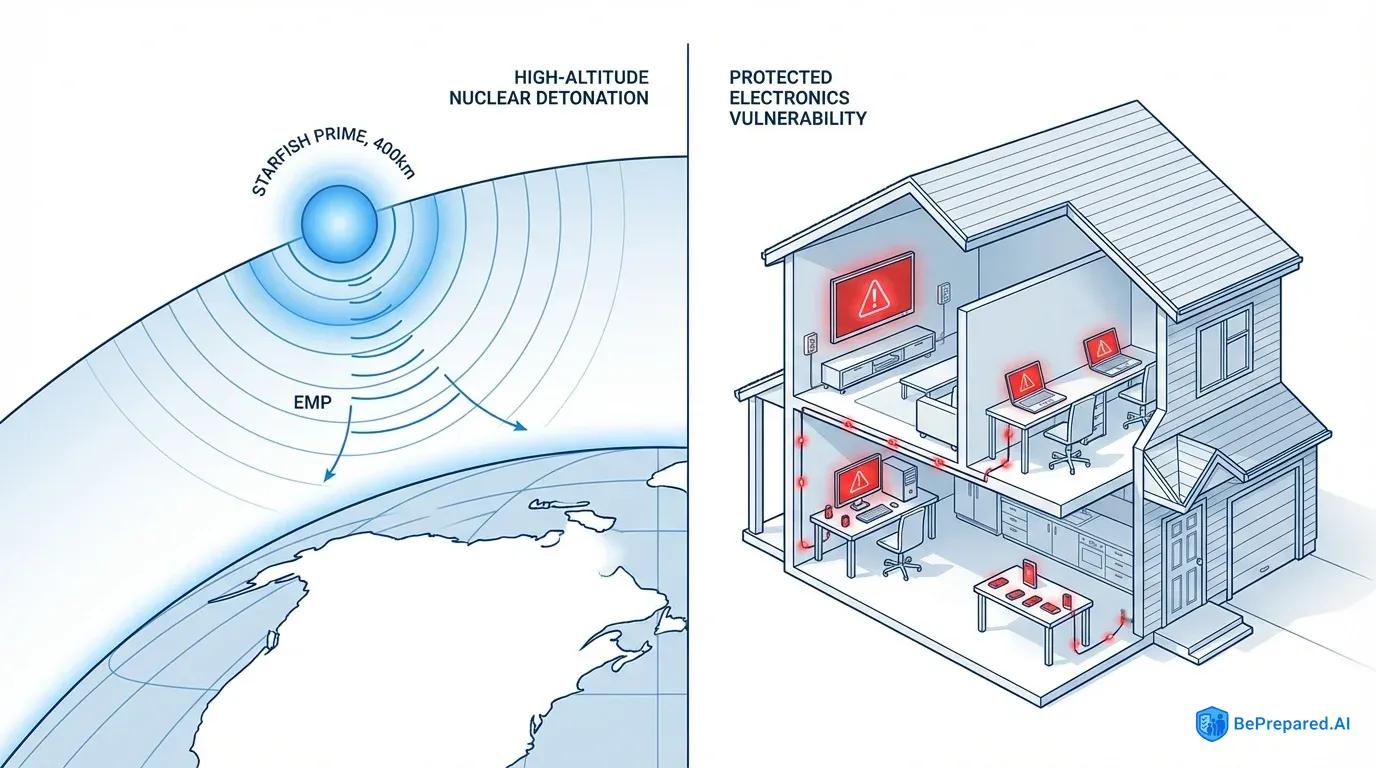
EMP-Resistant Communication Systems for Homes
Most Faraday cages fail during actual EMP events due to design flaws. Engineer-vetted specifications for communication systems that survive electromagnetic pulses.
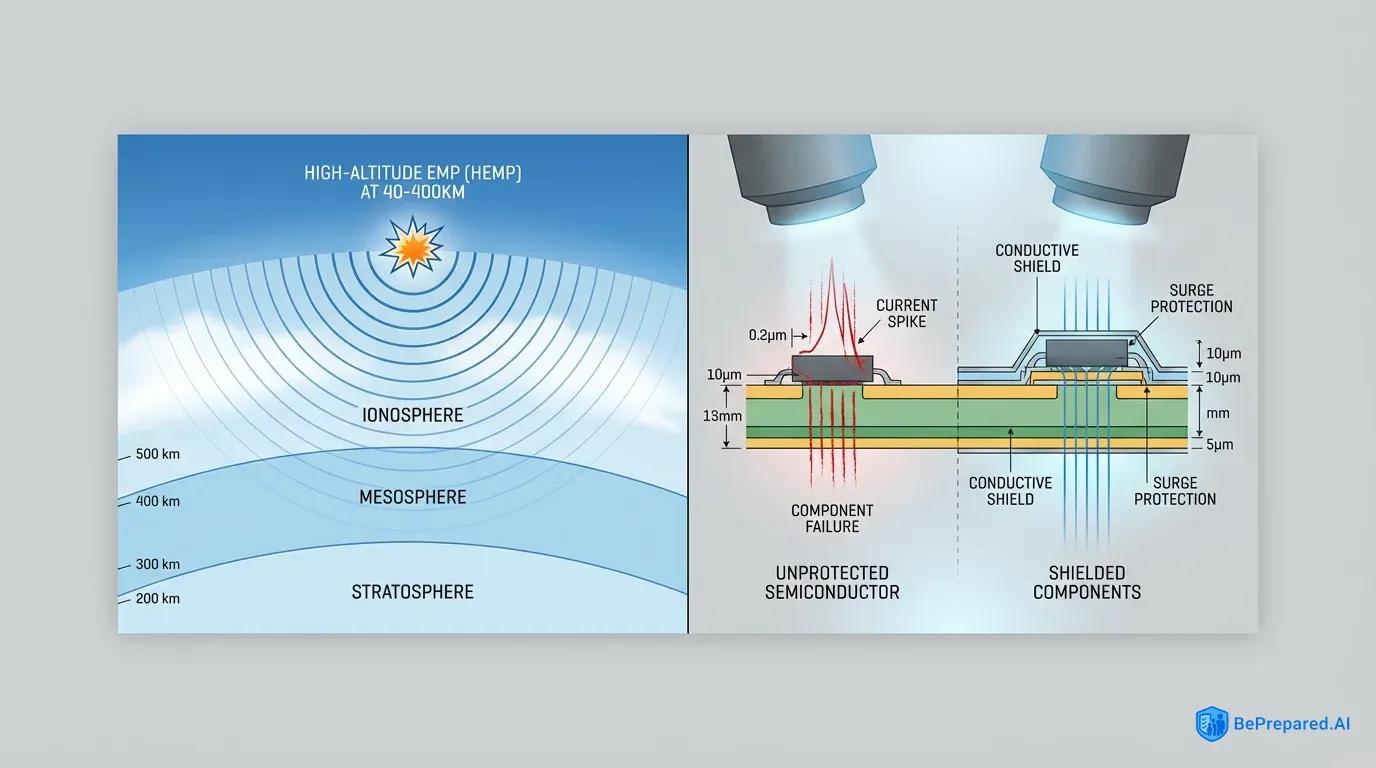
Best Ham Radios for EMP Survival: Complete Guide
Most ham radios fail within nanoseconds of an EMP strike. Technical analysis of hardened transceivers, Faraday protection, and semiconductor vulnerabilities for serious preparedness.
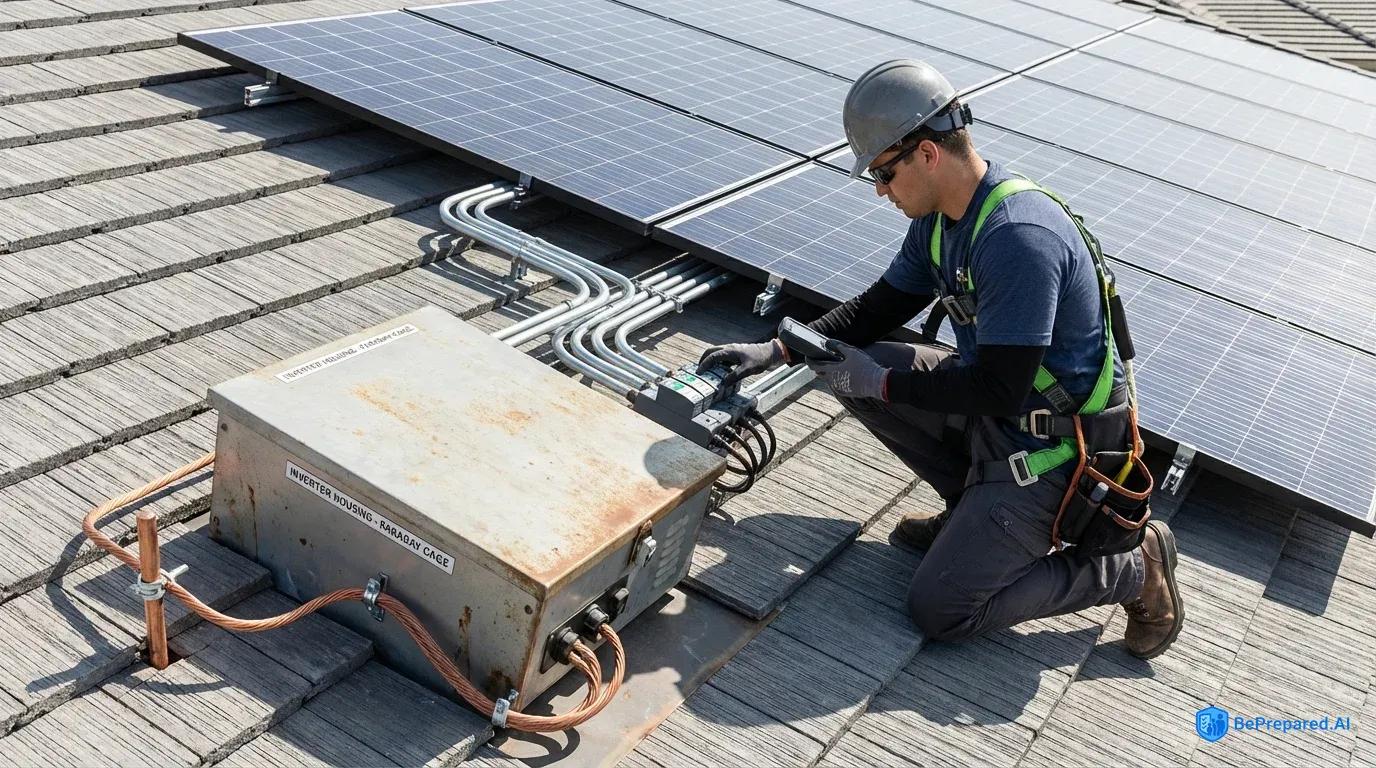
Setting Up an EMP-Protected Solar Power System
Modern solar inverters are 1000x more vulnerable to EMP than older equipment. Engineer-grade hardening techniques to protect your renewable energy investment from electromagnetic threats.
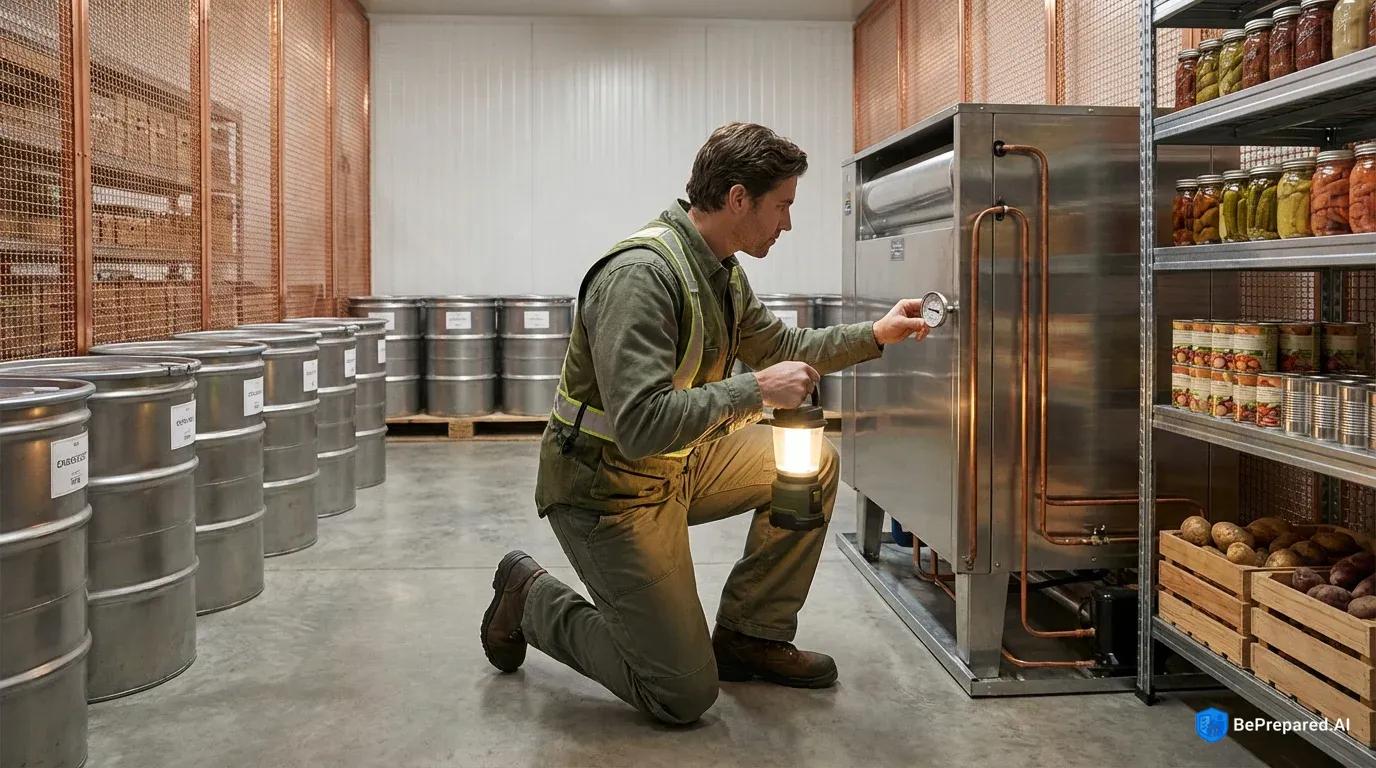
EMP-Safe Food Storage Systems: Complete Guide
Most preppers' food storage fails within 72 hours of an EMP event. Engineering-grade hardening protocols and non-electronic preservation systems that actually survive.
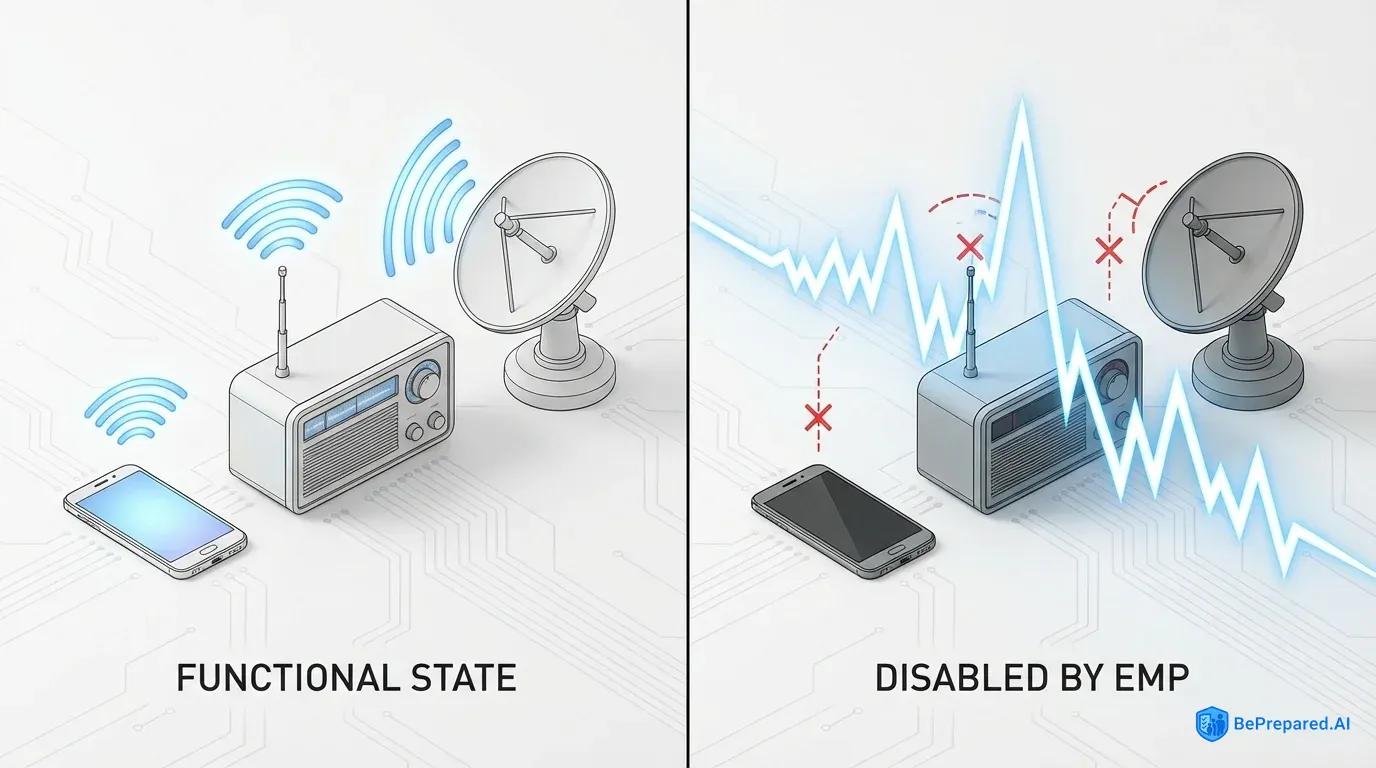
EMP-Proof Communication Systems
Your encrypted radio won't survive what a 1950s tube set will. Build communication systems that function when modern electronics fail completely.
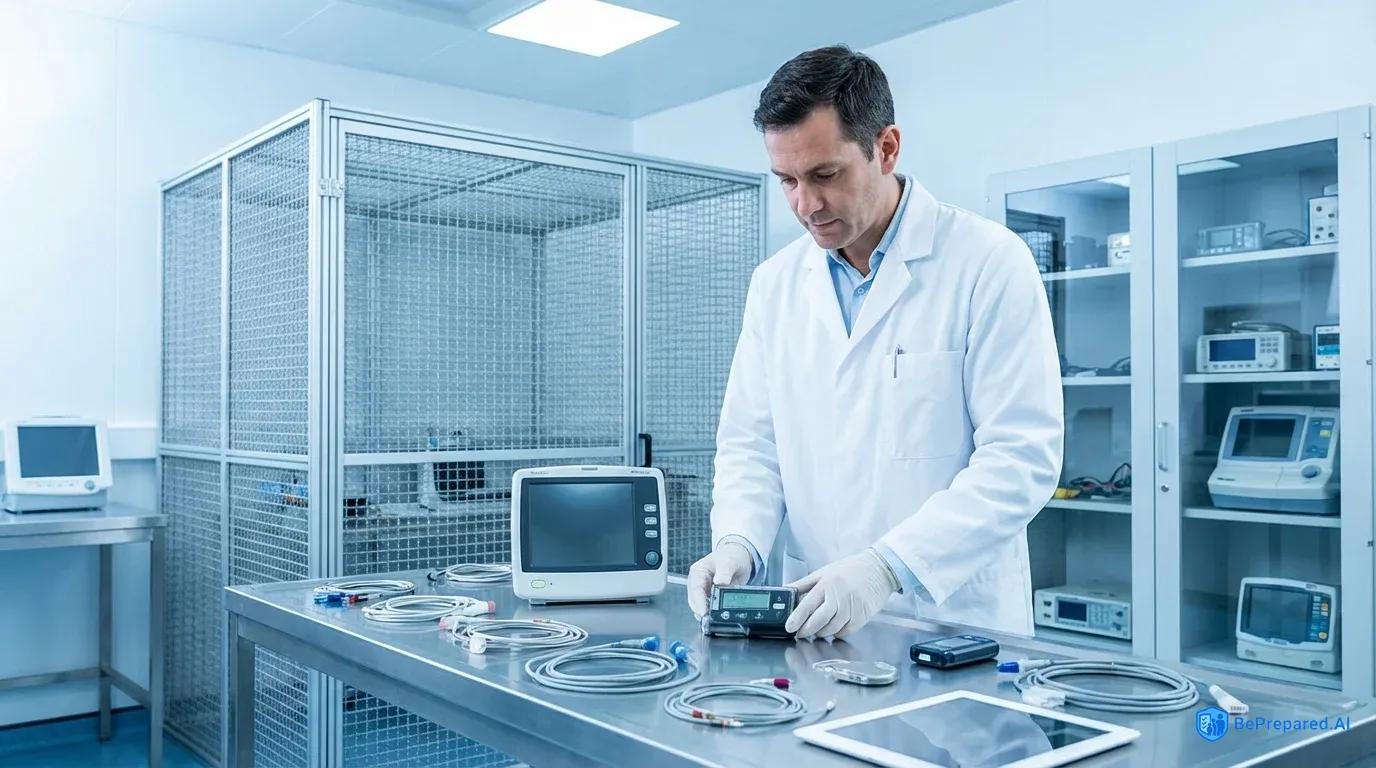
EMP Protection for Medical Devices
Your pacemaker contains the same vulnerable circuits that failed in grid tests. Protect life-critical medical devices against electromagnetic pulse threats.
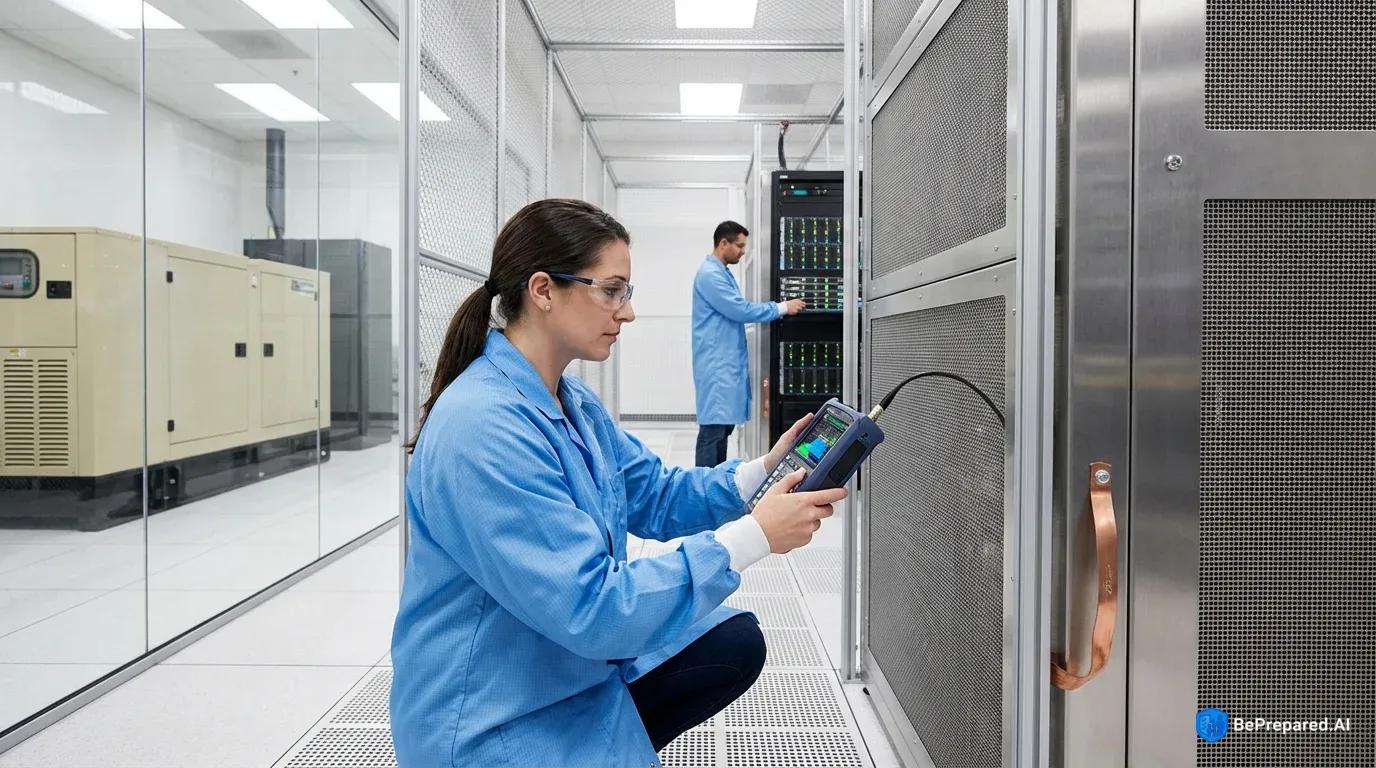
Advanced EMP Protection Systems and Implementation
Most Faraday cages fail against E1 pulse components. Professional-grade EMP hardening requires understanding nanosecond-scale vulnerabilities and multi-layer protection architectures that actually work.
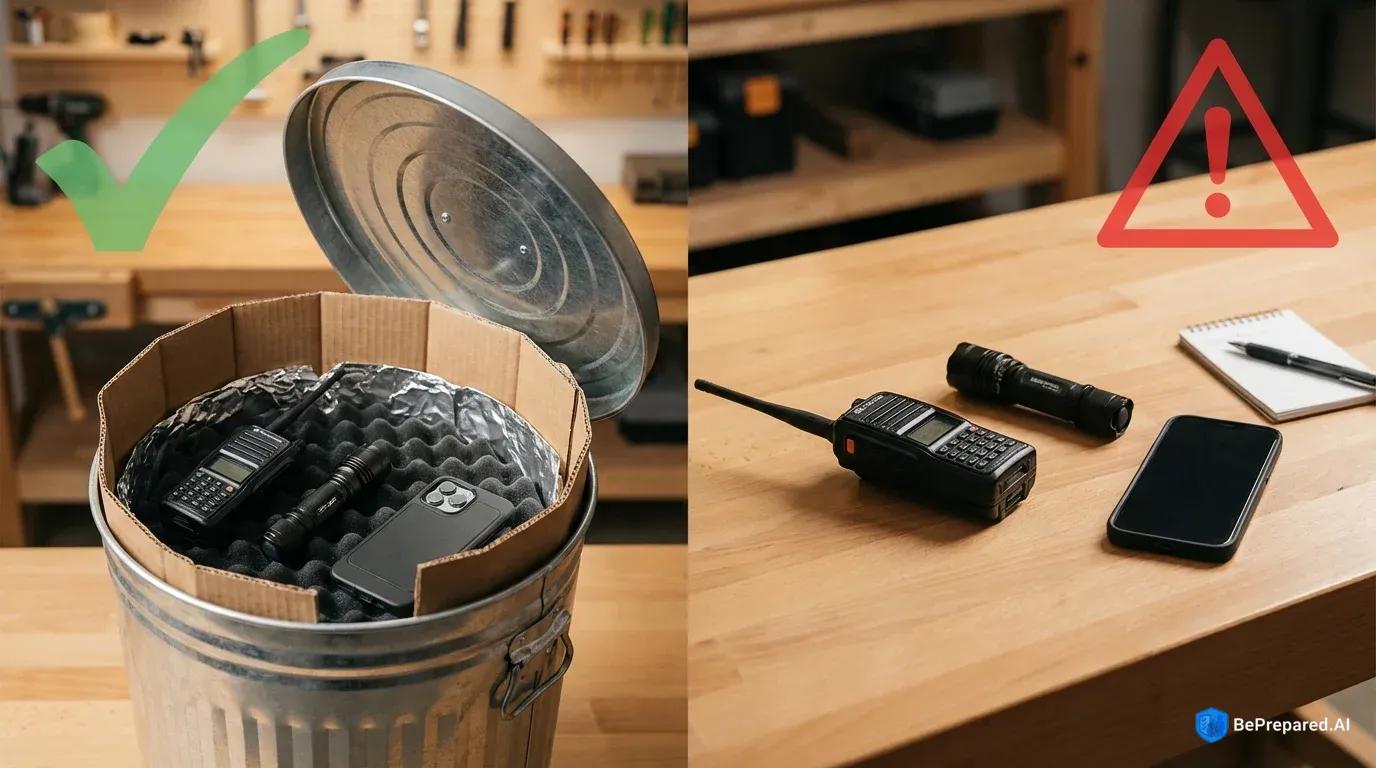
How to Build a Basic Faraday Cage
Military-grade EMP protection costs thousands, but hardware store materials work just as well. Build effective Faraday cages using everyday items you already own.
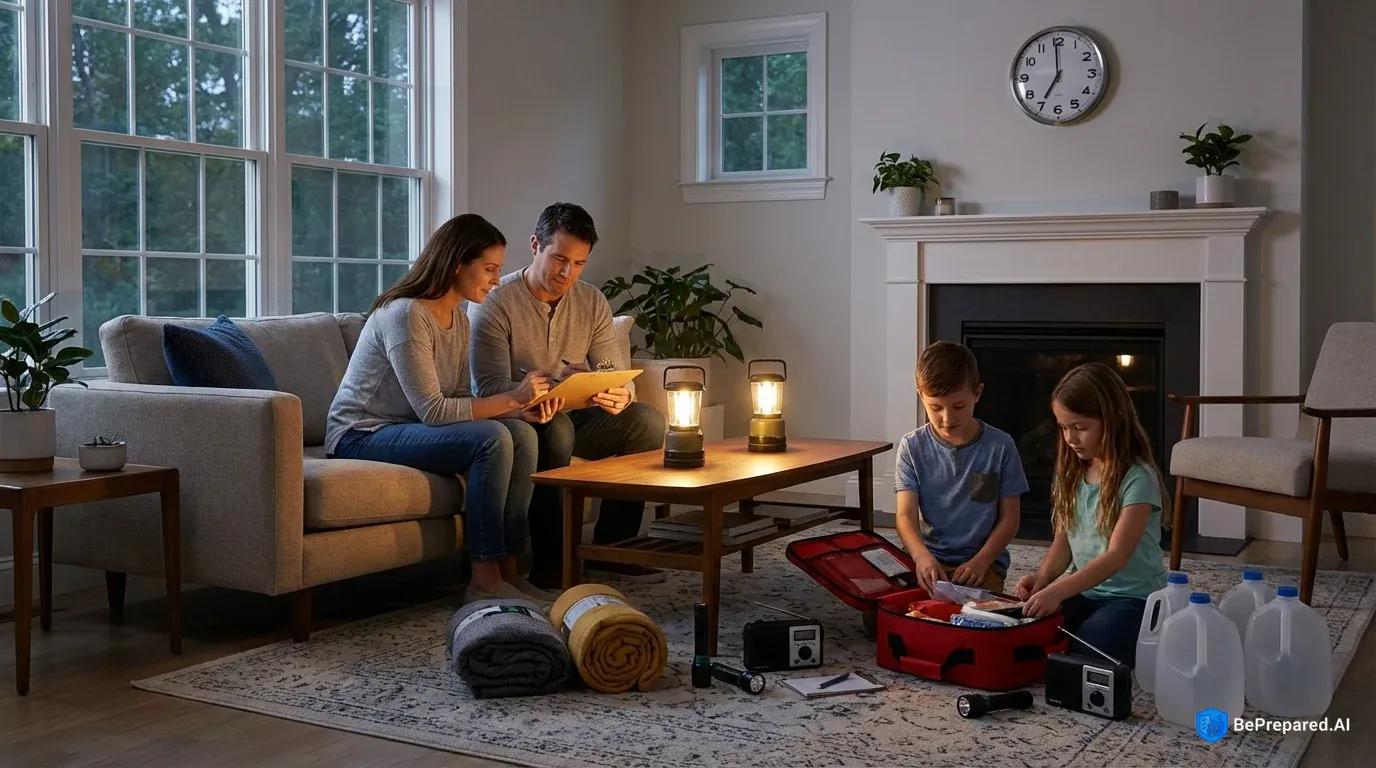
Life Without Electricity: First 30 Days After an EMP
Most people waste the critical first hours after an EMP making dangerous mistakes. Your hour-by-hour survival guide for the first month without power.

EMP Survival Guide: Essential Steps to Protect Your Family
Modern electronics are 1 million times more vulnerable to EMPs than 1960s devices. Your family needs these protection strategies before disaster strikes.

Non-Electric Alternatives for Daily Life
Your electric can opener won't work during a blackout. These proven manual alternatives keep your household running when the power fails.

Water Storage and Purification Without Power
Your municipal water stops flowing hours after the power fails. Build a simple storage and purification system that protects your family without breaking the bank.

What is an EMP and Why Should Families Care?
Your phone, car, and refrigerator could all fail simultaneously from one invisible event. Here's what families need to know about EMPs.

10 Essential Items for Your EMP Emergency Kit
Most EMP kits focus on gadgets you'll never use. These 10 practical essentials protect your family without the prepper-store price tag.
Ready to stock up? See our Grid Down / Cyber Attack / Electromagnetic Pulse kits.
Can an electromagnetic pulse take down the power grid?
An electromagnetic pulse could damage parts of the grid, but CISA classes the most extreme EMP incidents as low-probability, high-consequence events. In CISA's assessment, an intentional EMP attack could damage significant portions of the electrical grid, communications, water systems and transportation, with effects ranging from local to continental. Severe space weather is a related natural risk; Ready.gov notes it can induce extreme currents in power lines and cause widespread outages. For your household, the preparation matches any long outage: stored water, non-perishable food, flashlights, a crank or battery radio, and power banks. Keep your car's tank at least half full, since gas pumps rely on electricity.
How much water should we store for a long outage?
Store at least one gallon per person per day for several days, covering both drinking and sanitation. Children, nursing mothers, sick people and anyone in a hot climate may need more, and in very hot weather water needs can double. A long outage can interrupt public water and wastewater systems, so a stored supply matters even on city water. Commercially bottled water is simplest; keep it sealed in a cool, dark place. Water you bottle yourself belongs in food-grade containers and should be replaced every six months. Do not ration drinking water unless authorities tell you to. If you run out, bring questionable water to a rolling boil for one full minute and let it cool.
How do we keep food, medicine and our home safe during a multi-day outage?
Keep the refrigerator and freezer closed: a refrigerator keeps food cold for about four hours, and a full freezer holds its temperature for about 48 hours. After that, use coolers with ice and check temperatures with a thermometer. Throw out food that has been at 40 degrees or higher for two hours or more. Ask your doctor now about a backup plan for refrigerated medicines and powered medical devices. Never heat your home with a gas stove or oven. Run generators, camp stoves and grills only outdoors, at least 20 feet from windows, and install battery-backed carbon monoxide detectors on every level of your home.
Sources
- Power Outages, Ready.gov (FEMA). Outages can disrupt communications, water and transportation and close stores, gas stations, ATMs and banks; refrigerator about four hours, full freezer about 48 hours; coolers and thermometers; discard food at 40 degrees or higher for two hours; medical device and medicine plans; no gas stove or oven for heat; generators, camp stoves and grills outdoors at least 20 feet from windows; CO detectors on every level.
- Water, Ready.gov (FEMA). One gallon per person per day for several days; some people need more and hot weather can double needs; store bottled water sealed in a cool, dark place; food-grade containers replaced every six months; do not ration unless ordered; boil for one full minute.
- Space Weather, Ready.gov (FEMA). Space weather can induce extreme currents in power lines and cause widespread outages, including loss of water and wastewater systems; keep the gas tank at least half full because gas stations rely on electricity.
- Electromagnetic Pulse, Cybersecurity and Infrastructure Security Agency. An intentional EMP attack could damage significant portions of the electrical grid, communications, water systems and transportation; effects from local to continental; extreme EMP incidents are low-probability, high-consequence.